Business
Mahanadi Coalfields makes ₹10,698 crore a year, so why is its IPO half empty
By Ashish Kumar · 21 November 2026 · 6 min read
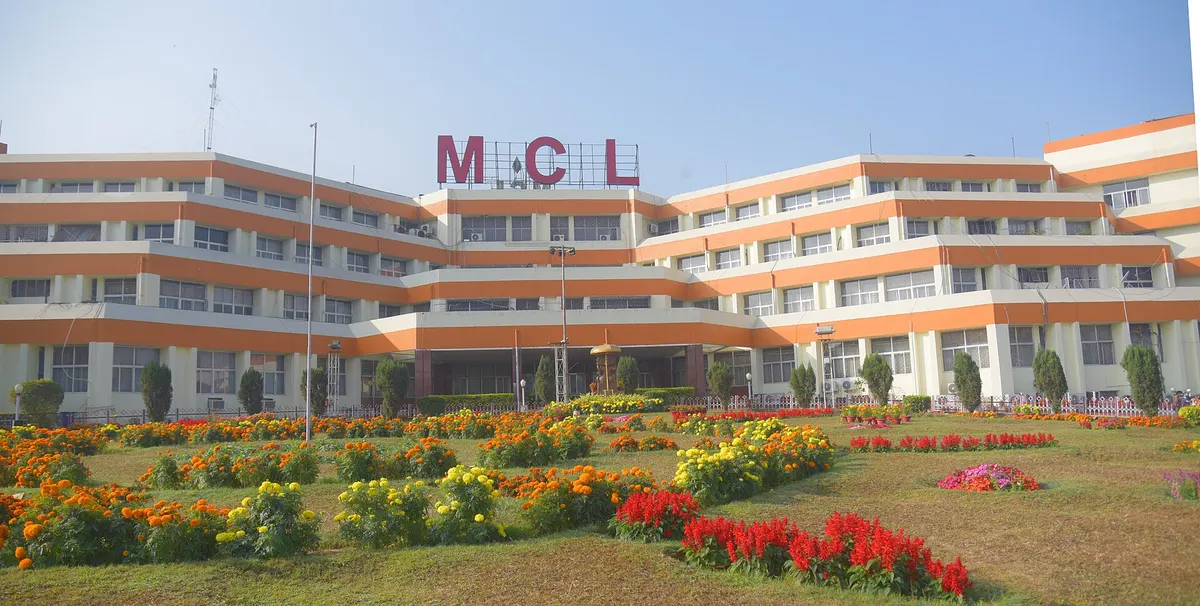
The Mahanadi Coalfields Limited headquarters in Sambalpur, Odisha. Photo: Rosehubwiki, Ramkesh Patel, CC BY-SA 4.0, via Wikimedia Commons, resized.
A company that earned more than ₹10,000 crore last year is struggling to fill its IPO order book, and both sides of the argument have real numbers behind them.
In January, a small Coal India unit called Bharat Coking Coal sold shares to the public. Its IPO was booked 146.87 times, and the stock opened about 96% above its issue price, as Business Today reported.
Ten months later, Coal India is selling a slice of its biggest coal producing subsidiary, Mahanadi Coalfields (MCL). The reaction has been the opposite. By 5 PM on Friday, the second of three bidding days, the issue was subscribed 0.49 times, meaning buyers had asked for less than half the shares on offer, according to exchange data compiled by HDFC Sky.
So who is right: the big funds that bought early, or the small investors staying away? Here is each side, laid out as fairly as we can.
What is actually on sale
MCL mines coal in the Talcher and Ib Valley fields of Odisha. It dug out 218.31 million tonnes in FY26, about 21% of all the coal mined in India, according to its red herring prospectus, the formal offer document filed with SEBI.
Coal India owns all of it today and is selling 10%: 66.18 crore shares at ₹129 to ₹136 each, worth up to ₹8,981 crore. This is an offer for sale, which means no new shares are created and MCL itself gets nothing. Every rupee goes to Coal India, as Upstox notes.
The smallest bid is one lot of 110 shares, or ₹14,960 at the top price, per Groww. Bidding closes on Monday, November 23, and shares are expected to list on November 27.
Here is how each group had bid by Friday evening:
The case for buying
It is cheap on paper. At ₹136 a share, the whole company is valued at about ₹90,000 crore. In FY26 it earned ₹10,698 crore after tax. Brokerage Anand Rathi, which rated the issue "Subscribe Long Term", puts that at 8.4 times earnings, as Goodreturns reported. Put simply, if profits stayed flat, they would add up to the price you paid in a little over eight years.
The latest half year looks better. In the six months to September 2026, revenue rose to ₹16,093 crore from ₹14,725 crore a year earlier, and profit rose to ₹4,881 crore from ₹4,574 crore, the prospectus shows.
It throws off cash. MCL is a government company, and government rules require profitable PSUs to pay out at least 30% of profit as dividend. MCL pays far more. The prospectus shows it paid dividends of ₹9,000 crore in FY24, ₹8,600 crore in FY25 and ₹7,650 crore in FY26. By our own arithmetic, the FY26 payout alone is about 8.5% of the IPO valuation. Past dividends are not a promise, but the habit is long.
That chart is the strangest part of this deal. Coal India is selling a tenth of MCL for roughly what MCL hands it in a single year.
Its mines are cheap to run. Almost all its coal comes from open pits, dug with machines called surface miners, and the prospectus, citing a CRISIL report, says it had the lowest cost per tonne of any Coal India subsidiary in FY26. It has 9,840 million tonnes of reserves, more than 40 years of output at today's pace, by our calculation. It has almost no debt.
The professionals bought. Before the issue opened, 53 anchor investors, the large funds allowed to buy a day early, took shares worth ₹2,295 crore at the top price. LIC alone put in ₹568 crore, and Abu Dhabi Investment Authority and several big mutual funds joined, per Upstox.
The case against
Profits are going the wrong way. Revenue slipped from ₹31,634 crore in FY24 to ₹30,550 crore in FY26, and profit fell from ₹11,842 crore to ₹10,698 crore. The operating margin, the share of each rupee of sales left after running costs, dropped from 46.4% to 41.7%, according to the figures Upstox drew from the prospectus. A cheap price is less of a bargain if the earnings under it are shrinking.
Coal has an expiry date, even if it is far away. The prospectus itself quotes CRISIL saying demand for this kind of coal should keep rising until about FY36, then start to fall as solar and wind take over. The decline CRISIL projects is gentle, but a buyer today is paying for profits that need to last decades. Under NITI Aayog's net zero scenario, also quoted in the document, India's coal demand falls to about 161 million tonnes by 2070, less than MCL alone mines today.
A handful of buyers matter a lot. The top 10 customers, including NTPC and several state power companies, brought in 55.94% of revenue in FY26. All of them buy on long fuel supply agreements, where the price is notified by Coal India rather than set freely by the market.
The board has no independent directors. SEBI's listing rules require them. The prospectus says MCL has none, its directors are appointed by the Ministry of Coal, and it has asked SEBI for an exemption. Independent directors are meant to speak up for small shareholders, much like an outside member on a housing society committee who does not live in the building. Here, the government decides.
The money does not stay in the company. Because this is a pure offer for sale, none of the ₹8,981 crore will build new mines or pay down debt at MCL. It goes to the parent, and through Coal India, partly to the government.
What the grey market is saying
The grey market, an unofficial and unregulated place where IPO shares are traded before listing, is not excited either. Goodreturns reported a grey market premium of just ₹1.60 on Friday, hinting at a listing barely 1% above the issue price. Grey market prices are rumours with numbers attached and are often wrong, but they explain why investors hoping for a BCCL style first day pop have not shown up.
If you want to check the numbers yourself, our guide on how to read an IPO prospectus shows where to look. For a contrast, see how Jio Platforms' listing played out when demand was the opposite of thin, or how Razorpay is pricing its own IPO.
The two sides are not really arguing about whether MCL is a good business today. Both agree it is. They are arguing about how long coal stays this profitable, and how much a small shareholder's voice is worth in a company the government will still control. Monday's final count will show which argument more people believed.
This is a news summary based on the company's filings and published reports, not investment advice.
Sources
Watch on Qrio
One-minute reels on this and related topics.
 ▶ 1:46
Business
Anthropic's IPO filing: a profit and a $66 billion loss
by Finance Explained in 90 Seconds
 ▶ 1:54
Business
Anthropic's IPO paperwork, explained
by PeterStewieStartup
 ▶ 1:21
Business
Is AI a bigger bubble than the dot-com crash?
by yieveberlins
 ▶ 2:51
Finance
How Berkshire Hathaway really makes money
by Dulma 🦋
More business stories
Business
Flipkart's CEO is leaving after ten years, here is what it means if you shop, sell or wait for its IPO
Flipkart Group CEO Kalyan Krishnamurthy is stepping down, the company said on November 25, and neither Flipkart nor its owner Walmart gave a reason. Three sources told Inc42 that Walmart asked him to go, as an internal probe into alleged kickbacks of over ₹150 crore from sellers widened and its IPO kept slipping. Chief product and technology officer Balaji Thiagarajan will lead with the board until a successor is named "in the coming weeks". Flipkart lost ₹8,468 crore in FY26 on ₹1,45,880 crore of revenue, and Walmart has reportedly asked for break even on EBITDA by March 2027. Here is what changes for shoppers, sellers, employees holding stock options and anyone waiting to buy its shares.
26 November 2026 · 6 min read
Business
Tata Steel is selling APL Apollo ₹28,000 crore of business, then buying APL Apollo with it
Tata Steel and APL Apollo Tubes shares crashed on November 23 because of one circular deal. APL Apollo will pay Tata Steel ₹28,000 crore, mostly borrowed, for its steel tubes and colour coated sheet businesses. Tata Steel will then spend ₹15,510 crore buying the APL Apollo promoters' stake at ₹2,100 a share, and up to ₹16,756 crore more in an open offer at ₹2,301.40. APL Apollo fell more than 21%, its worst day in 20 years per CNBC TV18, as investors balked at a bill worth about 60% of its own market value. Tata Steel fell over 8% as investors weighed what it gives up. Here is where every rupee goes.
24 November 2026 · 6 min read