Business
Jio Platforms listed at a 21% premium. Here is what 1.38 crore applicants actually bought
By Ashish Kumar · 29 October 2026 · 5 min read
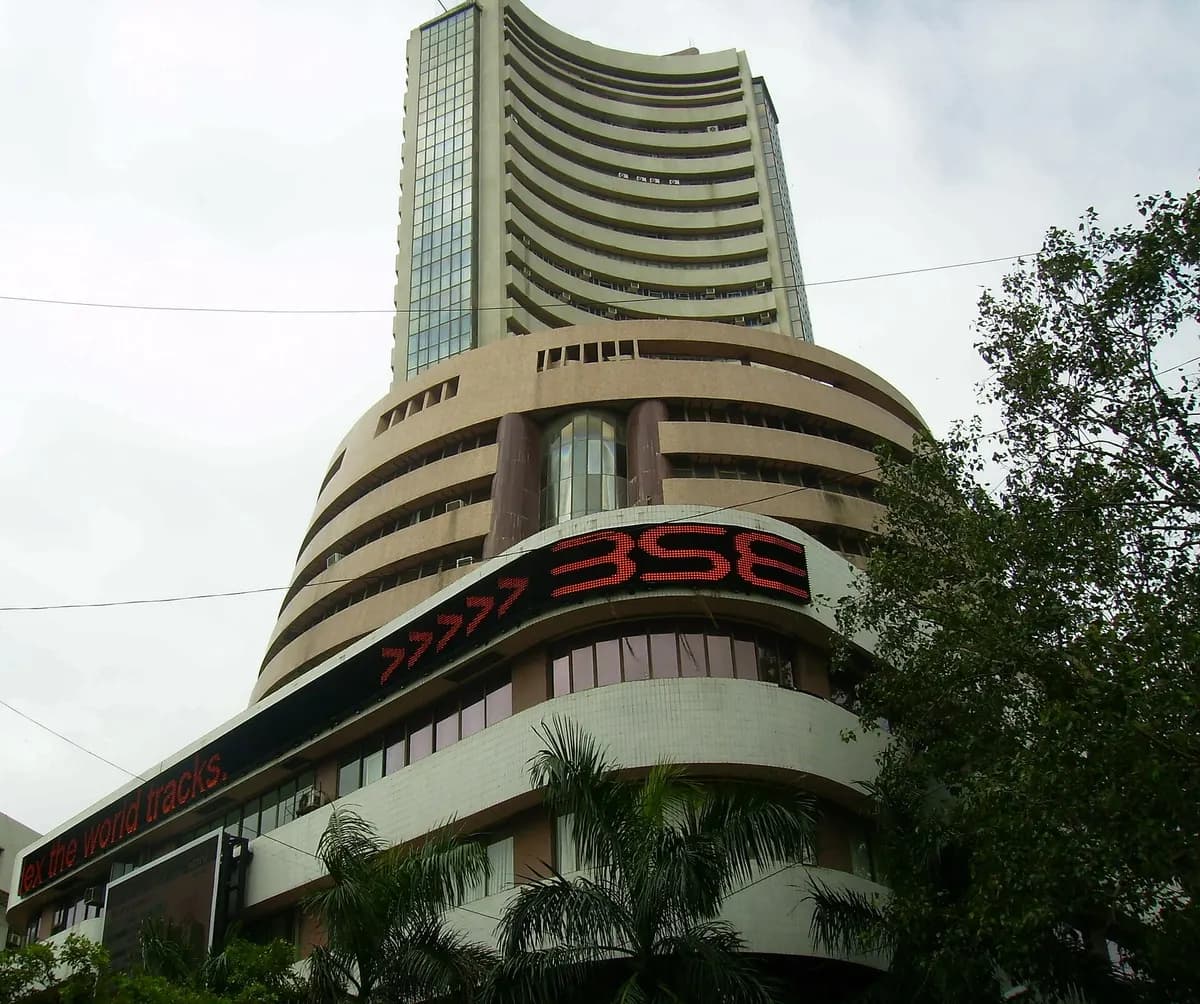
The Bombay Stock Exchange building on Dalal Street, Mumbai. Photo: Niyantha Shekhar, CC BY 2.0, via Wikimedia Commons, resized.
Jio's first day on the stock market was a party. But the most interesting part of this IPO is not the 21% jump. It is who sold nothing, and where the money is going.
On Wednesday morning, 28 October 2026, shares of Jio Platforms started trading on the BSE and NSE at ₹1,358. People who had been allotted shares at the IPO price of ₹1,119 were sitting on a gain of 21.36% before most offices had opened. By the close, the stock was at ₹1,417.35 on the BSE, up 26.66% on the day, according to Inc42.
If you have heard about this listing from five different WhatsApp groups and still are not sure what actually happened, here are the five questions that matter.
1. How big was this, really?
Bigger than anything India has done before. Jio raised ₹30,213 crore, about $3.2 billion. The previous record holder was Hyundai Motor India, which raised ₹27,870 crore in October 2024, as listed in a comparison by Upstox.
The demand was even bigger than the size. Bids came in for 22.19 times the shares on offer, worth more than $77 billion, from more than 13.8 million applicants, per TechCrunch. That is roughly 1.38 crore people trying to buy a piece of one company in the same three days. Most of them got nothing, because there simply were not enough shares to go around.
2. Did Meta and Google cash out?
No, and this is the detail most people miss.
Back in 2020, Meta (then Facebook) put $5.7 billion into Jio and Google put in $4.5 billion, alongside investors like General Atlantic, Silver Lake and Vista. A big IPO is usually the moment early investors sell some of their stake to the public. That sale is called an "offer for sale", and the money goes to the sellers, not the company.
Jio's IPO had no offer for sale at all. It was entirely new shares. Nobody who already owned Jio sold a single share, including Meta and Google. Every rupee raised went to Jio itself.
That is unusual for an issue this size, and it tells you something. The existing owners, including Reliance, chose to keep their full stakes rather than take money off the table at a valuation of more than ₹10 lakh crore.
3. So what is Jio doing with ₹30,213 crore?
Mostly paying off loans.
Of the money raised, ₹27,500 crore goes towards prepaying borrowings of Reliance Jio Infocomm, the telecom company inside Jio Platforms. The rest is for general corporate purposes. As of 30 June, Jio's total borrowings stood at about ₹61,370 crore, according to TechCrunch.
Think of it like a family that is already earning well, sells a slice of the house to friends, and uses the money to clear most of the home loan. The business does not change overnight. But with far less interest to pay, more of what it earns stays as profit. That is a large part of what investors were betting on.
The business itself is big and still growing. In FY26, Jio's operating revenue rose almost 15% to ₹1.47 lakh crore and net profit rose 15.1% to ₹30,049 crore, per Inc42. Average revenue per user went up to ₹215.60 a month from ₹208.80 a year earlier, and the average customer now uses 43.7 GB of data a month, up from 37 GB.
4. Why did the price jump so much on day one?
Simple supply and demand. When 22 times more money chases the shares than there are shares available, the people who did not get any try to buy on the first day. That pushes the price up.
There is a twist, though. Brokerage Motilal Oswal started covering the stock with a "buy" rating and a target price of ₹1,350, per Inc42. The shares opened above that and closed around ₹1,417. In other words, on day one the market had already gone past where at least one well-known analyst thought the stock was worth going over the coming months. That does not mean the price will fall. It means a lot of optimism was priced in very quickly.
At the closing price, Jio was worth about ₹13.05 lakh crore, which made it India's second most valuable listed company, behind its own parent Reliance Industries. In 2020, when Meta and Google invested, Jio was valued at up to ₹4.91 lakh crore. That is a big jump in six years.
5. I did not get shares. Did I miss out?
Maybe, maybe not, and anyone who tells you for sure is guessing.
A first-day gain says how excited people were on one Wednesday. It says very little about where a stock will be in three years. Some of India's most hyped listings have done brilliantly since. Others, like Paytm in 2021, fell far below their IPO price for a long time. Jio's numbers are strong, but its price now assumes they stay strong.
What is fair to say is that this listing changed something bigger than Jio. Akash Ambani put it this way: "My dream is that one day, when the world counts its great technology companies, one of them will be from India." For the 1.38 crore people who applied, many of them first-time IPO investors, this was the moment Indian tech stopped being something you read about and became something you could try to own.
If you want the background on how the issue was set up before listing day, we covered the price band, the money and the timeline on the Qrio blog. And for a very different kind of IPO, read how a ₹6,650 crore IPO happened where nobody sold a single share, or why Zepto's revenue doubled while its IPO valuation got cut nearly in half.
This is a news summary, not investment advice. Read the company's prospectus and speak to a SEBI-registered adviser before investing.
Sources
More business stories

Business
IndiGo earned 26% more and still lost ₹1,879 crore. One bill explains it
IndiGo, India's biggest airline, just reported a net loss of ₹1,879 crore for July to September 2026, even though its revenue jumped 25.9% to ₹23,364 crore. Ticket prices per kilometre went up by a third. So where did the money go? Mostly into one line of its accounts: jet fuel, which cost 67% more than a year ago as the conflict in West Asia pushed oil prices up. Here is the money, followed line by line.
29 October 2026 · 5 min read
Business
Unacademy sold for 94% less than what it was once worth. Its CEO said so himself
India's edtech firm Unacademy has officially been acquired by rival upGrad in an all-stock deal closing at just over $200 million (₹19.55 billion), roughly 94% below Unacademy's peak private valuation of $3.44 billion in 2021. Unacademy had raised nearly $880 million across 13 funding rounds from SoftBank, Tiger Global, and General Atlantic. Co-founder and CEO Gaurav Munjal didn't dress it up: "We raised at a peak, but sold at a fraction of that." No layoffs are planned for Unacademy's roughly 1,000 employees. The deal closes a five-year arc for one of India's most-funded startups, and it began with the opposite problem entirely.
3 September 2026 · 3 min read