Explained
Tata Sons listing: why the RBI wants it public, who objects
By Ashish Kumar · Published 25 November 2026 · 8 min read
The short answer: Tata Sons, the private company that controls the Tata group, is being told by the Reserve Bank of India to list its shares on the stock market, because RBI rules say large "upper layer" finance companies must be public. Its biggest owner, Tata Trusts, wants it to stay private, and that disagreement is now coming to a head at a Tata Sons board meeting on 30 November 2026.
This post explains where the rule comes from, how Tata Sons tried to avoid it, why the board meeting was pushed back this week, and what could happen next. It was written on 25 November 2026. The story is still developing, and the outcome of the 30 November meeting is not known yet. This is a news summary, not investment advice.
What is Tata Sons and who owns it?
Tata Sons is the holding company of the Tata group. It owns stakes in the listed companies you know, like TCS, Tata Motors and Tata Steel, and in unlisted ones too. Tata Sons itself has never been listed.
Its ownership is unusual. Here is the split reported by Business Today, with the big two stakes also confirmed by ThePrint and Outlook Business:
| Shareholder | Approximate stake | Position on listing |
|---|---|---|
| Tata Trusts (charitable trusts, chaired by Noel Tata) | About 66% | Against |
| Shapoorji Pallonji (SP) Group | About 18% | For |
| Tata group companies | About 13% | Not stated publicly |
| Individuals, mostly Tata family members | The rest | Not stated publicly |
So the charities that own two thirds of the company do not want it listed. The second biggest owner does. That is the heart of the story.
Why does the RBI want Tata Sons to list?
Because Tata Sons is registered with the RBI as a core investment company (CIC), a kind of non-banking financial company (NBFC) that mainly holds shares in its own group companies.
In October 2021 the RBI brought in a "scale-based" rulebook that sorts NBFCs into four layers: base, middle, upper and top. The bigger and riskier a lender, the higher its layer and the stricter its rules. The RBI circular says it plainly: "NBFC-UL shall be mandatorily listed within 3 years of identification as NBFC-UL." UL means upper layer.
The RBI put Tata Sons in the upper layer on 30 September 2022. That set a listing deadline of 30 September 2025, as Business Today and ThePrint both report. The deadline passed without a listing.
The idea behind the rule is simple. Big finance companies touch a lot of money, so the RBI wants them to face the discipline of public disclosure and outside shareholders. Revised RBI norms from June 2026 now place any NBFC with assets of ₹1 lakh crore or more in the upper layer, according to ThePrint and Outlook Business. Tata Sons' standalone assets were over ₹2 lakh crore as of March 2026, per both reports. When the RBI published its revised upper layer list in August 2026, Tata Sons was the only unlisted name on it, Business Today and Outlook Business report.
How did Tata Sons try to avoid listing?
It tried to stop being a regulated NBFC at all.
In 2024, Tata Sons repaid more than ₹21,000 crore of debt and became debt-free. Business Today puts the exact figure at ₹21,813 crore for FY24. Then, in March 2024, it applied to the RBI to surrender its CIC registration. If the RBI had agreed, Tata Sons would have fallen outside the rules that require listing and could have stayed private.
The RBI said no. Its letter rejecting the request is dated 11 September 2026, according to Business Today, and ThePrint reported that it reached the company on Saturday, 12 September.
What has happened since September?
A lot, in a short time. Here is the timeline, with each step reported by at least two outlets:
- 17 September 2026: The Tata Sons board agreed to start steps to comply with the RBI rules and reappointed N Chandrasekaran as chairman. Deccan Chronicle reports Noel Tata was the only director to vote against, and that Venu Srinivasan, the other Trusts nominee, sided with the majority.
- 28 September 2026: Tata Trusts proposed a different route. Merge two unlisted Tata companies, Tata Electronics Systems Solutions (TESS) and Tata Consulting Engineers (TCE), into Tata Sons. That would turn Tata Sons into a holding company that also runs businesses, so it would no longer be a CIC or an NBFC, and the listing rule would not apply. The plan needs the board's approval and a no-objection certificate from the RBI, ThePrint reports.
- 16 November 2026: The RBI wrote to Tata Sons again. It said the company must comply with all the directions for upper layer NBFCs, including listing, as reported by Business Today and Deccan Chronicle. No deadline has been reported.
- 22 November 2026: Noel Tata wrote to the company. He objected that the board papers were sent only four days before the 26 November meeting, against the usual practice of seven days' notice.
- 23 November 2026: Tata Sons moved the meeting to 30 November. Business Today and Deccan Chronicle both report the change.
Why does Tata Trusts not want a listing?
Noel Tata has argued that a listing would change how the group works. "We believe that it will fundamentally change the way the company has and the group has been run over the last 150 years," he said at the Republic Summit 2026, as quoted by Business Today.
His point is about pressure. Public shareholders tend to want steady growth every quarter. Tata Sons has often used its money to rescue group companies in trouble, and he asked whether outside shareholders would agree to that. "Tata Sons has always been there in case one of our companies got into trouble," he said.
There is also a philanthropy angle. Tata Trusts fund charitable work from the dividends they get as Tata Sons' main owner. In its September proposal, the Trusts said keeping Tata Sons private preserves its "more than 100-year-old distinctive and unique organisational structure", ThePrint reports.
Why does the SP Group want a listing?
Because a listing would turn its stake into something it can sell. Right now, 18% of a private company is hard to cash in. The SP Group has argued that a listing would "unlock value and improve liquidity for shareholders", Business Today reports, and Business Today's November coverage says the group needs liquidity. Monetising the SP Group's stake is on the agenda for the 30 November meeting.
What is on the 30 November agenda?
Reports differ slightly, but the main items line up. Business Today lists the RBI directive, monetisation of the SP Group's stake, business reviews of Tata AIG, Agratas and Tejas, and fixing a date for an extraordinary general meeting (EGM) of shareholders. Deccan Chronicle lists the RBI-mandated listing, a presentation on the Agratas battery business and a recent letter from the SP Group. It also says Noel Tata is likely to push for his restructuring option to be discussed.
One executive told Business Today they expect the listing proposal to go to a vote again, most likely 5 to 1, with Noel Tata opposing. That is one person's expectation, not a result.
How big could a Tata Sons IPO be?
Nobody knows yet, and the estimates vary a lot. Business Today cites brokerage estimates valuing Tata Sons at ₹9 lakh crore to ₹12 lakh crore, with a possible IPO of more than ₹55,000 crore. Deccan Chronicle says some reports value it at over ₹15 lakh crore. These are outside estimates, not company numbers. The timing, size and structure of any offering are still undecided, ThePrint reports.
If the board does go ahead, the next formal step would be a draft red herring prospectus filed with SEBI. We wrote a guide on how to read an IPO prospectus if you want to be ready when it lands.
What could happen next?
There are three broad paths. None is confirmed.
- The board pushes ahead with a listing. The board majority has backed compliance since September. The company would then prepare and file IPO papers.
- The Trusts' merger plan goes forward. This needs board approval and an RBI no-objection certificate. The RBI's November letter did not say whether it accepts or rejects the restructuring idea, per reports.
- The fight goes on. The Trusts can push back at board and shareholder level, and the RBI has not set a fresh deadline. Chandrasekaran's term as chairman ends in February 2027 and he has said he will not seek another, per Outlook Business, so leadership is also in play.
What does this mean for you?
If you hold shares in listed Tata companies, nothing changes on the day of the meeting. But a Tata Sons listing would matter. For the first time, ordinary investors could own a slice of the holding company itself, and the parent's decisions would face public scrutiny. Group companies' share prices can move on news about the parent, so expect noise around 30 November.
If you do not invest, this is still a useful case to follow. It shows how an RBI rule written for finance companies can reach India's oldest business group, and how ownership by charitable trusts shapes big corporate choices. For more on how RBI decisions reach your wallet, see our post on the repo rate and your EMI. For another Tata deal this week, our story on Tata Steel and APL Apollo follows the money. And if you are watching other big listings, our post on the Jio Platforms IPO covers the other giant in the queue.
We will know more after 30 November. Until then, treat any IPO date or price you see online as a rumour.
Sources
- Reserve Bank of India: Scale Based Regulation (SBR) framework for NBFCs, circular dated 22 October 2021
- Business Today: Tata Sons postpones crucial Nov 26 board meeting to Nov 30 (24 November 2026)
- Deccan Chronicle: Tata Sons postpones crucial board meeting on listing to November 30
- Business Today: Tata Sons listing, RBI makes its stand clear again (17 November 2026)
- Business Today: Tata Sons listing explained, why the holding company was required to go public (18 September 2026)
- ThePrint: RBI rejects Tata Sons bid to surrender NBFC licence
- Outlook Business: RBI rejects Tata Sons' bid to surrender NBFC licence
- ThePrint: Tata Trusts propose Tata Sons rejig to keep Tata Sons private (28 September 2026)
- Business Today: Noel Tata raises key Tata Sons listing concern (29 September 2026)
Frequently asked questions
Why does Tata Sons have to list on the stock market?
The RBI classed Tata Sons as an upper layer NBFC in September 2022. Under the RBI's 2021 scale-based rules, upper layer NBFCs must list within three years. Tata Sons asked to surrender its core investment company registration to escape that rule, but the RBI rejected the request in September 2026.
Who owns Tata Sons?
Tata Trusts, the group's charitable trusts chaired by Noel Tata, own about 66%. The Shapoorji Pallonji (SP) Group owns a little over 18%. Tata group companies hold about 13%, and the rest is with individuals, mostly Tata family members, according to Business Today.
When is the Tata Sons board meeting on the listing?
It was set for 26 November 2026 and moved to 30 November 2026 after Noel Tata objected that the papers came only four days before the meeting instead of the usual seven. The agenda includes the RBI's directive on listing and the SP Group's stake.
Can I buy Tata Sons shares now?
No. Tata Sons is still a private, unlisted company. No IPO date, size or price has been announced, and the RBI's latest letter did not set a deadline. You can only buy shares of listed group companies like TCS, Tata Motors or Tata Steel.
Watch on Qrio
One-minute reels on this and related topics.
 ▶ 1:46
Business
Anthropic's IPO filing: a profit and a $66 billion loss
by Finance Explained in 90 Seconds
 ▶ 2:34
Business
Why Rolex has no owner and no shareholders
by yieveberlins
 ▶ 2:28
Finance
Angels, VCs, hedge funds and family offices explained
by PeterStewieStartup
 ▶ 1:09
Startups
Why Sam Altman owns no shares in OpenAI
by USVC
More from the blog

Stories worth reading next
Business
Flipkart's CEO is leaving after ten years, here is what it means if you shop, sell or wait for its IPO
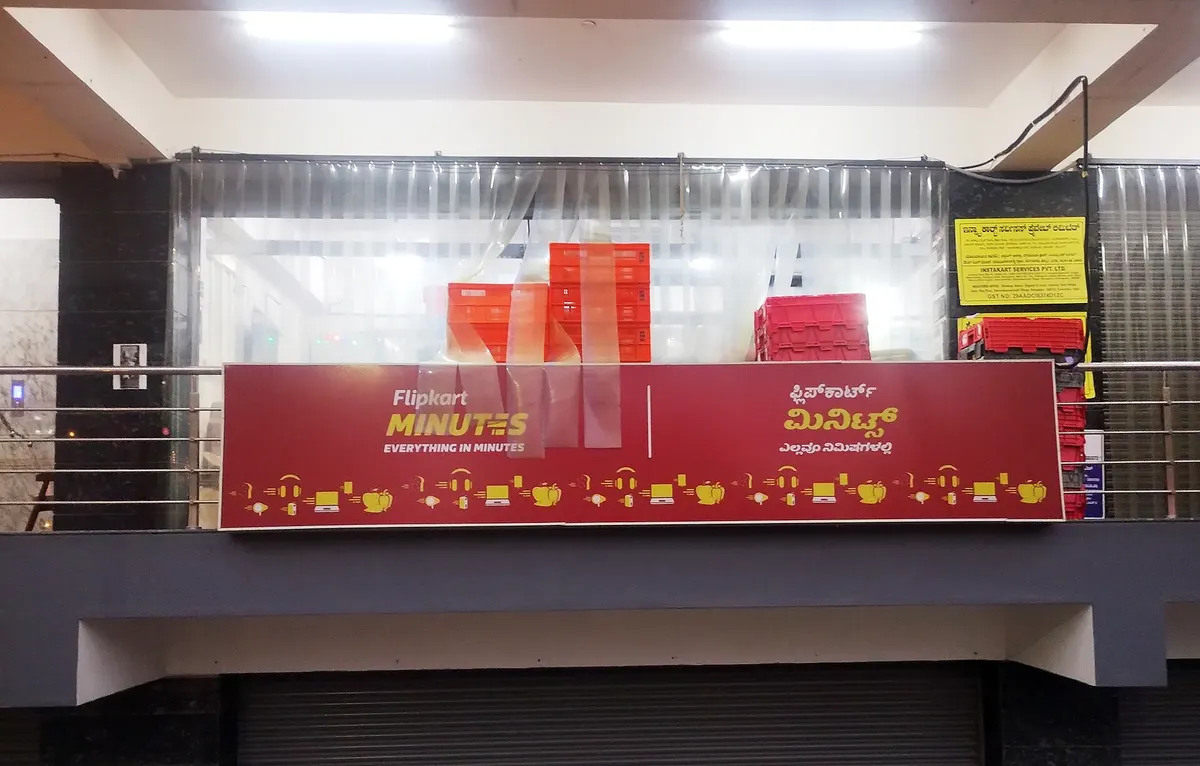
Flipkart Group CEO Kalyan Krishnamurthy is stepping down, the company said on November 25, and neither Flipkart nor its owner Walmart gave a reason. Three sources told Inc42 that Walmart asked him to go, as an internal probe into alleged kickbacks of over ₹150 crore from sellers widened and its IPO kept slipping. Chief product and technology officer Balaji Thiagarajan will lead with the board until a successor is named "in the coming weeks". Flipkart lost ₹8,468 crore in FY26 on ₹1,45,880 crore of revenue, and Walmart has reportedly asked for break even on EBITDA by March 2027. Here is what changes for shoppers, sellers, employees holding stock options and anyone waiting to buy its shares.
26 November 2026 · 6 min read
India Macro
India's biggest stock exchange is finally going public and it has to list on its rival
On September 4, the Securities and Exchange Board of India cleared the National Stock Exchange to launch its IPO, ending a wait of nearly a decade. The issue is an offer for sale of 14.89 crore shares, about 6% of the company, worth roughly Rs 30,000 crore. That would make it the largest public issue in Indian history, ahead of Hyundai Motor India's Rs 27,870 crore in October 2024, and implies a valuation above Rs 5 lakh crore. Subscription is expected to open September 15. The shares will trade on the BSE, the rival NSE has spent thirty years leaving behind.
7 September 2026 · 4 min read