Business
Razorpay plans to list for a third less than its 2021 value, after paying $150 million to come home
By Ashish Kumar · 5 November 2026 · 7 min read
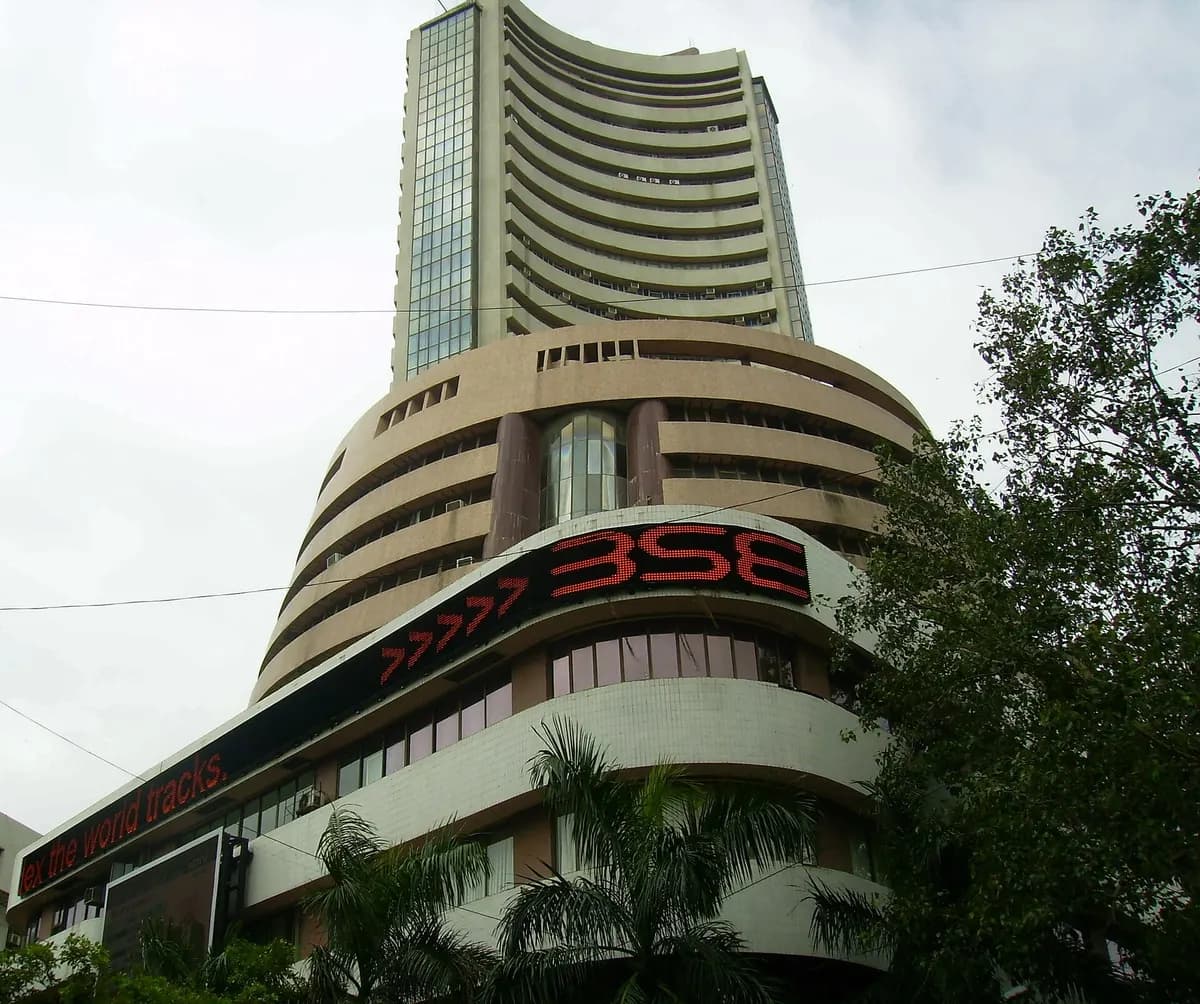
The Bombay Stock Exchange building on Dalal Street, Mumbai. Photo: Niyantha Shekhar, CC BY 2.0, via Wikimedia Commons, resized.
A friend saw "Razorpay IPO" trending and asked what the fuss was about, so here is the whole thing, the way we would tell it over chai.
"Wait, what is Razorpay? I have never downloaded it."
You probably never will, and you have still used it. When you pay on a website or an app and a neat little checkout window pops up offering UPI, cards and net banking, there is a good chance Razorpay built it. It is a payment gateway, the plumbing that moves money from your bank to the shop's bank and tells both sides it worked.
Two IIT Roorkee graduates, Harshil Mathur and Shashank Kumar, started it in 2014. It says it serves more than 8 million businesses and handles over $180 billion in payments a year, per Forbes India.
So what happened this week
"Okay. And the news?"
On 3 and 4 November, several outlets reported that SEBI, India's market regulator, has cleared Razorpay to sell shares to the public in an IPO (initial public offering, the first time a company lets anyone buy its shares on a stock exchange). Entrackr and Business Today both cite people familiar with the matter. One important caveat: as of 5 November, neither Razorpay nor SEBI had confirmed it publicly.
The reported numbers:
The bankers handling it are reported to be Axis Capital, Kotak Mahindra Capital, JP Morgan and Citi.
Why the price tag went down
"Five billion dollars sounds huge. Why are people calling it a discount?"
Because in December 2021 Razorpay raised $375 million at a valuation of $7.5 billion, as both Entrackr and Forbes India report. Going public at about $5 billion means the company is asking for roughly a third less than what its investors once agreed it was worth.
Think of it like a flat you bought at the top of a property boom. You can wait for the old price to come back, or you can sell at today's price and get on with life. 2021 was a boom year for startup funding. Since then, Indian public market investors have been stricter. Zepto shelved its IPO after mutual funds reportedly valued it far below its private price, and Pine Labs listed at about $2.9 billion against a private peak above $5 billion, per Forbes India. Razorpay seems to be pricing in that reality before anyone forces it to.
Business Today adds a detail that shows the same story: Razorpay originally planned to raise about $700 million at around $7 billion. The plan has shrunk on both counts.
The $150 million plane ticket home
"You said it paid to 'come home'. Come home from where?"
From America, on paper. Like many Indian startups that raised money from foreign investors, Razorpay's parent company was registered in Delaware, in the US, with the Indian business sitting underneath it as a subsidiary. To list on an Indian exchange, it had to flip that structure, so the Indian company became the parent. This is called a "reverse flip".
It merged the US parent into its Indian unit, Razorpay Software, and brought its six Indian entities under one roof, according to Inc42. Co-founder Shashank Kumar told Inc42 in May 2025: "Yes, we've officially completed our reverse flip, and we couldn't be more proud."
Moving a company's home is not free. The tax bill was reported at about $150 million, roughly ₹1,245 crore per Inc42 and about ₹1,280 crore per Entrackr, which reported it would be paid from Razorpay's own cash. The tax is usually worked out from the company's valuation, so a richer company pays more to move. PhonePe, Groww and Zepto made similar moves.
Is it actually making money
"Fine, but is the business any good?"
It is growing fast. For FY25 (April 2024 to March 2025), Razorpay reported operating revenue of ₹3,783 crore, up 65% from ₹2,296 crore a year earlier, and gross profit (what is left after paying banks and card networks their share) of ₹1,277 crore, per Inc42.
But it also reported a loss. Business Today and Forbes India put it at ₹1,209 crore, which the company tied to one-time costs: a large employee stock option (ESOP) expense and the taxes and restructuring costs of the move home. Strip those out and the core online payments business is EBITDA-profitable, the company says. (EBITDA is profit before interest, tax and accounting charges like depreciation.)
CFO Arpit Chug said last year: "By the end of FY26, our India business should be solidly profitable." Here is the catch: FY26 ended in March, and those numbers are not public yet. They will be in the prospectus.

UPI has made paying anyone in India as easy as scanning a sign like this one, and it is free for shops, which squeezes what payment companies can charge. Photo: Suyash.dwivedi, CC BY-SA 4.0, via Wikimedia Commons, resized.
That squeeze is the real question hanging over the IPO. UPI has carried no merchant fee since January 2020, Forbes India notes. A proposed 0.4% fee on merchant payments above ₹2,000 has been deferred, with no start date. So investors will want to see whether Razorpay can make its money from things like business banking, lending and cross-border payments, rather than from the checkout button alone.
Why have we not seen the documents
"When I look up most IPOs, I can read the prospectus. Why not this one?"
Because Razorpay used SEBI's confidential route, which has existed since November 2022. It filed its draft papers privately in June 2026. Here is how that route works, per Corporate Professionals, a corporate law firm:
The benefit for the company is that it can quietly walk away before going public without its numbers ever being exposed. The first document you will be able to read is the UDRHP-I (updated draft red herring prospectus). When it lands, our guide on how to read an IPO prospectus shows which pages to check first.
Indian Startup News adds that shareholders approved a fresh issue (new shares, so the money goes to the company) of up to ₹2,700 crore. The rest would be an offer for sale, where existing investors sell some of their shares. A pre-IPO placement could also shrink the final issue.
So should I care
"Last one. Does any of this matter to me?"
Three ways it might. If you apply for IPOs, this is one of the biggest fintech listings lined up for early 2027, and you will want to read the FY26 numbers before deciding anything. If you follow startups, it is a test of whether Indian investors will pay up for a payments company that is only now turning profitable, much as Jio Platforms' listing tested appetite for a giant. And if you just pay online, nothing changes at your end.
The honest summary is that the headline numbers are still sources talking. The size, the valuation and even the timing can move, and Business Today warns that choppy markets could delay the issue. The prospectus is where reports become facts.
This is a news summary based on media reports that the company has not confirmed, not investment advice.
Sources
Watch on Qrio
One-minute reels on this and related topics.
 ▶ 1:54
Business
Anthropic's IPO paperwork, explained
by PeterStewieStartup
 ▶ 2:51
Finance
How Berkshire Hathaway really makes money
by Dulma 🦋
 ▶ 1:46
Business
Anthropic's IPO filing: a profit and a $66 billion loss
by Finance Explained in 90 Seconds
 ▶ 2:34
Business
Why Rolex has no owner and no shareholders
by yieveberlins
More business stories

Business
Your milk costs up to ₹4 more from today. Here is who gets the extra money
Amul and Mother Dairy raised milk prices by ₹2 to ₹4 per litre from November 12, 2026. Amul Taaza toned milk is up ₹2 (3.3%) and Amul Gold is up ₹4 (5.5%) across India. In Delhi-NCR, Mother Dairy full cream milk goes from ₹72 to ₹76 a litre and toned milk from ₹60 to ₹62. Both dairies blame costlier fodder, cattle feed, packaging and fuel after an uneven monsoon, and both say most of what you pay goes back to farmers: about 80% for Amul, 75% to 80% for Mother Dairy. It is the second hike since May, and it comes two weeks after Karnataka raised Nandini milk by ₹8.
12 November 2026 · 6 min read

Business
Affle is paying $420 million for Perion. More than half of it is already in Perion's bank
Indian adtech company Affle has agreed to buy Perion, an Israeli advertising technology firm listed on Nasdaq, for about $420 million in cash, or $11.70 a share. The surprise sits inside Perion's own accounts: at the end of September it held $228.3 million in cash, deposits and marketable securities and no financial debt. That is about 54% of the price. Three years ago Perion was worth more than $1 billion, until Microsoft's Bing cut off the search deals that brought in roughly half its revenue. Affle's shares rose about 9% on the news. The deal still needs Perion shareholders, US antitrust clearance and a 40-day window in which a rival bidder can step in.
3 November 2026 · 6 min read