India Macro
Onions doubled in a year and your EMI just went up. Four myths about India's inflation jump
By Ashish Kumar · 7 November 2026 · 6 min read
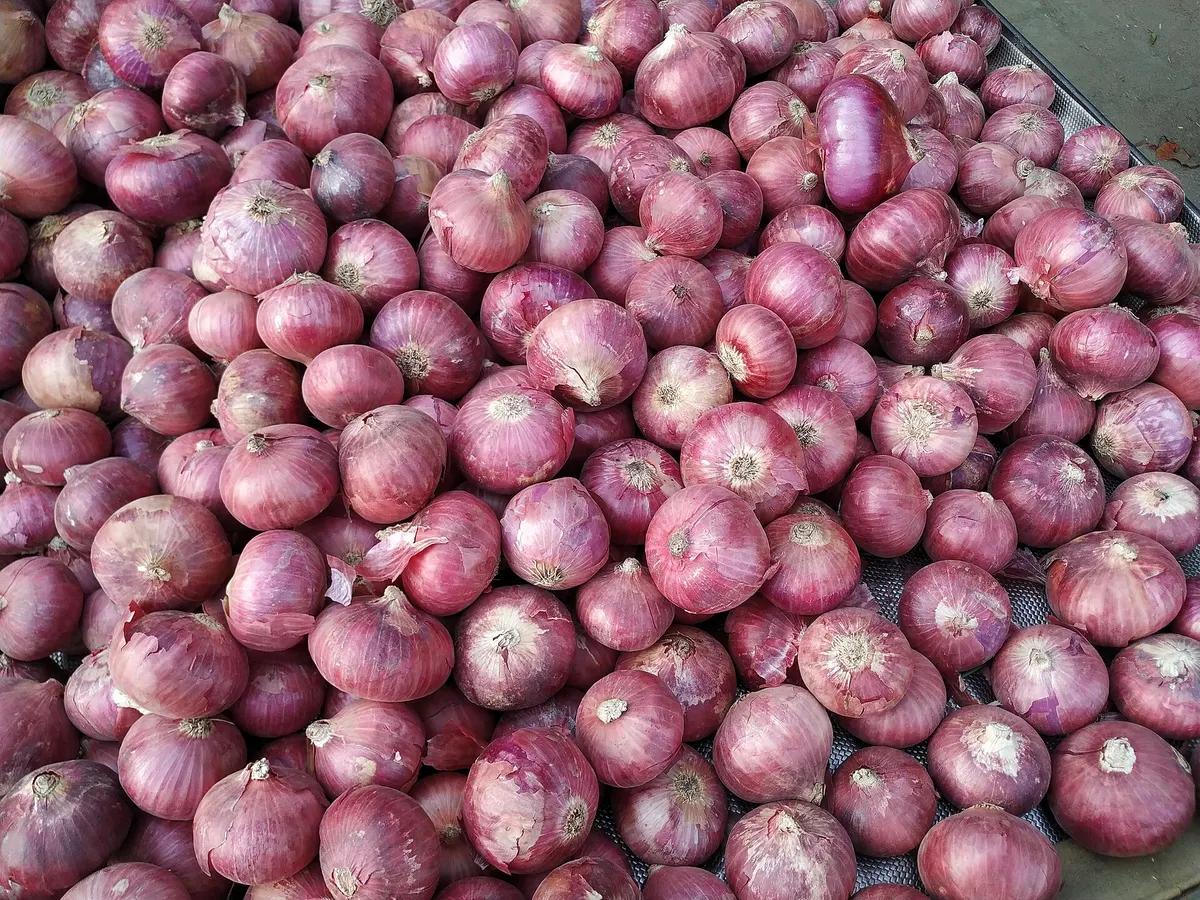
Onions piled on a vendor's trolley in India. Photo: Ravi Dwivedi, CC BY-SA 4.0, via Wikimedia Commons, resized.
In January, India's inflation was below 3%. By September it was 5.54%, and the numbers behind that jump say more about your kitchen and your loan than the headline does.
In June we wrote about why everything felt expensive when official inflation was near 3%. Five months later, the official number has caught up with the feeling. Retail inflation, which measures how much more a typical basket of household goods costs than a year ago, rose to 5.54% in September, according to the Ministry of Statistics (MoSPI). Food inflation was 7.74%.
Then, on October 7, the Reserve Bank of India raised its repo rate for the first time since 2023. The repo rate is the interest rate at which the RBI lends to banks, and most loan rates in the country take their cue from it.
A lot of half-truths travel with news like this. Here are four of them, checked against the official data.
Myth 1: "Inflation at 5.54% means everything costs about 5.54% more"
It does not. The 5.54% is an average across hundreds of items, weighted by how much a typical household spends on each. Inside that average, prices are moving in wildly different directions.
MoSPI's own release lists the items that rose fastest and slowest in September. Onion prices were up 108.09% from a year earlier, which means they had more than doubled. Garlic was up 54.62% and ginger 62.85%. Silver jewellery rose 87.80%. Meanwhile potatoes were 11.50% cheaper than a year ago and tomatoes 8.62% cheaper.
Think of it like a class average in an exam. A class average of 55 can hide one student scoring 100 and another scoring 10. Your personal inflation depends on what you buy. A family that eats out often faced 9.36% inflation on restaurant meals, while health costs rose just 1.40%, per the same release.
Myth 2: "The RBI raised rates, so onion prices will come down"
A rate hike does not grow more onions. The RBI's own policy resolution says the rise in inflation came mainly from food and fuel, and it lists the risks as a deficient south-west monsoon, strong El Niño conditions and sharp swings in crude oil prices linked to the West Asia conflict. None of those are things an interest rate can fix directly.
The crude part is large. According to a footnote in the Governor's statement, the Indian basket of crude oil averaged $116.1 a barrel in September, up from $90.2 in August. We covered who absorbs that cost at the petrol pump late last month.
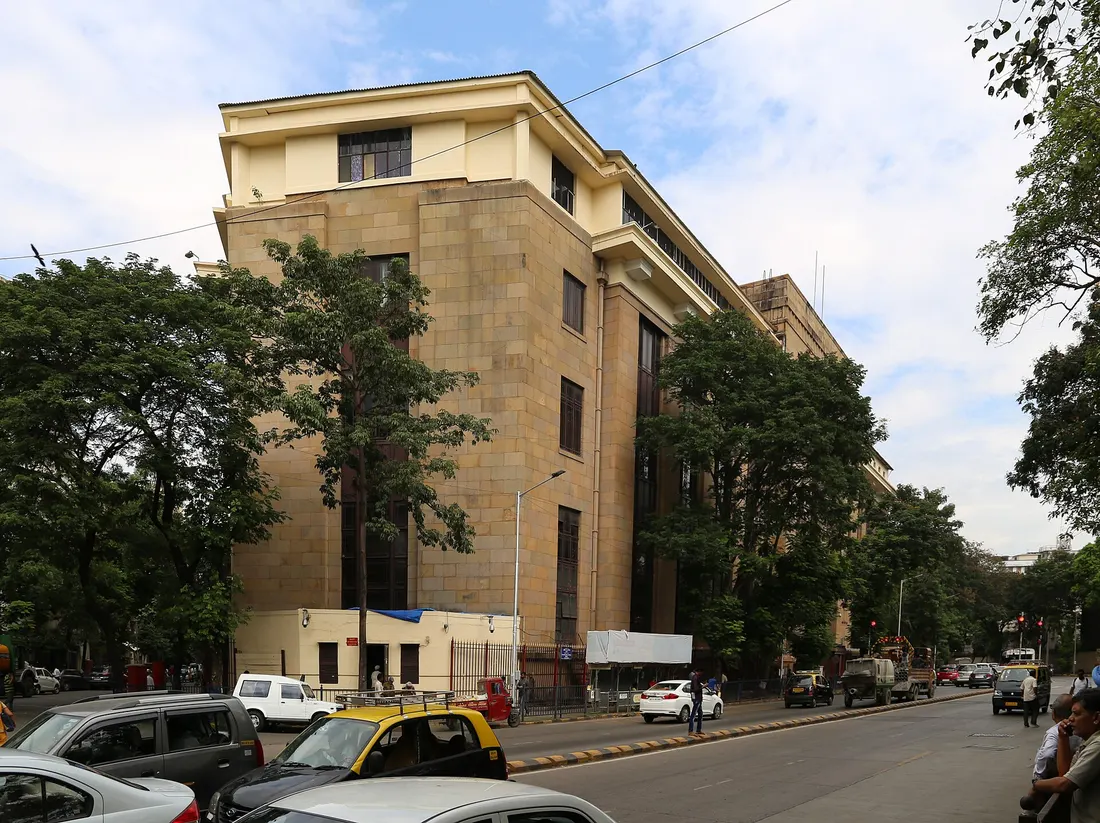
The Reserve Bank of India building in Mumbai. The RBI's rate-setting committee voted unanimously for the October hike. Photo: Sailko, CC BY 3.0, via Wikimedia Commons, resized.
So why hike at all? A costlier loan makes people and businesses borrow and spend a little less, which over months cools demand across the economy. It also signals that the RBI will not let high prices settle in. Governor Sanjay Malhotra put it bluntly: inflation and its outlook "are not benign as they were last year," and "rate cuts are off the table in the near term." ICRA's chief economist Aditi Nayar told Business Today that "crude certainly is not in RBI or the government's control," and warned that hikes not warranted by domestic conditions would choke growth. That is the tension the RBI is managing: a tool that works on demand, aimed at a problem that is mostly about supply.
Myth 3: "My EMI went up the day the RBI announced the hike"
Only for some loans, and not on the same day. Loans priced off an external benchmark, usually the repo rate itself, move when the repo moves. Banks announce a new benchmark rate and pass it on from the next reset.
This time several banks moved within a day. Punjab National Bank and Indian Overseas Bank raised their external benchmark lending rates from 8.10% to 8.35%, Indian Bank from 7.95% to 8.20%, and Karur Vysya Bank from 8.55% to 8.80%, all effective October 8, as reported by the Free Press Journal.
What does 0.25 points mean in rupees? On a ₹30 lakh loan with 20 years left, moving from 8.10% to 8.35% raises the monthly EMI from about ₹25,280 to about ₹25,750, an increase of roughly ₹470 a month (our calculation, using the standard EMI formula). Whether your EMI or your remaining tenure changes depends on your loan terms, so the loan statement is the place to check.
Myth 4: "Higher rates mean my FD will pay more right away"
The data says not yet. Over July and August, before the hike, the average interest rate banks paid on fresh term deposits actually fell by 28 basis points (0.28 points), while the average rate on fresh loans rose by 8 basis points, according to the RBI Governor's statement. The RBI linked the drop in deposit rates to a flood of foreign currency deposits that left banks flush with cash.
Banks raise deposit rates when they need money. Loans reset almost automatically; deposits wait for competition. So the lag tends to favour the bank, at least at first.
The number everyone is waiting for
MoSPI publishes October's inflation figure on November 12. The month-by-month climb this year has been steady:
ICRA expects October to come in at 6.1%, with food and beverages inflation above 8%, according to a note reported by BusinessLine. ICRA says part of that jump is a statistical quirk, an unfavourable base from last year's GST rate rationalisation. MoSPI's own table shows the price index did not move at all between September and October 2025, so this October is being compared with a flat month. Barclays economists, quoted in the same report, think the pass-through from wholesale to retail prices "may be moderate." The RBI has a target of 4% and a tolerance band of 2% to 6%. BusinessLine notes that a reading above 6% would be the first breach of that band since October 2024.
The RBI's next policy meeting is on December 2 to 4. HSBC and Goldman Sachs expect another hike, according to CNBC, and Nayar expects another 0.25 points. None of that is settled until the committee votes.
If prices keep running ahead of rates, the RBI also has the rupee to watch. We looked at what it costs the RBI to defend the currency in August.
This is a news summary, not financial or investment advice.
Sources
Watch on Qrio
One-minute reels on this and related topics.
 ▶ 1:54
Business
Why people stay in New York even as it makes them broke
by yieveberlins
 ▶ 2:55
Geopolitics
The Strait of Hormuz: 33 km that decide your petrol price
by Qrio
 ▶ 1:18
Startups
From Pakistan's maths olympiad team to a SpaceX deal
by FOUNDED
 ▶ 2:34
Business
Why Rolex has no owner and no shareholders
by yieveberlins
More india macro stories
India Macro
Crude is at $113. Your petrol price has not moved. Someone is paying the difference
Brent crude is around $113 a barrel, close to its highest in four years and about 76% higher than a year ago. Yet petrol in Delhi still costs ₹102.12 a litre and diesel ₹95.20, unchanged for weeks. That gap does not disappear. In September, state-run oil companies were losing about ₹8 on every litre of petrol and ₹9 on every litre of diesel they sold, roughly ₹530 crore a day, and the government gave up ₹10 a litre in tax in March to soften the blow. Here is who is paying for your full tank, and how long that can last.
29 October 2026 · 5 min read
India Macro
India's biggest stock exchange is finally going public and it has to list on its rival
On September 4, the Securities and Exchange Board of India cleared the National Stock Exchange to launch its IPO, ending a wait of nearly a decade. The issue is an offer for sale of 14.89 crore shares, about 6% of the company, worth roughly Rs 30,000 crore. That would make it the largest public issue in Indian history, ahead of Hyundai Motor India's Rs 27,870 crore in October 2024, and implies a valuation above Rs 5 lakh crore. Subscription is expected to open September 15. The shares will trade on the BSE, the rival NSE has spent thirty years leaving behind.
7 September 2026 · 4 min read