India Macro
Crude is at $113. Your petrol price has not moved. Someone is paying the difference
By Ashish Kumar · 29 October 2026 · 5 min read
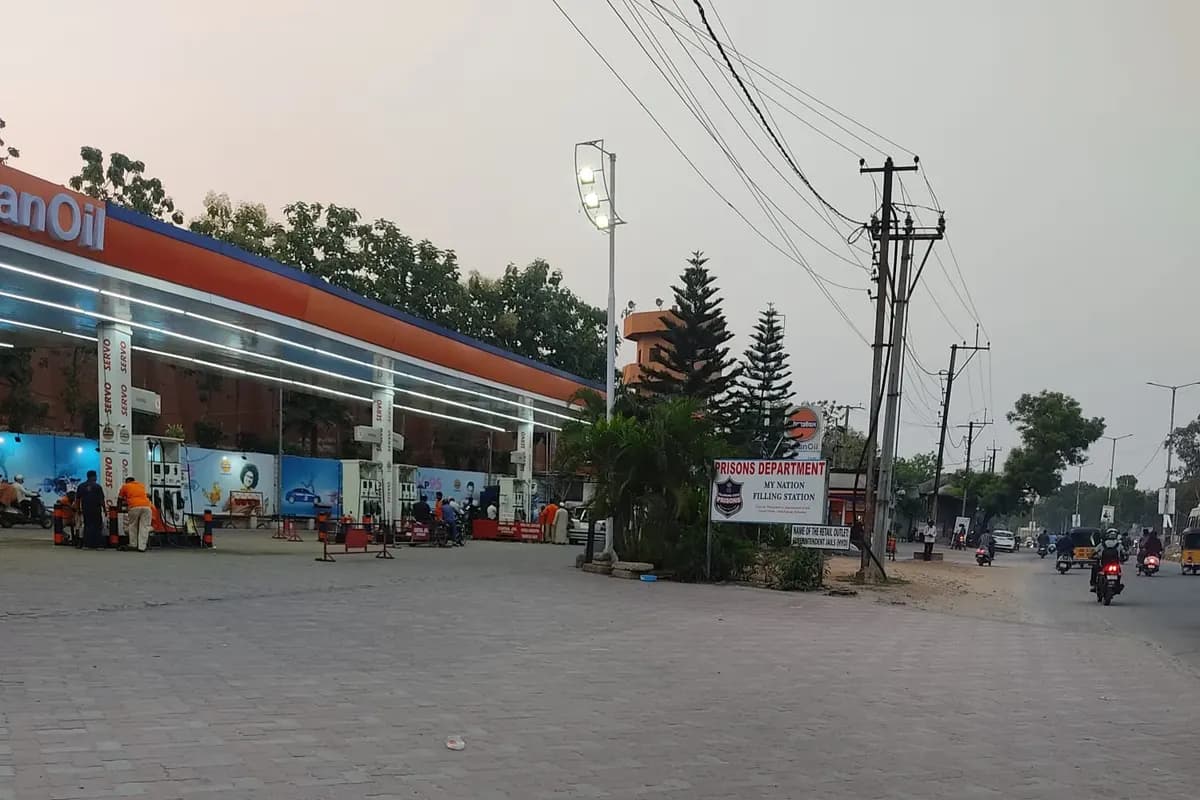
An Indian Oil petrol pump in Hyderabad. Photo: HyderabadEditor, CC BY-SA 4.0, via Wikimedia Commons, resized.
You pulled into the pump this week, asked for a full tank, and paid what you paid last month. Somewhere far from the pump, someone else paid the rest.
You have probably seen the headlines. Oil is at a four-year high. Tankers are avoiding the Gulf. Prices are "surging". And then you fill up your scooter or car, and the number on the meter looks exactly like it did weeks ago.
Both things are true at the same time. Here is how.
The price of oil, in one line
Brent crude, the global benchmark India's imports are priced against, was trading at about $113 a barrel on 29 October 2026, according to Trading Economics. It has climbed more than 15% in the past month and about 76% in a year, and it recently touched its highest level in four years.
The reason is the conflict in West Asia. Attacks around the Strait of Hormuz, the narrow channel between Iran and Oman that a large share of the world's oil passes through, and clashes involving Saudi Arabia and Iran-backed Houthi forces have kept markets nervous. On 29 October prices eased slightly after reports of talks between Washington and Tehran, but nobody knows yet whether those talks will go anywhere.
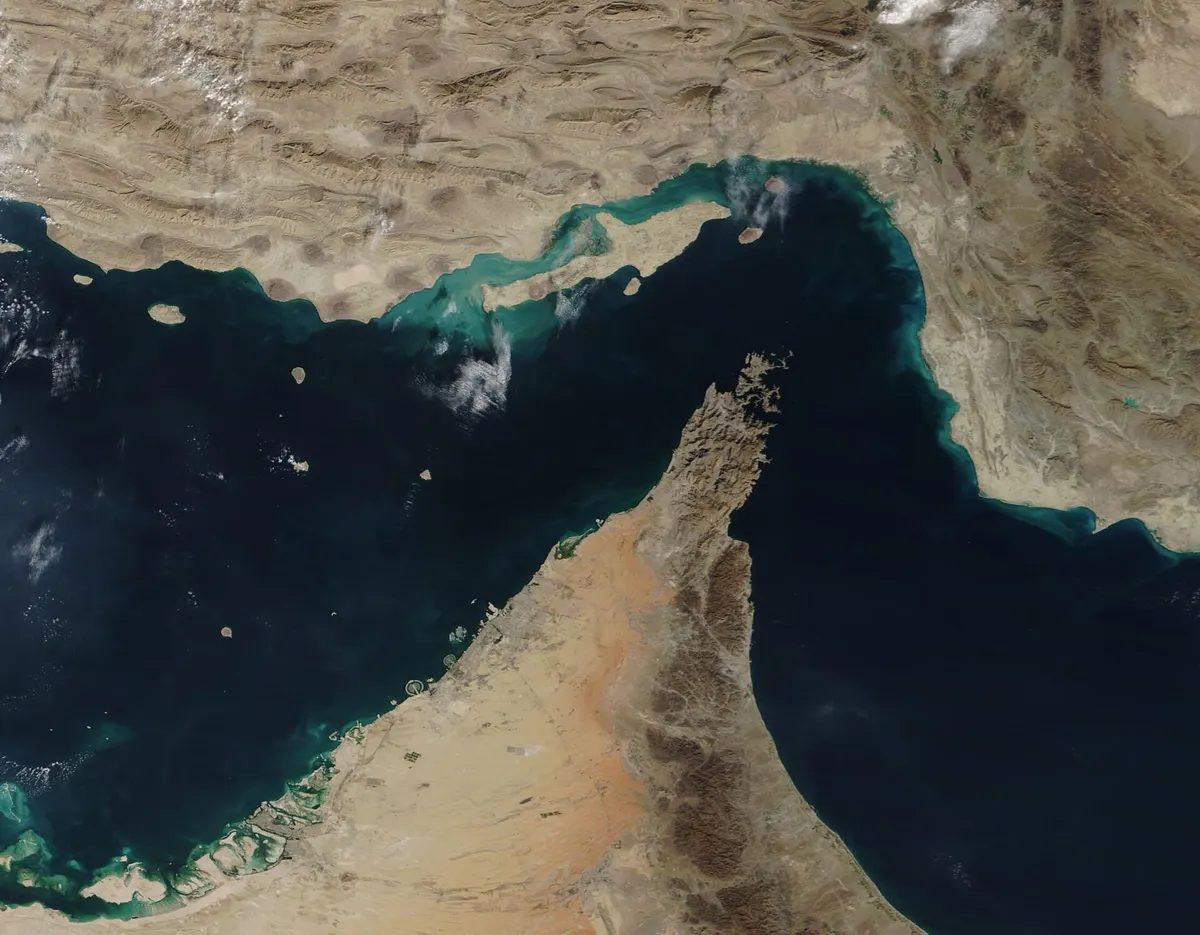
The Strait of Hormuz from space. The narrow gap between Iran (top) and Oman's Musandam peninsula (centre) is one of the most important shipping lanes in the world for oil. Image: NASA MODIS Land Rapid Response Team, public domain.
India imports a large share of the crude it uses. So when oil gets expensive, India's fuel bill should get expensive too.
The price at your pump, in one line
It has not. On 17 October, petrol cost ₹102.12 a litre in Delhi and diesel ₹95.20, unchanged across major cities, per Business Today. Other cities pay more because of state taxes: petrol was ₹111.21 in Mumbai and ₹116.15 in Hyderabad.
India's three big state-run fuel retailers, Indian Oil, Bharat Petroleum and Hindustan Petroleum, have simply kept prices where they were.
So who is paying? Three people, in order
First: the oil companies. When the cost of making a litre of fuel is higher than the price it sells for, the company loses money on every litre. Rating agency ICRA estimated that in September the state-run companies were making a margin of minus ₹8 a litre on petrol and minus ₹9 a litre on diesel, as reported by Business Today. Added up, that is about ₹530 crore of losses every single day.
Second: the government. This has been going on since spring. On 27 March 2026, after crude shot up from about $70 to about $122 in roughly a month, the government cut excise duty by ₹10 a litre on both petrol and diesel, according to an IANS report carried by Newsgram. Normally a tax cut lowers the pump price. This one did not. The Petroleum Ministry said the cut would offset part of the oil companies' losses, and pump prices would stay the same. At that point the companies were losing about ₹26 a litre on petrol and ₹81.90 on diesel.
Petroleum Minister Hardeep Singh Puri acknowledged that the government had taken "a substantial impact on its taxation revenues". Tax the government does not collect is money it does not have for something else.
Third: eventually, everyone else. Losses at state-run companies do not vanish. They show up as lower profits for companies the government owns, lower dividends paid to the government, or support from the budget later. One way or another, the cost of a frozen petrol price is spread across the whole economy instead of landing on the person at the pump.
Where the shock is not hidden
Not every fuel is frozen. Jet fuel is a good example of what happens when the shock passes straight through. IndiGo, India's biggest airline, just reported that its fuel bill for July to September jumped 67% to nearly ₹9,967 crore, according to Newsdrum, helping push it to a loss of ₹1,879 crore. That is why your flights got costlier while your petrol did not. We broke that down in how IndiGo earned 26% more and still lost money.
How long can this last?
That depends almost entirely on what happens around Hormuz. If talks calm things down and crude falls back, the losses shrink and the freeze looks like a smart way to protect people through a temporary storm. If crude stays above $110 for months, ₹530 crore a day adds up to roughly ₹16,000 crore a month, and something eventually has to give: a price hike, more tax cuts, or more pressure on the budget.
The bigger idea is worth keeping. A stable price is not the same as a cheap price. When a price does not move during a shock like this, it usually means someone has decided who pays, and it is just not you at the pump. Yet.
If you want the full story of the waterway behind all this, read why ships still would not sail through Hormuz even after it reopened. And for the time India cut pump prices instead, see when petrol fell by ₹5 a litre.
Sources
More india macro stories
India Macro
India's biggest stock exchange is finally going public and it has to list on its rival
On September 4, the Securities and Exchange Board of India cleared the National Stock Exchange to launch its IPO, ending a wait of nearly a decade. The issue is an offer for sale of 14.89 crore shares, about 6% of the company, worth roughly Rs 30,000 crore. That would make it the largest public issue in Indian history, ahead of Hyundai Motor India's Rs 27,870 crore in October 2024, and implies a valuation above Rs 5 lakh crore. Subscription is expected to open September 15. The shares will trade on the BSE, the rival NSE has spent thirty years leaving behind.
7 September 2026 · 4 min read

India Macro
India grew at 7.8% and its stock market shrugged
India's economy expanded 7.8% year on year in the June quarter, comfortably beating both the Reserve Bank of India's 7% projection and a market consensus of about 7.1%. That is a strong number for an economy absorbing a six-month oil shock. The stock market's response has been a shrug. On Thursday the Sensex fell 417.49 points to 76,152.86 and the Nifty 50 slipped to 23,873.45, after opening higher and briefly crossing 24,000. Foreign investors have pulled $24.6 billion out of Indian equities this year. The index and the economy are not the same animal.
4 September 2026 · 3 min read