Kerala's flood warning arrived after the flood already hit
4 min read · by Qrio · 4 Aug 2026
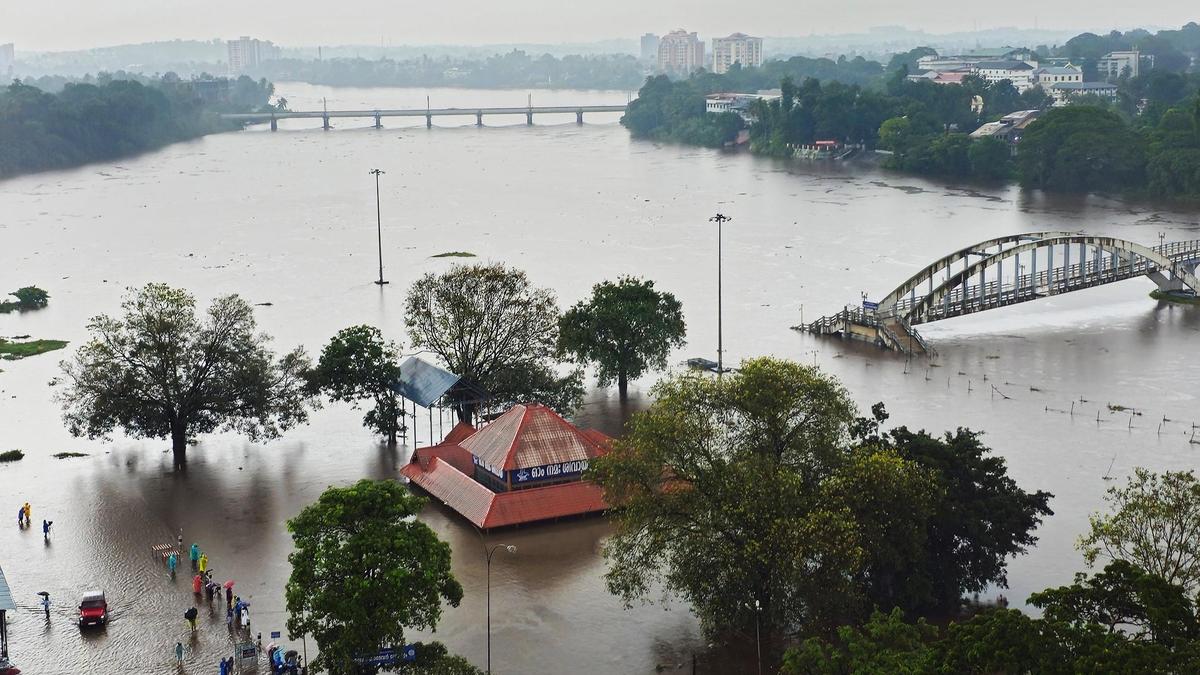
A flood warning is only useful if it arrives before the flood. In Kerala this weekend, the paperwork and the disaster crossed paths in the wrong order.
On the night of July 31, 2026, rain began falling over Kerala's hilly Western Ghats at a rate that would, within hours, overwhelm rivers, roads and hillsides across 13 of the state's 14 districts. By the time the worst of it passed on August 1, the state had recorded 184.2mm of rain in three days, against a seasonal normal of just 55.4mm, a 232% departure. Six districts exceeded 300% above normal. Pathanamthitta, the hardest hit, recorded a 533% excess, and Thiruvananthapuram wasn't far behind at 457%.
The Pampa river in Pathanamthitta breached its banks within an hour, submerging shops and homes in Ranni. Landslides tore through hillside settlements, killing at least two people in Kottayam's Poonjar area alone. By Sunday, the death toll across Kerala had climbed to 11, and a related landslide in neighboring Karnataka killed three more, bringing the combined toll to 14. Nearly 7,700 people were moved into around 275 relief camps across the state.
The number that matters more than the rainfall total
Most coverage of this disaster, understandably, led with the rain. The more revealing number is a set of timestamps. India Meteorological Department Director Neetha K Gopal later explained that "rain poured down for as long as eight hours continuously in many places, leading to flash floods." But the alert level assigned to that rain lagged behind it. An Orange alert, the second highest tier, was issued for multiple districts before 10:30pm on July 31. The IMD only acknowledged the likelihood of Red alert intensity rainfall at 11:15pm that night, and a formal Red alert for Pathanamthitta, Idukki and other worst hit districts wasn't issued until 7am on August 1, by which point the Pampa had already broken its banks and the disaster had already begun.
Why this isn't simply a story about heavy rain
Kerala's Western Ghats have produced catastrophic floods and landslides before, most infamously in 2018, and the region's hillside communities are known to be vulnerable to exactly this kind of concentrated, short duration downpour combined with already saturated soil. What makes this weekend different is that the warning system meant to give people time to move did not keep pace with the storm. Several independent weather monitoring agencies had reportedly flagged the possibility of extremely heavy, localized rainfall over the eastern high ranges of central Kerala as early as Friday night, ahead of the IMD's own escalation. Kerala's State Disaster Management Authority did not initiate large scale precautionary evacuations on that earlier signal.
A simple way to picture it
Think of a smoke alarm that only goes off once a room is already on fire. A working alarm doesn't just confirm danger, it buys the time needed to act on it. An Orange alert issued the night before, followed by a Red alert issued after a river has already broken its banks, technically tells you the truth, but at the point it stops being useful information and starts being a description of what already happened.
"Rain poured down for as long as eight hours continuously in many places, leading to flash floods." - Neetha K Gopal, IMD Director, on the weekend's rainfall
The honest catch
Forecasting exact rainfall intensity down to the hour, in a specific valley, remains genuinely hard, and the IMD's own account describes the rainfall's magnitude as unpredictable even to its own meteorologists, not merely slow to communicate. A single Red alert issued a few hours earlier might not have been enough to fully evacuate hillside communities that have lived alongside this monsoon risk for generations, and coordinating a state-wide precautionary evacuation on an independent forecaster's flag, rather than an official one, carries its own real cost and disruption if the rain does not materialize as feared. Kerala's government has, to its credit, moved quickly on relief once the scale of the disaster became clear, activating hundreds of camps within a day.
Frequently Asked Questions
What is "Kerala's flood warning arrived after the flood already hit" about?
Heavy rain battered Kerala from July 31 into August 1, 2026, dumping 184.2mm of rain in three days against a normal of 55.4mm, a 232% departure, with Pathanamthitta alone seeing a 533% excess. At least 11 died in Kerala and three more in a neighboring Karnataka landslide, a combined 14 deaths, with nearly 7,700 people evacuated to 275 relief camps. India's weather office had issued only an Orange alert the night before. The Red alert for the worst hit districts was issued at 7am, hours after the Pampa river had already breached its banks.
Why does this india macro topic matter?
This topic covers a significant development in india macro that affects economies, industries, and everyday people. Qrio breaks it down in plain English so you can understand the implications without needing specialized knowledge.
How long does it take to read this explainer?
The brief takes about 30 seconds. The full deep dive takes just a few minutes. You can choose how deep you want to go.
More from Qrio

Oura wants $16 billion for a ring, and one number explains why

India's biggest stock exchange is finally going public and it has to list on its rival