Australia guards the world's largest uranium reserves. It just opened the vault to India.
4 min read · by Qrio · 21 Jul 2026
Most state visits produce one big headline and a photo op. Modi's Melbourne trip was built differently: 18 smaller locks, all closing in the same direction.
What actually happened
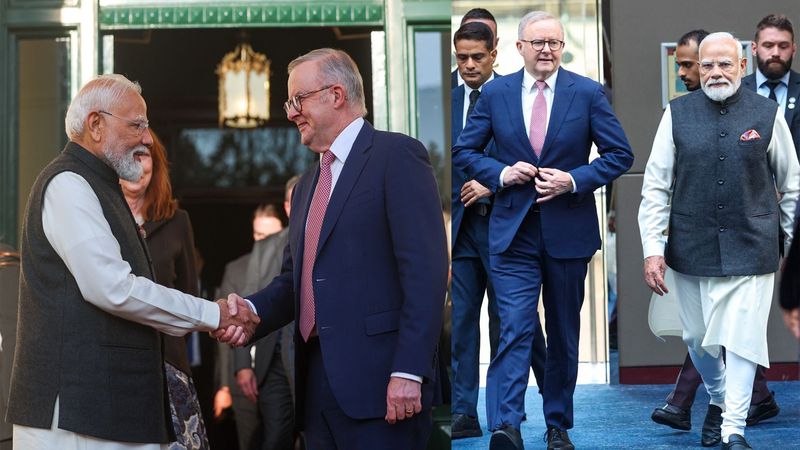
Prime Minister Modi spent July 8 to 10 in Melbourne for the third India-Australia Annual Summit with PM Anthony Albanese. The spectacle was hard to miss: 35,000 people filled Docklands Stadium for the diaspora event, Australian newspapers ran "Mr India" front pages, and Modi signed jerseys at the MCG. But the substance was in the paperwork: 18 agreements and outcomes covering defence, uranium, critical minerals, technology, trade, education and sport.
The uranium door just opened
This is the one that matters most. Australia holds the world's largest known uranium reserves, and for decades it refused to sell to India for one reason: India never signed the Nuclear Non-Proliferation Treaty. A cooperation agreement was signed back in 2014, but exports stayed a trickle because the final rules were never in place.
On July 9, both governments signed the final Administrative Arrangement that enables long-term Australian uranium exports to India, exclusively for civilian use, under IAEA safeguards.
For India, this is fuel security for its nuclear power expansion, one of the pillars of its clean energy plan. It is also something bigger: a public signal of trust. Australia used the same summit to back India's membership of the Nuclear Suppliers Group and a permanent seat on the UN Security Council.
Everything else points the same direction
Look at the rest of the list and a pattern appears. A new Critical Minerals Corridor, aimed at the lithium and rare earths that go into EVs and electronics, a supply chain China currently processes roughly 90% of. A new cyber and critical-technology partnership (PACTS). A trilateral technology pact with Canada (ACITI). A Joint Declaration on Defence and Security both sides call a "step change," with an annual defence ministers' dialogue, a maritime security roadmap, and an MoU linking Australia's Maritime Border Command with the Indian Coast Guard.
No document mentions China. Every document is shaped by it: two democracies rebuilding their supply lines, fuel sources and naval coordination so that less of it runs through Beijing.
What's in it for ordinary Indians
More than you'd think. Both PMs agreed to fast-track CECA, the full trade deal that would build on the 2022 ECTA agreement, good news for textile, pharma and gems exporters, and for cheaper Australian goods here. Flinders University got the letter of intent for a Bengaluru campus and Victoria University the approval for Gurugram, Australian degrees without the airfare. A national mining-skills centre is coming up in Bhubaneswar. Australia is building a temporary tracking terminal on the Cocos Islands to support Gaganyaan, India's human spaceflight mission. And a sports roadmap now connects the 2030 Commonwealth Games in Ahmedabad with the 2032 Brisbane Olympics.
What is not done
Honesty requires this section. CECA was promised, not signed, and it has been "in negotiation" since 2022. The Bilateral Investment Treaty is still being "worked towards." Uranium volumes and mineral offtake deals take years to materialise. Eighteen signatures are statements of intent, not delivery.
What to watch
Two markers over the next 12 months: whether CECA actually closes, and whether the first long-term uranium contract and minerals offtake deals get signed. If both happen, July 2026 will be remembered as the month India started rerouting its supply lines around China. If neither does, Melbourne was a very good party.
“Today, as we are in Melbourne, the sporting capital of the world, not talking about sports would be like winning the toss in a cricket match but never starting the game. Cricket is the diplomatic language of India-Australia relations,” the Prime Minister said. Drawing parallels between diplomacy and cricket, PM Modi said, “In many ways, our meetings are like a game of cricket: our agenda is as focused as a One Day International, our decisions are as swift as a T20 match, and our partnership is as enduring and deep as a Test match.”
Frequently Asked Questions
What is "Australia guards the world's largest uranium reserves. It just opened the vault to India." about?
Modi's three days in Melbourne (July 8 to 10) produced 18 agreements, but one stands above the rest: Australia signed the final paperwork enabling long-term uranium exports to India, something it resisted for decades because India never signed the nuclear Non-Proliferation Treaty. Add a Critical Minerals Corridor, a defence pact both sides call a "step change," a tech triangle with Canada, and a promise to fast-track the long-pending CECA trade deal. The word "China" appears nowhere in the documents. Every single one is shaped like it.
Why does this geopolitics topic matter?
This topic covers a significant development in geopolitics that affects economies, industries, and everyday people. Qrio breaks it down in plain English so you can understand the implications without needing specialized knowledge.
How long does it take to read this explainer?
The brief takes about 30 seconds. The full deep dive takes just a few minutes. You can choose how deep you want to go.
More from Qrio
Oura wants $16 billion for a ring, and one number explains why

India's biggest stock exchange is finally going public and it has to list on its rival