Behind Qrio
How we pick what goes into a Qrio video
By Ashish Kumar · Published 27 October 2026 · 7 min read
The short answer: people pick what goes into Qrio, not an algorithm hunting for clicks. We choose creators first, then the videos, and every video has to pass one test: after watching it, can you say what happened and why it matters?
This post explains how that works in practice. It covers the topics we cover, the ones we leave out, how we handle contested stories, and what the app does after a human has made the choice.
Disclosure: we make Qrio, a free Android app of short videos on business, startups and the world. This post describes our own process.
Why does it matter who picks the news?
Because the picker shapes what you see, often more than the stories themselves.
Most big news apps use software for this. Google, for example, says plainly on its help page that "computer algorithms determine which stories show up on Google News and in what order", with some sections personalised from your settings and past activity. That is a reasonable design for a product that covers everything.
There is research on what happens when the two approaches sit side by side. Jack Bandy and Nicholas Diakopoulos of Northwestern University audited Apple News over two months, comparing its editor-picked Top Stories with its algorithm-driven Trending Stories. They found the human-curated section did better on several measures of source diversity. The algorithmic section leaned toward celebrity and entertainment news, while the editorial picks leaned toward policy and world affairs. The study was published at ICWSM 2020. It is one study of one app in one country, so we read it as a pointer, not a law.
Still, it matches what we saw in our own feeds. When the goal is time spent, the loudest story usually wins.
What topics make it into Qrio?
Three, and only three:
- Geopolitics. Conflicts, trade deals, elections, alliances, and the places where they meet, such as shipping lanes and energy.
- Business strategy. How companies make money, why a deal happened, why a brand rose or fell.
- Startups. Funding, founders, business models, and what the numbers say about a company.
We chose narrow topics on purpose. If you open the app, you should know what you will get. We wrote more about why in why we are building Qrio.
What do we leave out?
This list matters as much as the first one.
- Celebrity, sport and entertainment news. These can be great, but they are everywhere already.
- Petty news. A spat between two people on social media, or a story that will not matter by next week.
- Pure reaction. A video that only says "this is shocking" without saying why.
- Unsourced claims. If a video rests on a big factual claim we cannot trace to a credible source, we leave it out.
Leaving things out is the hard part. Some of these stories would get more views. We think a narrow feed you trust is worth more than a broad one you skim.
How do we choose creators?
Most videos on Qrio come from independent creators we have chosen to feature. We call the first group Founding Creators. Every video appears with the creator's name and profile, so you always know whose work you are watching. We only feature a creator's videos with their permission.
When we look at a creator, we ask a few questions:
| What we look for | Why it matters |
|---|---|
| They explain how or why, not just what | A headline you could get anywhere. An explanation is the value. |
| Claims can be traced to a source | Fast formats make mistakes easy, so we check. |
| A clear, calm tone | Shouting raises your heart rate, not your understanding. |
| Strong visuals, such as maps, charts or footage | Pictures carry a story faster than a talking head. |
| Videos that end when the point is made | A short, finished video beats a long one you abandon. |
That last row comes partly from our own early viewing data, which is still small. Short, visual "how" and "why" videos are watched to the end far more often than long opinion pieces to camera. So we lean toward the first kind. We do not treat that as a rule for every topic, and we will keep checking it.
How do we decide if a single video is good enough?
We use the same test for every video: after watching it, could you explain the story to a friend in two sentences?
If the answer is yes, it goes in. If the video is mainly a hot take, a teaser for something else, or relies on a claim we cannot check, it does not.
We also ask whether the story will still matter in a month. A trade deal, a war, a big funding round or a company's collapse usually will. A rumour about a deal usually will not, so we would rather wait for confirmation.
How do we handle political and contested stories?
Carefully, and the same way every time. Geopolitics is the topic where trust is most fragile, so we also make some videos ourselves, under the Qrio name, on stories that shape the wider world. For those we follow a fixed process:
- Read both sides first. Before writing a word, we gather sources from each side of the story, including official statements and the strongest criticism.
- Attribute every claim. If a government says a deal will create jobs, the video says the government says so. It does not repeat the claim as fact.
- Include the critics. Each story names the main objection, from more than one side where there is one.
- Write the script before anything else. The script is checked and approved before a single frame is made, so the facts lead and the visuals follow.
- Use images we are allowed to use. Photos come from free-licence or public-domain sources such as Wikimedia Commons, which only accepts free licences or public-domain works. Credits go in the video's caption.
- Keep a source list. We keep a list of sources for each of these videos and share it alongside the video where the platform allows.
One more thing worth saying plainly: the narration in our own videos uses an AI voice. The script, the research and the choices are ours.
This matters because the wider trust picture is not good. The Reuters Institute's Digital News Report 2025 found overall trust in news at 40%. Across its online sample, 58% said they worry about telling what is true from what is false online. Online influencers and personalities were named as a major source of false or misleading information by 47%, tied with national politicians, according to the report's key findings. The same report says audiences want more balance, better fact-checking and fuller disclosure of sources. Those are the habits we try to build in.
If you want a wider approach to following world events, our guide on how to follow geopolitics suggests sources beyond Qrio.
What happens after a video is picked?
Once a person has chosen the videos, the app decides the order you see them in. The rules are simple:
- New before seen. Videos you have not watched come first.
- Your topics. Videos in the topics you chose when you signed up come before the others.
- What others finished. Among those, the more-watched videos come earlier.
- Creators take turns. We mix creators so one voice does not fill your screen.
- The feed ends. When you have seen the day's videos, the app tells you so and offers to remind you tomorrow.
We do not give our own Qrio videos a special spot. They compete on the same terms as everyone else's.
That last rule, the ending, is the one we care about most. A feed with no bottom is built to keep you in it. Ours is built to let you go. We wrote about why that helps in follow the news without the anxiety and in what a healthy news diet looks like.
What if we get something wrong?
We will, sometimes. Fast formats make mistakes easy, and we are a small team.
Every video in the app has a report option. If you think a video is wrong, misleading or unfair, tell us there. If it is wrong in a way that matters, our aim is to take it down or ask the creator to correct it. We would rather lose a good-looking video than keep a wrong one.
The honest limits of this approach
Human picking has costs. We are slower than an algorithm. We miss stories. Our own views can creep into what we choose, which is why we write the rules down and try to apply them the same way each time. And a two-minute video can never carry a whole story, so we see Qrio as a first pass that gets you curious, not the last word.
If you make careful short videos on business, startups or the world, we would like to see them.
Sources
- Google News Help, How Google News stories are selected
- Bandy and Diakopoulos, Auditing News Curation Systems: A Case Study Examining Algorithmic and Editorial Logic in Apple News (arXiv preprint)
- Proceedings of ICWSM 2020, Auditing News Curation Systems
- Reuters Institute, Digital News Report 2025: Executive summary
- Reuters Institute, Digital News Report 2025: Overview and key findings
- Wikimedia Commons, Licensing
Frequently asked questions
Who decides what appears on Qrio?
People do. We choose which creators to feature and which of their videos go into the app. An ordering system then decides the sequence you see them in, based on what you have not watched yet, the topics you picked and what other viewers finished.
What topics does Qrio cover?
Three: geopolitics, business strategy and startups. We leave out celebrity news, sport, outrage clips and general entertainment, even when they are popular. Narrow topics mean you know what you will get when you open the app.
How does Qrio handle political or contested stories?
For videos we make ourselves, we read sources from each side before writing, attribute every claim to whoever made it, include the main criticism from more than one side, and list our sources with the video. We aim to explain the disagreement, not to win it.
What should I do if I spot a mistake in a Qrio video?
Use the report option on the video in the app and tell us what is wrong. Reports come straight to us. If a video is wrong in a way that matters, our aim is to take it down or ask the creator to fix it.
More from the blog

Stories worth reading next
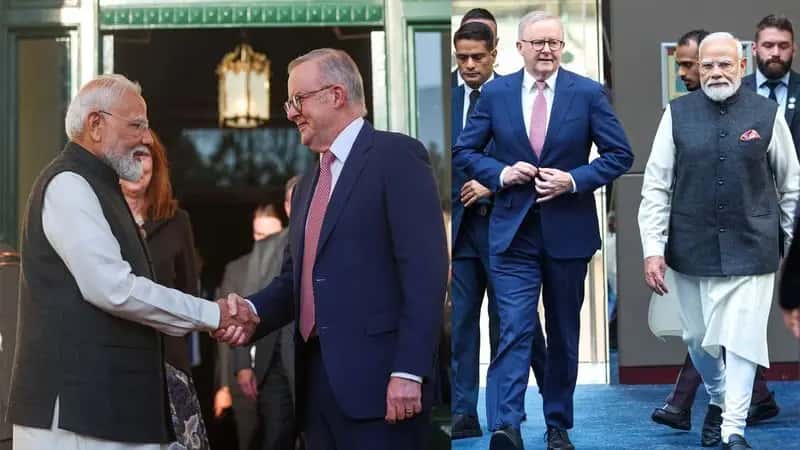
Geopolitics
Australia guards the world's largest uranium reserves. It just opened the vault to India
Modi's three days in Melbourne (July 8 to 10) produced 18 agreements, but one stands above the rest: Australia signed the final paperwork enabling long-term uranium exports to India, something it resisted for decades because India never signed the nuclear Non-Proliferation Treaty. Add a Critical Minerals Corridor, a defence pact both sides call a "step change," a tech triangle with Canada, and a promise to fast-track the long-pending CECA trade deal. The word "China" appears nowhere in the documents. Every single one is shaped like it.
21 July 2026 · 3 min read
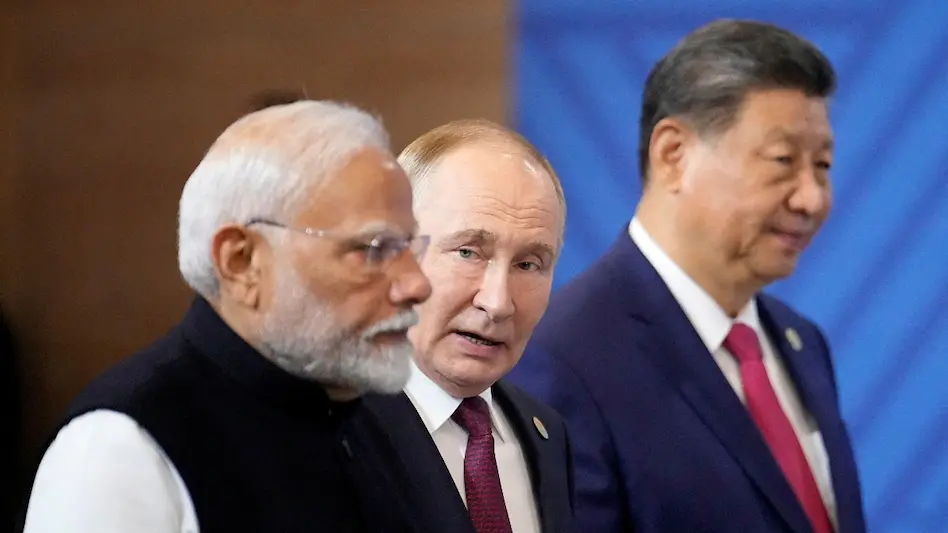
India Macro
Modi, Xi, and Putin shared a stage today. What they didn't share matters more
Prime Minister Narendra Modi, Chinese President Xi Jinping, and Russian President Vladimir Putin are together in Bishkek, Kyrgyzstan for the 26th Shanghai Cooperation Organisation Summit on August 31 and September 1, 2026, marking 25 years since the SCO's founding. Iranian President Masoud Pezeshkian, Pakistani PM Shehbaz Sharif, and Turkish President Recep Tayyip Erdogan are also attending. Modi said he wants to "advance India's vision for the region, focusing on security, connectivity and opportunity," calling for a region "free from terrorism, separatism and extremism." A one-on-one Modi-Putin meeting is confirmed. A Modi-Xi bilateral has not been. The gap between who meets whom on the sidelines is where the real story sits.
1 September 2026 · 3 min read