Staying informed
What a healthy news diet looks like
By Ashish Kumar · Published 24 October 2026 · 7 min read
The short answer: a healthy news diet is small, varied and regular. You check at set times, rely on a few trusted sources, mix local, national and global stories, and choose more explanation than alarm.
It is not about eating less news for the sake of it. It is about choosing what goes on your plate, instead of finishing whatever the feed puts in front of you. Here is what research says, what a balanced plate looks like, and a sample week you can copy.
What is a news diet?
Your news diet is everything you take in about the world. That includes which sources you use, how often you check, the formats you prefer and how much time it all takes.
The food comparison is useful because it moves the question away from "news good" or "news bad". Nobody asks whether food is bad for you. They ask what kind, how much and when. Library and media groups use the same idea. A guide from the University of the District of Columbia suggests one international, one national, one local and one hyperlocal source. News Co/Lab warns that leaning on one outlet or platform makes for a poor diet.
What does research say about too much news?
The research points one way, but it comes with an important caveat. Most of it is correlational. It shows that heavy news use and stress go together, not that one causes the other.
Two studies are worth knowing.
After the Boston Marathon bombings. In a 2013 study in PNAS, Holman, Garfin and Silver surveyed 4,675 American adults two to four weeks after the 2013 attack. People who reported six or more hours a day of bombing-related media in the week after were far more likely to report high acute stress than those with little exposure. In their models, heavy media exposure was linked to more stress than being at or near the bombing itself. The authors say plainly that their correlational study cannot prove cause, and that the link may run both ways: people who are already distressed may watch more.
Problematic news habits. In a 2022 study in Health Communication, McLaughlin, Gotlieb and Mills surveyed 1,100 US adults. They classed 16.5% as having severely problematic news consumption: feeling absorbed by the news, thinking about it constantly, struggling to stop and finding it got in the way of daily life. Of that group, 73.6% reported mental ill-being "quite a bit" or "very much", compared with 8% of everyone else. For physical complaints such as fatigue and poor concentration, the figures were 61% and 6.1%. The data came from one point in time, so again this shows an association, not proof.
The honest takeaway is not "news makes you ill". It is that very heavy, compulsive news use and feeling unwell often travel together. For a wider look at the evidence on scrolling, see is doomscrolling bad for you?.
Is too little news a problem too?
It can be. One of the researchers behind the 2022 study, Melissa Gotlieb, put it simply in a Texas Tech University interview: "we don't want to tell people to turn off the news." The team pointed towards mindful news use rather than quitting.
Many people do switch off for a while. The Reuters Institute's Digital News Report 2025 found that 40% of people across markets sometimes or often avoid the news, up from 29% in 2017. A short break is reasonable. But the news you skip still shapes your rent, your job market, your investments and the conversations around you. A healthy diet aims for a steady, smaller intake, not a fast.
What goes on a balanced news plate?
Here is the food comparison made practical.
| On the plate | The news version | Why it helps |
|---|---|---|
| Staples | Two or three trusted sources you return to | You stop seeing the same scare ten times |
| Vegetables | Explanations and analysis of a few big stories | You understand what happened and why |
| Protein | News about your own field or city | It is the news you can actually act on |
| Something different | One source outside your usual view | It keeps you out of a bubble |
| Snacks | Headlines, alerts, social posts | Fine in small amounts, not as a meal |
| Junk | Outrage threads, rumours, forwards with no source | High in emotion, low in facts |
A few rules sit underneath the table:
- Set mealtimes. Check at one or two fixed times a day. Our post on staying informed in 5 minutes a day has a simple routine.
- Have an end. A newsletter, a bulletin or a short set of videos finishes. A feed does not.
- Separate fact from opinion. Commentary has its place, but it should not be most of the plate.
- Check before you share. News Co/Lab suggests four quick questions: who made it, what is the evidence, why was it made and what context is missing.
How does this look for a news reader in India?
The Reuters Institute's India page for 2025 gives a picture of where people get their news. YouTube (55%), WhatsApp (46%), Instagram (37%) and Facebook (36%) were the most used platforms for news. WhatsApp was also the channel most often seen as a source of false information, named by 53% of respondents. Overall trust in news stood at 43%.
One caveat: that survey covers mainly English-speaking, online news users, and the report says it is not nationally representative. Still, for the young city readers it does describe, the pattern is clear. Much of the news arrives through platforms built for entertainment and private chats. That is exactly where snacks and junk crowd out the real meal.
A few small changes help:
- Treat a forward as a headline, not a fact. If it matters, find the story at a named outlet.
- Pick one source for business and one for the world. Our guides on Indian business news and following geopolitics list options, including ones we do not make.
- Keep your own city on the plate. Local stories about traffic, water, housing and jobs often touch your life more than a global headline.
A sample news diet for a busy week
This is a starting point, not a prescription. Adjust the times to your day.
| When | What | Time |
|---|---|---|
| Weekday mornings | One summary of the day's main stories | 5 minutes |
| Weekday commute or lunch | One deeper read or video on a story you care about | 10 minutes |
| Weekday evenings | News on your field, if anything changed | 5 minutes |
| One weekend slot | A longer weekly review, plus one piece from outside your usual view | 30 minutes |
| Last hour before sleep | No news | the whole hour |
That adds up to well under three hours a week. It keeps you informed enough to talk about what matters and make decisions, without living inside the feed. If the late-night scroll is your weak spot, read our guide to doomscrolling at night.
How do you know your news diet is off?
Ask yourself a few honest questions:
- Do you check the news without deciding to, many times a day?
- Do you finish a session feeling worse but no better informed?
- Can you explain the main story of the week in two sentences? If not, you may be grazing headlines instead of reading.
- Is news eating into sleep, work or time with people?
- Do most of your stories reach you through forwards and comments rather than sources you chose?
One or two yeses is normal. Most of them suggests it is time to cut the snacks and set mealtimes. Our post on following the news without the anxiety has more on the mood side.
When should you talk to someone?
Feeling upset by upsetting events is normal. If worry about the news is affecting your sleep, work or relationships for weeks, or you cannot stop checking even when you want to, speak to a doctor or a counsellor. That is a sensible step, not an overreaction.
Disclosure: we make Qrio, a free Android app of short videos on business, startups and the world. We built it to be one of the sources on your plate that has an end.
Sources
- Holman, Garfin and Silver (2013), Media's role in broadcasting acute stress following the Boston Marathon bombings, PNAS
- ScienceDaily, news release on McLaughlin, Gotlieb and Mills (2022), Health Communication
- Texas Tech University, College of Media and Communication, on the problematic news consumption study
- Reuters Institute, Digital News Report 2025: Executive summary
- Reuters Institute, Digital News Report 2025: India
- News Co/Lab, You are what you read: why a balanced information diet matters
- University of the District of Columbia, Creating your news diet
Frequently asked questions
What is a news diet?
A news diet is simply everything you take in about current events: which sources, how often, in what format and how much. Like a food diet, it is not about cutting everything out. It is about choosing what goes on your plate on purpose, rather than eating whatever the feed serves.
How much news is too much?
There is no research-backed limit. Studies link very heavy exposure, such as six or more hours a day of disaster coverage, with higher stress, but they are correlational. A better test is how you feel. If news is crowding out sleep, work or time with people, cut back.
Is it bad to avoid the news completely?
Short breaks are common and usually fine. The Reuters Institute found 40% of people sometimes or often avoid the news. Cutting it out for good has costs, though, because news helps with conversations, money and work decisions. Most people do better with a smaller, steadier intake than with none.
What should a balanced news diet include?
A mix of levels, such as your city, your country, the world and your own field. A couple of trusted sources you return to, at least one that is outside your usual view, and more stories that explain than stories that only react. Then set times to read, and an end point.
More from the blog

Stories worth reading next

Tech & AI
India wants your bank and hospital data to train AI without anyone seeing it
On 30 October 2026, India's IT ministry unveiled a draft plan called DEPA for AI Training that would let startups train AI models on data held by banks, hospitals and government agencies, without ever seeing the raw records. The data stays locked inside a secure "sealed room"; developers send their model in and get only the trained model back. The government says this could add $500 billion of AI-driven value to India's economy by 2030. The draft is not legally binding yet, and big questions remain: how data owners get paid, who is liable if something leaks, and where your own consent fits in. Here is what we know, and what we do not.
31 October 2026 · 6 min read
Tech & AI
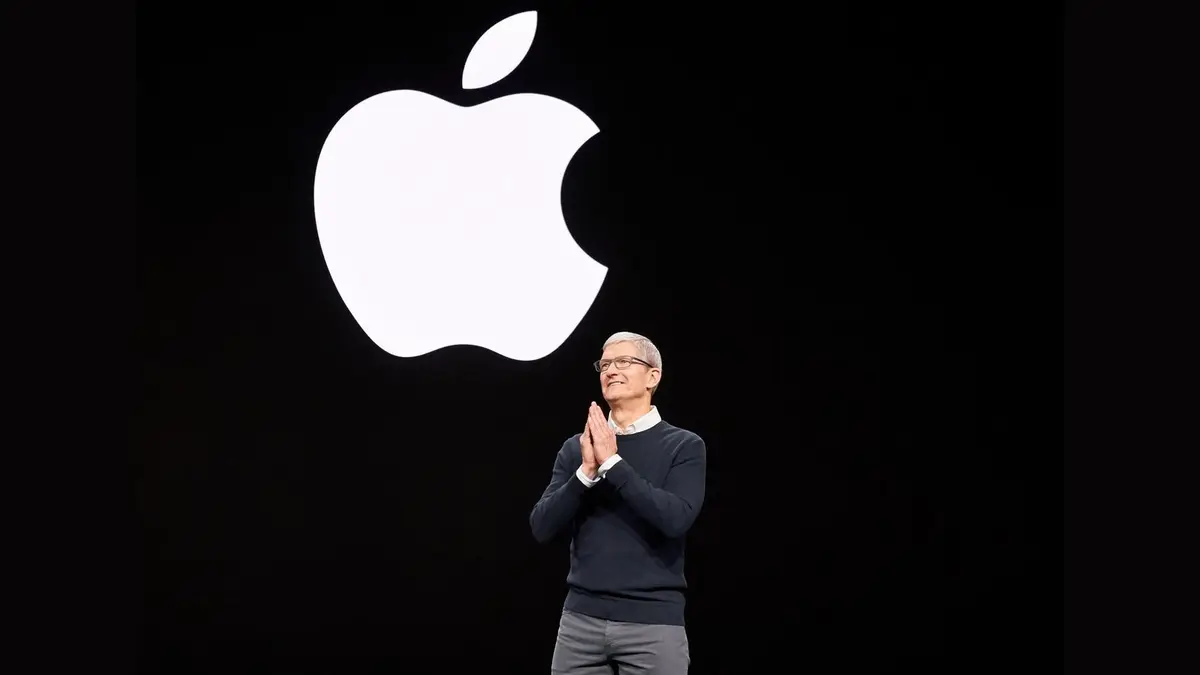
Apple picked an engineer to run the company right when everyone else is picking AI talkers
Tim Cook stepped down as Apple's CEO on September 1, 2026, after 15 years in the role, becoming executive chairman. John Ternus, who joined Apple in 2001 and has spent 25 years rising through hardware engineering to senior vice president, is the new CEO. Cook said Ternus "has the mind of an engineer, the soul of an innovator, and the heart to lead with integrity and with honor." Under Cook, Apple became the world's most valuable company multiple times over and launched the Apple Watch, AirPods, and Vision Pro. Reporting on the handover frames Ternus's central mandate in two words: focus on AI.
2 September 2026 · 3 min read