Tech & AI
Apple picked an engineer to run the company right when everyone else is picking AI talkers
By Ashish Kumar · 2 September 2026 · 3 min read
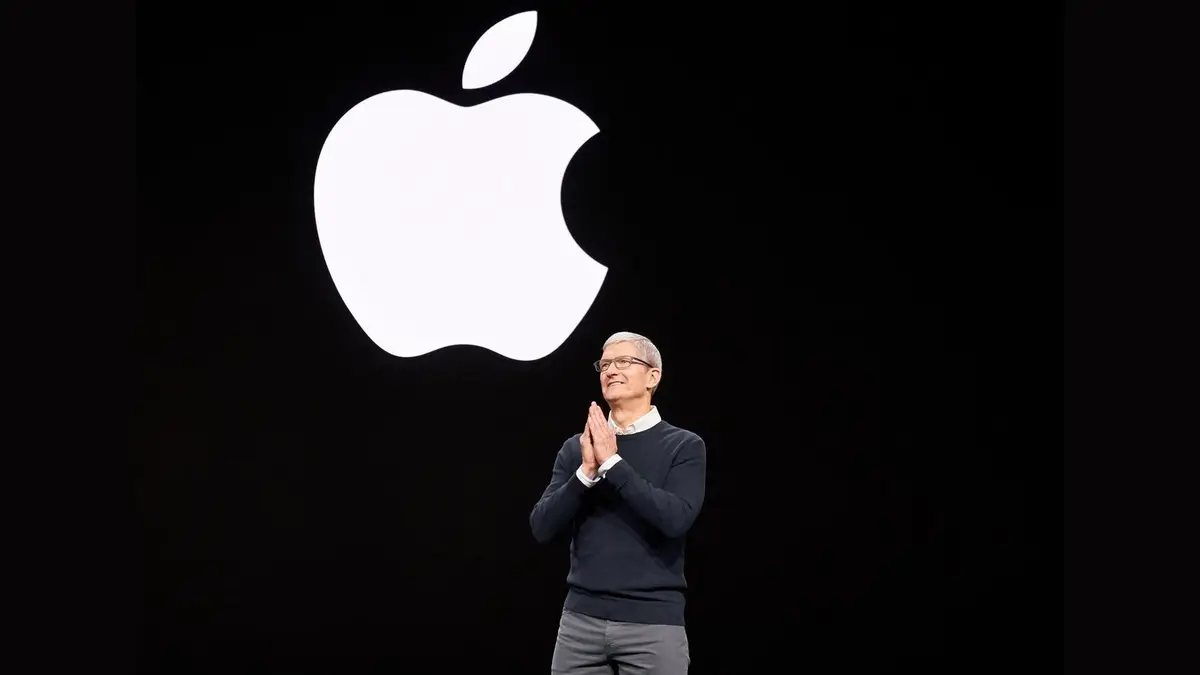
Every other major tech company handing over its future right now is turning to someone steeped in software and AI research. Apple just handed its future to the person who has spent 25 years perfecting the boxes.
Tim Cook's run as Apple's chief executive ended on September 1, 2026, fifteen years after he took over from Steve Jobs in August 2011. He becomes executive chairman of the board, a role in which he says he will keep "engaging with policymakers around the world" and stay close to select company matters, without running day-to-day operations. Arthur Levinson, Apple's non-executive chairman for the past 15 years, becomes lead independent director on the same day. John Ternus takes the CEO title.
What Cook actually built.
Judged purely on scale, Cook's tenure was extraordinary. Apple became the world's most valuable public company multiple separate times during his 15 years, something no predecessor achieved even once. He shipped the Apple Watch, AirPods, HomePod, Apple Music, Apple TV+, and, more recently, the Vision Pro headset, while steering the company through a global supply chain buildout that few rivals could match. The company posted record quarterly revenue repeatedly in its most recent reporting periods under his watch. Cook was, by almost every financial measure, one of the most successful corporate stewards of his generation.
Who Ternus actually is.
Ternus joined Apple's product design team in 2001, straight out of a mechanical engineering background, and spent the next quarter-century almost entirely inside hardware. He became vice president of hardware engineering in 2013 and later senior vice president, overseeing the physical design of the iPhone, iPad, Mac, and Apple Watch lines. He is, by every account, a product person's product person: someone who has spent his entire career figuring out how things get built, not how deals get structured or how a services business gets monetized.
The non-obvious part.
Coverage of this transition keeps repeating that Ternus's mandate is "AI," almost as a throwaway line, the same way every tech leadership story in 2026 gets an AI label stapled onto it. But the actual choice is more specific and more interesting than that label suggests. Every other major tech company navigating an AI transition right now, Microsoft, Google, Meta, Anthropic, OpenAI, has either promoted or hired someone whose background sits inside software, research, or large language models. Apple did the opposite. It handed its future to the one senior executive whose entire career has been spent making physical objects. That is not an accident of succession planning. It is a bet, deliberate or not, that Apple's actual answer to the AI moment will look less like a better chatbot and more like a device that quietly does more, an AI that lives inside hardware Apple already controls end to end, rather than a standalone product competing head-on with a conversational assistant.
Cook, in his farewell message, said of his successor: "John Ternus has the mind of an engineer, the soul of an innovator, and the heart to lead with integrity and with honor."
The honest catch.
Ternus has never run a company, let alone one with Apple's scale, culture, and public scrutiny. Hardware engineering leadership and chief-executive leadership draw on genuinely different skills, capital allocation, investor communication, high-stakes public messaging, and Ternus's 25 years inside Apple have not tested those specific muscles the way running the company will. Cook, for all his operational brilliance, was also frequently criticized during his tenure for Apple's comparatively slow, cautious public moves in generative AI specifically, and installing an engineer as his successor does not, on its own, resolve whether Apple's underlying AI strategy was the right one to begin with.
Fifteen years ago, Apple handed its company to an operations expert to keep a genius's inventions running smoothly. This week, it handed the company to an engineer, right when the rest of the industry is betting everything on people who talk to machines for a living.
Sources
Watch on Qrio
One-minute reels on this and related topics.
 ▶ 1:43
Business
Harvey vs Legora: the brand war in legal AI
by Oliver
 ▶ 2:34
Business
Why Rolex has no owner and no shareholders
by yieveberlins
 ▶ 2:26
Business
Nvidia was 30 days from bankruptcy in 1996
by yieveberlins
 ▶ 1:34
Business
How a ghee brand turned one KBC moment into an ad people waited for
by Anurag Bansal
More tech & ai stories
Tech & AI
Nvidia's CEO admitted an affair on Sunday. On Monday the company was worth $200 billion less
Nvidia shares fell about 4.3% on November 9, wiping out almost $200 billion in market value, after CEO Jensen Huang admitted to an affair and the company's board opened an independent investigation. The woman, Alice Huang, is a former executive of Singapore-based Megaspeed, an Nvidia customer that has been investigated over chip exports to China. US officials reportedly believe she is a Chinese spy. China calls that a smear, and she has not commented. Nvidia's board says it has no reason to believe secrets or national security were compromised. Here is how the week unfolded, and why one person's private life moved the world's second most valuable company.
10 November 2026 · 6 min read
Tech & AI
India wants your bank and hospital data to train AI without anyone seeing it
On 30 October 2026, India's IT ministry unveiled a draft plan called DEPA for AI Training that would let startups train AI models on data held by banks, hospitals and government agencies, without ever seeing the raw records. The data stays locked inside a secure "sealed room"; developers send their model in and get only the trained model back. The government says this could add $500 billion of AI-driven value to India's economy by 2030. The draft is not legally binding yet, and big questions remain: how data owners get paid, who is liable if something leaks, and where your own consent fits in. Here is what we know, and what we do not.
31 October 2026 · 6 min read