Staying informed
What is CPI inflation and how to read India's number
By Ashish Kumar · Published 16 November 2026 · 8 min read
The short answer: CPI inflation is how much more the same basket of everyday goods and services costs now than it did a year ago. In India it is published every month by the Ministry of Statistics (MoSPI), and in October 2026 it was 6.09%, which means that basket cost about 6% more than in October 2025.
That number matters more than usual right now. It is the first reading above the RBI's 6% upper limit since India switched to a new CPI series this year, and it comes three weeks before the RBI's next rate decision. This guide explains what the number measures, how to read the monthly release in a few minutes, and what it means for your salary, savings and EMI. It is general information, not financial advice.
What is CPI inflation, in plain words?
Picture a giant shopping list. It has rice, onions, milk, rent, petrol, phone bills, school fees, haircuts and a few hundred other things. Government field staff check the prices of everything on that list every week, across the country. The Consumer Price Index, or CPI, is a single number that tracks what that whole list costs.
The index starts at 100 in a base year. In India's current series the base year is 2024, so 2024 prices equal 100. In October 2026 the all-India index stood at 110.05, according to the MoSPI press release for October 2026. In October 2025 it was 103.74.
CPI inflation is the percentage change in that index compared with the same month a year earlier. Roughly: (110.05 minus 103.74) divided by 103.74 is about 6.1%. MoSPI calculates it from unrounded index values, which is why the official figure is 6.09%.
Two things are worth remembering:
- Inflation of 6% does not mean prices went up 6% last month. It means they are about 6% higher than a year ago.
- If inflation falls from 6% to 4%, prices are not falling. They are still rising, just more slowly.
What changed with the new CPI series in 2026?
On 12 February 2026, MoSPI replaced the old CPI, which used 2012 as its base year, with a new series based on 2024. ThePrint and Business Today both reported the main changes:
- Bigger basket. 358 items instead of 299: 308 goods and 50 services.
- New weights. They now come from the Household Consumption Expenditure Survey 2023-24, so they reflect how Indians spend today, not in 2012.
- Less food. Food and beverages fell from 45.86% of the index to 36.75%.
- More groups. 12 groups instead of 6, following an international standard, so health, transport, schooling and restaurants each show up on their own.
- Online prices. 12 online marketplaces are now tracked alongside physical markets.
Finshots lists some of the items added, such as streaming services and digital storage devices, and some dropped, such as VCRs, DVD players and cassettes.
This matters if you read older articles. Many pages that rank for "what is CPI" still describe the 2012 series, with food at nearly half the basket and the old count of markets. Those numbers are out of date.
What is in the basket, and how much does each part count?
Each group gets a weight based on how much the average household spends on it. A price jump in a heavy group moves the headline number much more than the same jump in a light one. These are the weights in the new series, from Annexure I of the October 2026 MoSPI release, along with each group's inflation in October 2026:
| Group | Weight (%) | Inflation, Oct 2026 (%) |
|---|---|---|
| Food and beverages | 36.75 | 8.51 |
| Housing, water, electricity, gas and fuels | 17.66 | 2.90 |
| Transport | 8.80 | 5.84 |
| Clothing and footwear | 6.38 | 4.96 |
| Health | 6.10 | 2.05 |
| Personal care and miscellaneous | 5.04 | 10.14 |
| Furnishings and household equipment | 4.47 | 3.94 |
| Information and communication | 3.61 | 3.16 |
| Restaurants and accommodation | 3.35 | 10.06 |
| Schools, colleges and tuition | 3.33 | 4.02 |
| Paan, tobacco and intoxicants | 2.99 | 4.93 |
| Recreation, sport and culture | 1.52 | 2.52 |
You can see the story of October 2026 in that table. Food is still the heaviest group, and it rose 8.51%. Housing, the second-heaviest, rose only 2.90%. That is why food decides most of what happens to the headline.
How do you read the monthly CPI release in five minutes?
MoSPI publishes the CPI in the middle of each month, at 4 pm. The October 2026 data came out on 12 November. The release is a short PDF. Here is what to look at, in order:
- The headline. The combined (rural plus urban) year-on-year number. For October 2026: 6.09%.
- Provisional or final. The latest month is always provisional and gets revised the next month. September 2026 was confirmed at 5.54%.
- Food inflation (CFPI). The Consumer Food Price Index. For October 2026: 8.94%, up from 7.74%.
- Rural vs urban. Rural inflation was 6.63% and urban 5.41%. A wide gap tells you where the pressure is.
- The item tables. The release lists the five items with the highest and lowest inflation. These explain the headline better than any commentary.
- The trend. The last page shows every month's index. One month is a data point. Three months is a direction.
For October 2026, the high-inflation list was striking. Onion prices were up 116.22% from a year earlier, garlic 60.74%, silver jewellery 52.39%, ginger 48.32% and lemon 47.30%. At the other end, potato was down 14.24%. We looked at why onions drove this in our story on India's inflation jump.
The trend is just as clear. According to the MoSPI series, inflation rose every single month of 2026, from 2.74% in January to 4.38% in June, 5.54% in September and 6.09% in October.
States differ too. Among large states, the release shows Tamil Nadu at 7.29%, Telangana at 7.26% and Andhra Pradesh at 7.25%, while Delhi was at 3.80%.
Why does the RBI care so much about this number?
Because it is the RBI's legal target. Under the RBI Act, the government sets an inflation target every five years. The RBI's monetary policy framework page gives the current target as 4% CPI inflation, with a band of 2% to 6%, for 1 April 2026 to 31 March 2031. ThePrint reported that the government notified this on 25 March 2026, keeping the target unchanged for the second time since it began in 2016.
The RBI counts it as a failure if average inflation stays above 6%, or below 2%, for three quarters in a row. Then it must send the government a report with the reasons, what it will do, and how long it expects to take. One month above 6% does not trigger that. It is the quarterly average that counts.
The RBI saw this coming. In its policy resolution of 7 October 2026 it raised the repo rate from 5.25% to 5.50%, moved its stance to "calibrated tightening" and projected inflation at 6.0% for the October to December quarter. Its next meeting is on 2 to 4 December 2026. How that rate reaches your loan is covered in our guide to the repo rate and your EMI.
What does 6% inflation mean for you?
The headline is an average. Here is how to turn it into something personal.
Your salary. If your pay rose 6% this year and inflation is about 6%, your buying power is roughly where it was. A raise only makes you better off if it beats inflation.
Your savings. What matters is the return after inflation. Say a fixed deposit pays 7% a year. With inflation around 6%, your money grows only about 1% in real terms, and less after tax. Money in a savings account paying less than inflation is slowly losing value.
Your loans. Rising inflation usually means higher interest rates, as the October hike showed. Floating-rate EMIs tend to follow.
Your own basket. Your spending is not the national average. A city renter who eats out a lot is weighted very differently from a rural family that spends more on food. In October 2026, restaurant meals were up 10.06%, but housing rents rose much less. So your personal inflation could be higher or lower than 6.09%. We dug into this gap in our story on why everything feels expensive when inflation looks low.
A simple habit: once a month, read the headline, the food number and the top five items. That takes five minutes and tells you more than most news coverage. If you want a routine for the rest of the news, our guide on staying informed in 5 minutes a day has one, and how to read quarterly results uses the same skim-the-source approach for companies.
What is still uncertain
The October figure is provisional and could be revised when the November data comes out on 14 December 2026. Food prices are volatile, so one or two good harvests can change the picture quickly. And because the new series only allows year-on-year comparisons from January 2026, comparing today's inflation with years before that needs care. MoSPI publishes a linking factor for splicing the two series together.
We make Qrio, a free app of short videos on business, startups and the world. We cover numbers like this one when they move.
Sources
- MoSPI: Press release of CPI for October 2026 (12 November 2026)
- ThePrint: India unveils new CPI series with 2024 base, wider basket
- Business Today: CPI inflation base revision, what's changed and why it matters
- Finshots: India's new CPI explained
- RBI: Monetary policy framework overview
- ThePrint: Govt asks RBI to maintain retail inflation at 4% till March 2031
- RBI: Monetary policy statement, 7 October 2026
- NCA Academy: CPI inflation October 2026
Frequently asked questions
What is India's CPI inflation right now?
6.09% for October 2026, up from 5.54% in September, according to MoSPI's release of 12 November 2026. The October figure is provisional. Food inflation was 8.94%. The November number is due on 14 December 2026.
What is the base year of India's CPI?
2024. MoSPI moved the CPI from a 2012 base to a 2024 base on 12 February 2026. The new basket has 358 items, including 50 services, and gives food a weight of 36.75%, down from 45.86% in the old series.
What is the RBI's inflation target?
4% CPI inflation, with a band of 2% to 6%, for 1 April 2026 to 31 March 2031. If the quarterly average stays above 6% for three quarters in a row, the RBI must send the government a report explaining why and what it will do.
Why does my inflation feel higher than the official number?
CPI is an average for all Indian households, weighted by what they spend. If you rent in a city, eat out often or pay school fees, your own basket differs from the average. Your personal inflation can be higher or lower than the headline.
Watch on Qrio
One-minute reels on this and related topics.




More from the blog

Stories worth reading next
India Macro
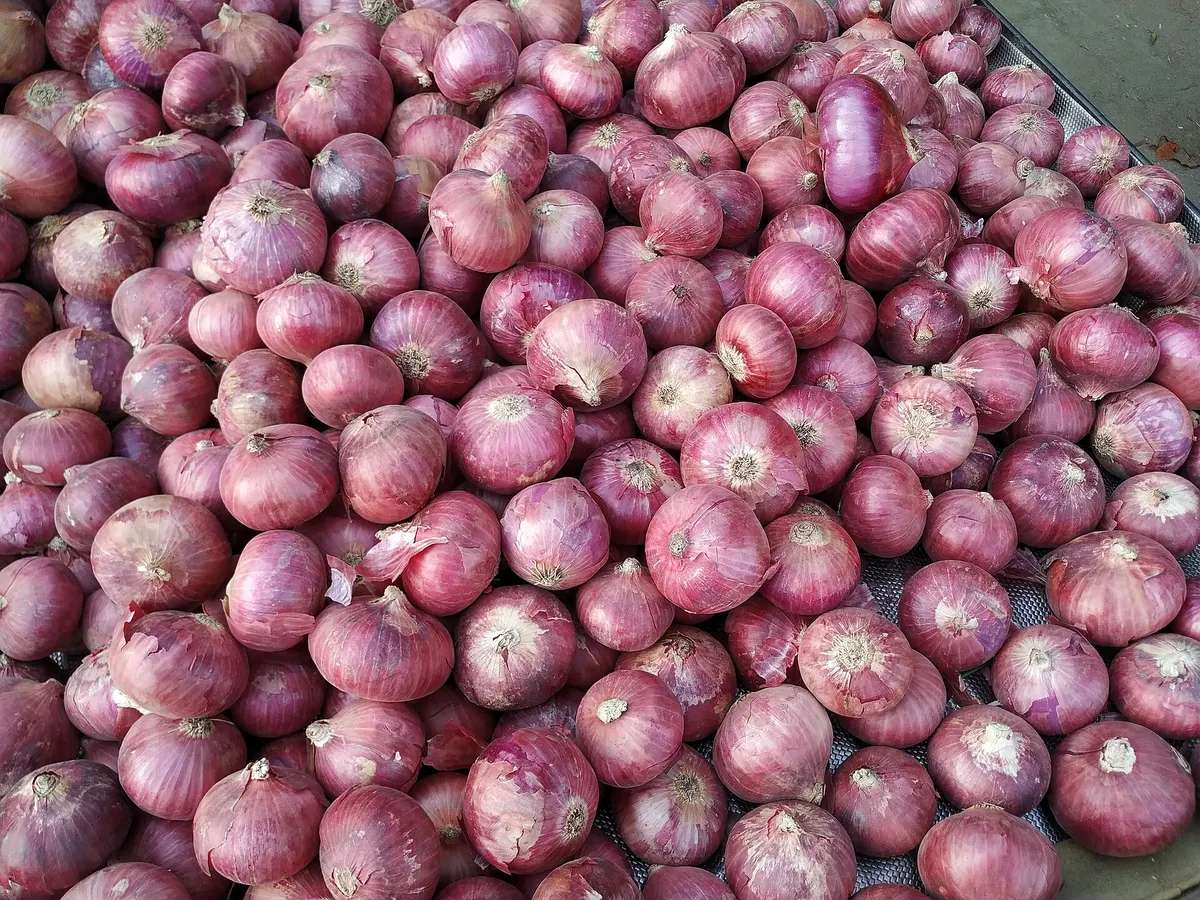
Onions doubled in a year and your EMI just went up. Four myths about India's inflation jump
India's retail inflation rose to 5.54% in September 2026, its highest in almost two years, driven by food. Onion prices were up 108% from a year earlier. In October the RBI raised its repo rate by 0.25 points to 5.50%, its first hike since 2023, and said rate cuts are off the table for now. Several banks raised their repo-linked loan rates by the same 0.25 points from October 8. October's inflation number comes out on November 12 and ICRA expects it to cross 6%, the top of the RBI's comfort band. Here are four common assumptions about all this, and what the official data actually says.
7 November 2026 · 6 min read

Tech & AI
CoinDCX says your crypto is safe, but the leaked data is what phishing scammers look for
CoinDCX says a breach at Plotline, an outside company it used to send in-app messages, exposed the names, email addresses and linked bank names of a "small number" of its customers. The exchange says no money, wallets, passwords or trading systems were touched. Unauthorised access happened on October 24 to 26 and October 30 to 31, 2026; Plotline told CoinDCX on October 31, and CoinDCX posted its notice on November 17. It has not said how many people were hit. The real risk is phishing: a scam email that knows your name and your bank looks far more believable. By our count, this is CoinDCX's fourth security incident in about 16 months.
19 November 2026 · 6 min read