Spain lifted the World Cup but the biggest winner never kicked a ball
4 min read · by Qrio · 22 Jul 2026
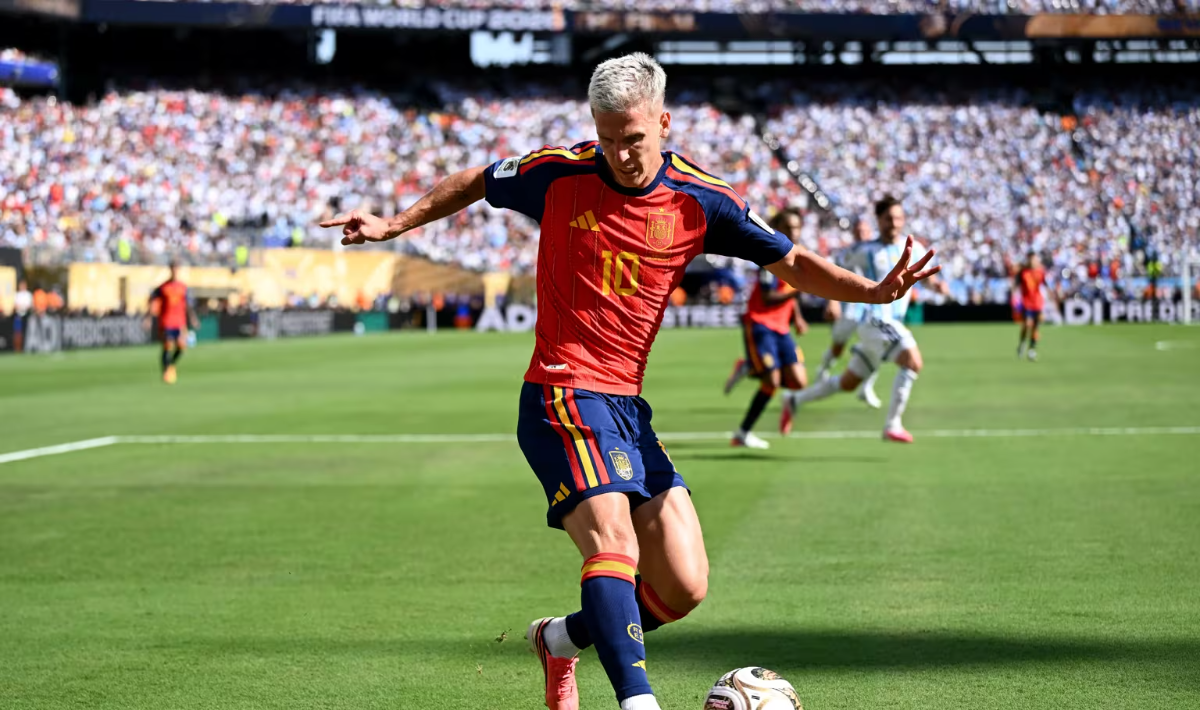
Ferran Torres needed one touch in the 106th minute to win the World Cup. FIFA needed 104 matches to pull off something bigger, the most profitable sporting event ever staged.
A final decided by a fortress
First, the football. Spain defeated Argentina 1-0 after extra time at the New York New Jersey stadium on Sunday, claiming their second World Cup after 2010. The match was a masterclass in control. Argentina, the defending champions, did not manage a single shot on target across 120 minutes. Spain finished the entire tournament unbeaten and conceded just one goal in the whole competition, one of the great defensive runs in World Cup history.
For Lionel Messi, aged 39 and in tears at the final whistle, it was almost certainly the last World Cup match of his career, and he leaves with the 2022 title rather than a fairytale repeat. For 19 year old Lamine Yamal, it was a coronation. US President Donald Trump presented the trophy, and his visit caused security delays that Al Jazeera reported left fans stuck in queues outside.
Earlier in the weekend, England beat France 6-4 in Miami in one of the wildest third-place playoffs ever seen.
Now look at the balance sheet
The 2026 edition was the first with 48 teams and 104 matches, up from 64 matches in Qatar. That expansion was never mainly about football. More matches means more tickets, more broadcast slots and more sponsor inventory. The results, according to FIFA's own projections and Forbes reporting:
- Record revenue of more than 8 billion dollars for this cycle, some estimates near 9 billion, up 56 percent from 2022
- About 3.9 billion dollars from broadcasting rights
- More than 3 billion dollars from hospitality and ticket sales
- A prize pool of 871 million dollars, nearly double Qatar's 440 million
The 250 million dollar water break
The strangest money story of the tournament belongs to Fox. The network paid 485 million dollars for US English-language rights years ago, a price that looked steep at the time. Fox and Spanish-language partner Telemundo are expected to pull in roughly 850 million dollars in combined advertising revenue. And because this tournament was played in brutal summer heat across North America, referees mandated hydration breaks, and Fox sold ads against them, reportedly earning as much as 250 million dollars from those pauses alone.
Think about that. The climate problem that critics said would ruin the tournament became a brand new advertising product worth a quarter of a billion dollars.
Viewership matched the money. The final was projected to reach a global audience of around 1.8 billion people. In Spain, it averaged 15.7 million viewers with an astonishing 87.1 percent audience share, meaning nearly nine of every ten Spaniards watching television were watching the final.
The historical parallel
The 1994 US World Cup is the obvious rhyme. That tournament still holds the total attendance record from the pre-expansion era and its profits seeded Major League Soccer. The 2026 edition is 1994 on an industrial scale, and its legacy question is the same. Does the money cascade down into American and Canadian and Mexican grassroots football, or does it pool at the top?
The honest catch
Not everyone got rich. Host cities absorbed heavy security and infrastructure costs, and researchers cited by eMarketer questioned whether local economies actually net out positive, a finding consistent with decades of studies on mega-events. FIFA keeps the revenue while hosts keep the bills. And the summer heat that Fox monetised was a genuine sporting problem, with players and coaches complaining throughout.
Spain conceded one goal in seven matches. FIFA did not concede a single dollar.
Frequently Asked Questions
What is "Spain lifted the World Cup but the biggest winner never kicked a ball" about?
Spain beat Argentina 1-0 in extra time on Sunday to win the 2026 World Cup, with Ferran Torres scoring in the 106th minute and a tearful Lionel Messi, now 39, denied a farewell title. But the scoreboard hides the real result. FIFA is set to bank record revenue of more than 8 billion dollars, up 56 percent from Qatar 2022, and Fox reportedly made 250 million dollars just from ads during water breaks. The most-watched match in history was also the most monetised. Here is where all that money actually went.
Why does this business topic matter?
This topic covers a significant development in business that affects economies, industries, and everyday people. Qrio breaks it down in plain English so you can understand the implications without needing specialized knowledge.
How long does it take to read this explainer?
The brief takes about 30 seconds. The full deep dive takes just a few minutes. You can choose how deep you want to go.
More from Qrio
Oura wants $16 billion for a ring, and one number explains why

India's biggest stock exchange is finally going public and it has to list on its rival