Apple just agreed to give iPhones two different brains just for China
5 min read · by Qrio · 20 Jul 2026
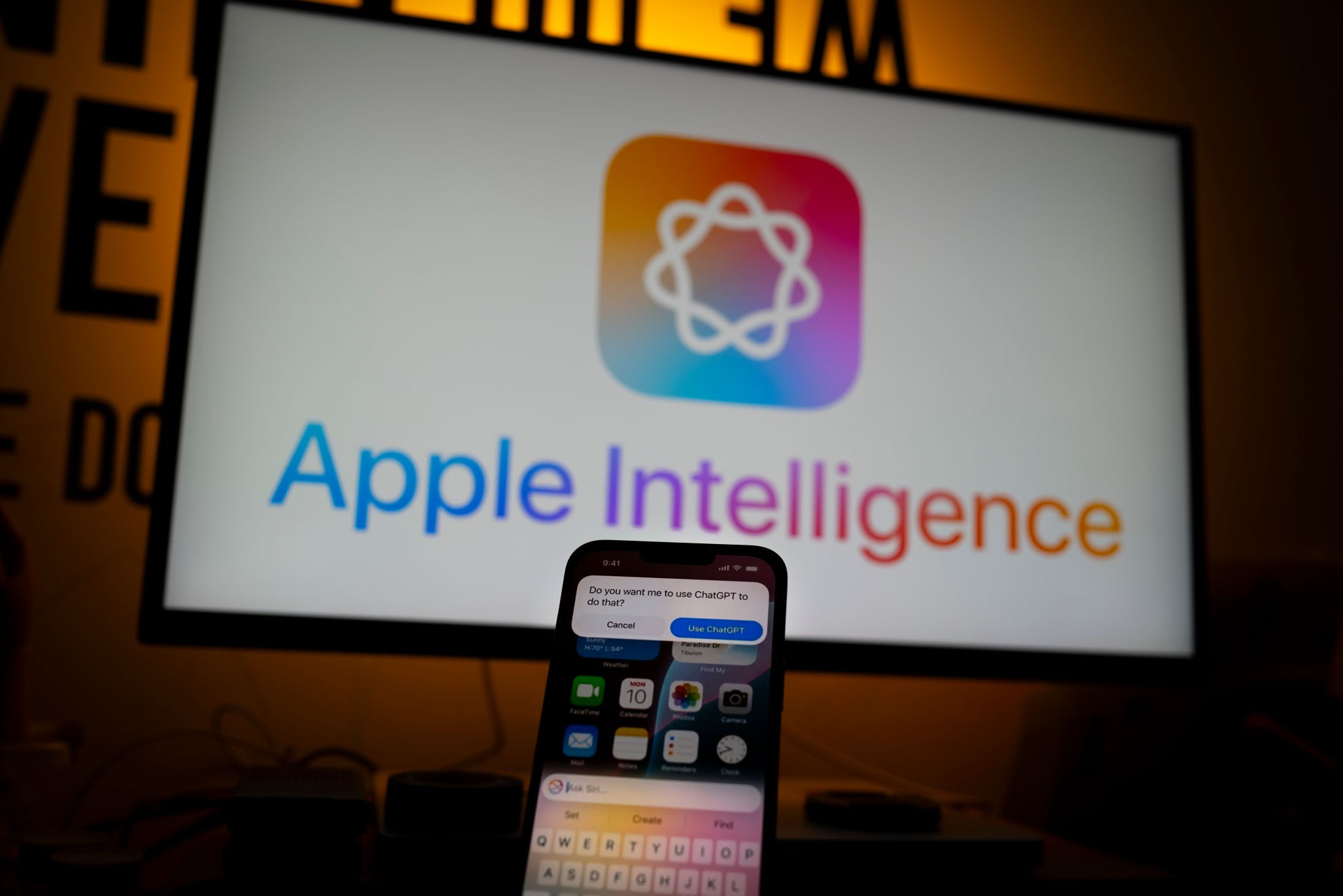
Apple just agreed to give iPhones two different brains. It didn't have a choice.
Category: Tech & AI
The Brief
For nearly two years, a new iPhone in Shanghai was missing the one feature Apple advertised everywhere else: its AI. Last week, China's internet regulator finally approved Apple Intelligence, but only after Apple agreed to swap out its AI's brain for one built by Alibaba, hosted inside China and compliant with Chinese content rules. Apple gets to compete again in a market that just grew 28%. The price: the same phone now thinks differently depending on where you bought it. And every government in the world was watching.
The Deep Dive
Global technology used to look identical whether you opened a device in New York, Mumbai, or Shanghai. Last week, the world's most valuable company agreed to end that era. Voluntarily, and at full price.
What actually happened
On July 15, the Cyberspace Administration of China (CAC), the country's internet regulator, added Apple Intelligence to its list of approved AI services. The approval, first reported by Reuters, came with the fine print that explains the two-year delay:
In China, Apple's AI features won't run on Apple's models. They'll be powered by Qwen, the large language model built by Alibaba, across iPhone, iPad, Mac and Vision Pro. Baidu is reportedly building additional features on top.
Apple Intelligence launched in the US in October 2024. Chinese buyers of the same phones got nothing. For 21 months, the most heavily advertised iPhone feature simply didn't exist in Apple's second-biggest market.
Why Apple couldn't just flip a switch
Two Chinese laws made the normal rollout impossible, and it's worth saying plainly what they do.
First, China's 2023 generative-AI rules require any AI service offered to the Chinese public to be registered with the CAC, and its outputs must comply with state content rules. In plain English: the AI must be censored. ChatGPT, which powers some Apple Intelligence features elsewhere, was never going to pass.
Second, Chinese data law requires that data generated by Chinese citizens stays on servers inside China. Everywhere else, complex Apple Intelligence queries leave your phone for Apple's own "Private Cloud Compute" servers. In China, they can't.
A query typed in Shanghai will be answered by Alibaba's model, on Chinese servers, without ever touching Apple's global infrastructure. Apple didn't just translate the product. It replaced the engine and the fuel line.
Apple has done this before
This is the second time Apple has rebuilt its backend to Chinese specifications. Since 2018, iCloud data for Chinese users has been stored not by Apple but by GCBD, a state-linked cloud company in Guizhou province. The playbook is consistent: when a market is big enough, Apple will re-engineer almost anything to stay in it.
And China is that big. Apple's Greater China revenue hit $20.5 billion in the January to March quarter, up 28% from a year earlier, and shipments jumped 24% in the quarter after that. It is a sharp recovery after years of losing ground to Huawei, whose phones shipped with AI features while iPhones in China had none. Analysts consistently ranked the missing AI among the reasons iPhones were losing Chinese buyers.
What most people get wrong
The easy read is "company complies with local regulations." The real story is bigger: this is the clearest sign yet that the single global internet is splitting into regional ones.
Hardware always needed an adapter at the border, a different plug, different cellular bands. Software was the thing that stayed identical everywhere. That's now over. The world's most valuable company just shipped its flagship product with two different brains, and the dividing line is political, not technical.
Apple is now squeezed from both sides. In Washington, lawmakers are reportedly weighing restrictions on American companies relying on Chinese AI models, which is exactly what Apple Intelligence in China now does. In Hangzhou, Alibaba recently banned its own employees from using American AI tools. Apple's two brains answer to two governments that increasingly want the other's technology gone.
The India question
If you're reading this in India, this isn't a spectator sport. India notified its own data protection rules under the DPDP Act in late 2025, and the RBI has forced payment data to be stored locally since 2018. India hasn't demanded a separate AI brain for Indian users. Yet.
Apple just demonstrated, in public, that if a market is valuable enough, it will pay that price. Every large government now knows the price gets paid.
What to watch
Two things over the next six months. One: whether the US bill restricting American reliance on Chinese AI moves forward. It would put Apple's China arrangement in legal crossfire. Two: Apple's Greater China revenue over the next two quarters. If the double-digit growth holds once Qwen-powered features actually ship, the split-brain gamble worked, and every global tech company will copy it.
The unified internet didn't end with a dramatic shutdown. It ended with a settings screen in Shanghai that quietly loads a different mind.
Frequently Asked Questions
What is "Apple just agreed to give iPhones two different brains just for China" about?
For nearly two years, a new iPhone in Shanghai was missing the one feature Apple advertised everywhere else: its AI. Last week, China's internet regulator finally approved Apple Intelligence — but only after Apple agreed to swap out its AI's brain for one built by Alibaba, hosted inside China and compliant with Chinese content rules. Apple gets to compete again in a market that just grew 28%. The price: the same phone now thinks differently depending on where you bought it. And every government in the world was watching.
Why does this business topic matter?
This topic covers a significant development in business that affects economies, industries, and everyday people. Qrio breaks it down in plain English so you can understand the implications without needing specialized knowledge.
How long does it take to read this explainer?
The brief takes about 30 seconds. The full deep dive takes just a few minutes. You can choose how deep you want to go.
More from Qrio
Oura wants $16 billion for a ring, and one number explains why

India's biggest stock exchange is finally going public and it has to list on its rival