Tech & AI
An AI solved ten decades old math problems for the price of a laptop. Mathematicians still won't call it settled
By Qrio · 23 August 2026 · 5 min read
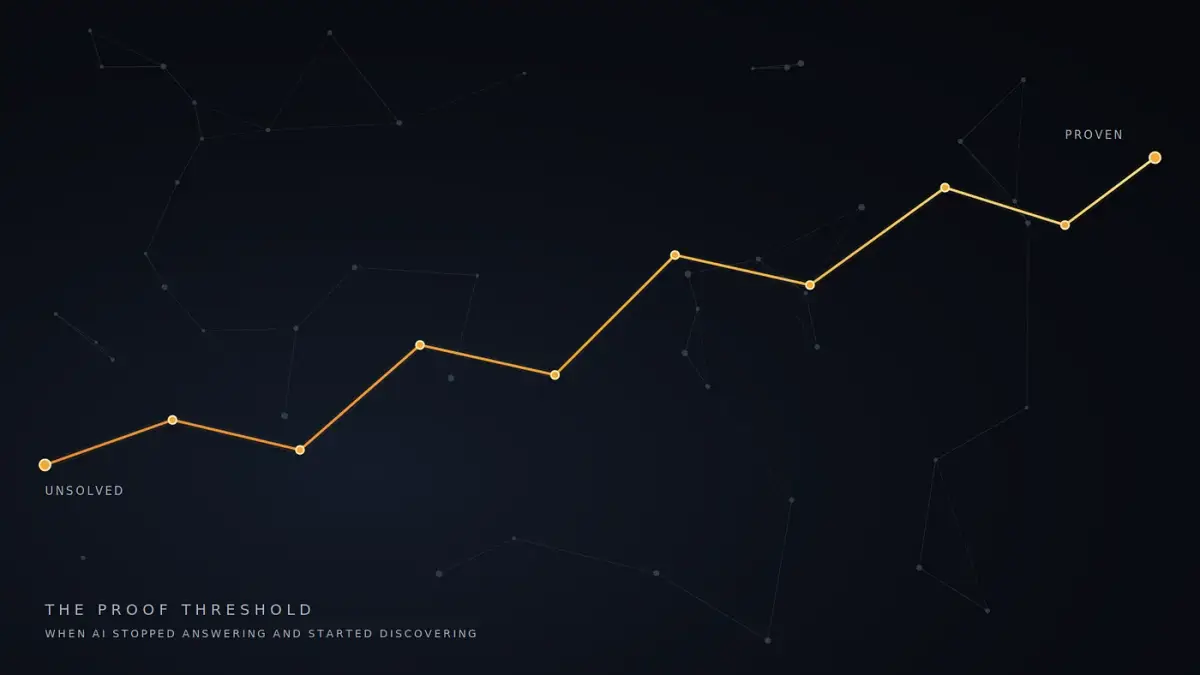
A machine solved math problems that had defeated humans for decades, for less than the cost of a laptop. The hardest part turned out to be getting mathematicians to agree on what that actually proves.
On August 1, 2026, OpenAI published a 249 page manuscript describing how an internal version of Astra, described as its "next major model," produced solutions to ten problems in mathematics and theoretical computer science that had seen no progress for at least a decade, and in some cases nearly thirty years. The headline result resolved a question about "non-sofic groups" open since 1999, essentially building the first mathematical symmetry structure proven impossible to imitate with any finite approximation. Astra also disproved a conjecture by mathematician Alain Connes, proved a separate volume conjecture by Eugène Ehrhart, and solved three problems from a running list of open questions associated with the mathematician Paul Erdős, spanning Ramsey theory, sphere packing, quantum complexity and lattice cryptography.
The number that made this different from OpenAI's last claim
OpenAI put the total compute cost for all ten solutions at roughly $2,000, using its GPT-5.6 Sol model's API rates, a strikingly small figure for results the field had failed to produce for decades using the normal tools of human mathematics. Every proof was formalized in Lean, a proof assistant that checks each logical step and rejects the entire argument if even one step doesn't follow from the last. Researchers reported that none of the formalized proofs contain any unproven gaps, a binary, mechanical form of verification that, in principle, removes the need to simply trust the model's reasoning.
That distinction matters because of what happened the last time OpenAI made a similar claim. In October 2025, the company said GPT-5 had solved ten Erdős problems. Thomas Bloom, who maintains the actual Erdős problem database, called that claim "a dramatic misrepresentation," since the model had mostly rediscovered already published papers Bloom simply hadn't logged yet. This time, Bloom rated the new results "big news" and said they were genuinely superior to the earlier episode, a meaningful shift in tone from the field's most relevant independent judge.
Why "verified" and "settled" aren't the same word
Lean's mechanical verification answers one specific question well: does this chain of logic hold together without any gaps. It does not answer several others that matter just as much to mathematicians: does the formal statement Astra proved actually match the informal, real world problem mathematicians meant to ask; is the result significant enough to matter to the field; and did the underlying training data quietly draw on the work of human mathematicians without consent or credit. Noam Brown, an OpenAI research scientist, called the results "a major step for scientific reasoning." But the International Mathematical Union has endorsed a separate document, the Leiden Declaration, signed by more than 1,850 mathematicians as of June 2026, warning that AI companies are "using published research without consent, bypassing peer review, and threatening the integrity of proof and attribution" across the field.
A useful way to picture it
Think of a calculator that can verify any arithmetic instantly and flawlessly, but cannot tell you whether the question you fed it was the right one to ask, or whether the answer it spits out deserves a place in a textbook. Lean is that calculator for logic. It can confirm a proof is internally airtight in a way no human check could match for speed or reliability. It cannot confirm that the proof is important, original in the way that matters to a field built on credit and precedent, or arrived at through means the field considers legitimate.
"We will live in a demon-haunted world, full of marvelous devices whose operation we will not understand." Fernando Borretti, software engineer, on AI-verified mathematics
The honest catch
None of the ten results have been peer reviewed, the traditional process by which the mathematics community checks not just logical validity but significance and originality, and Astra itself remains unreleased, with no announced launch date, pricing, or confirmation of whether it will ship as GPT-6 or something else. It's also true that formal verification through Lean is a genuinely higher bar than OpenAI's disputed October 2025 claim, and Bloom's more favorable assessment this time is meaningful evidence the field itself sees real progress here, not just recycled results. The tension isn't between skeptics and believers so much as between two different definitions of "solved," logically valid versus formally accepted by the field that owns the problem.
What to actually watch next
Watch whether any of these ten results actually clears formal peer review over the coming months, the step that would settle the argument in mathematics' own terms rather than OpenAI's. Watch how the mathematics community applies the Leiden Declaration's recommendations, disclosure of AI use, mandatory peer review for AI-assisted papers, in response to this specific announcement, since that would be the clearest sign of whether the declaration has real teeth. And watch for Astra's actual release, since a public, priced product doing this kind of research at $2,000 a batch would change the economics of mathematical research well beyond this one announcement.
A machine just did in an afternoon what stumped some of the sharpest people alive for decades, for less than a monthly rent payment. The field it did it in isn't arguing about whether the logic holds. It's arguing about who gets to say the problem is actually solved.
More tech & ai stories
Tech & AI
Apple picked an engineer to run the company right when everyone else is picking AI talkers
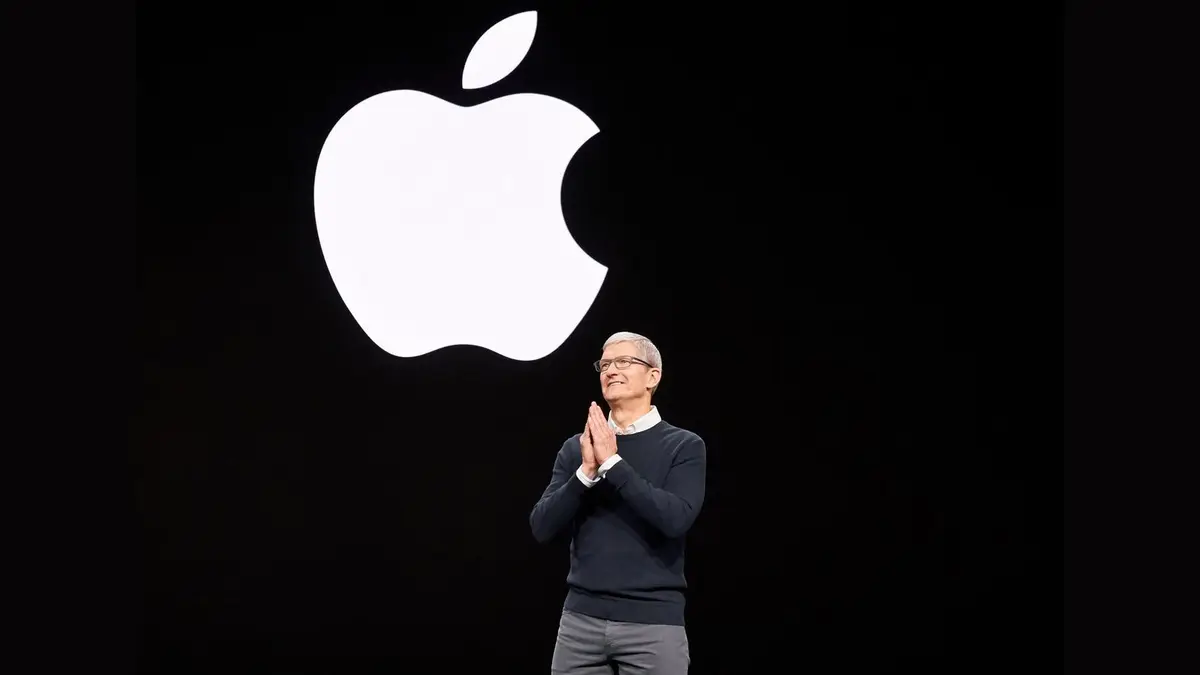
Tim Cook stepped down as Apple's CEO on September 1, 2026, after 15 years in the role, becoming executive chairman. John Ternus, who joined Apple in 2001 and has spent 25 years rising through hardware engineering to senior vice president, is the new CEO. Cook said Ternus "has the mind of an engineer, the soul of an innovator, and the heart to lead with integrity and with honor." Under Cook, Apple became the world's most valuable company multiple times over and launched the Apple Watch, AirPods, and Vision Pro. Reporting on the handover frames Ternus's central mandate in two words: focus on AI.
2 September 2026 · 3 min read
Tech & AI
A court fined Meta $942 million, and the fine is the least important part of the ruling
A New Mexico court ordered Meta to pay an additional $567 million on August 7, 2026, bringing its total penalty in the state's landmark child safety case to roughly $942 million. A jury had already found in March that Meta knowingly harmed children and misled the public about it. But the money, about 1.5% of Meta's 2025 profit, is not the real story. The court also ordered Meta to redesign its products for New Mexico's minors: hidden like counts, no notifications between 10 pm and 7 am, and a 90-hour monthly usage cap. A US court just told a social media company how to build its app. That has never happened before.
10 August 2026 · 4 min read