Two giant democracies are quietly building a maritime wall without signing a single military alliance
3 min read · by Qrio · 10 Jul 2026
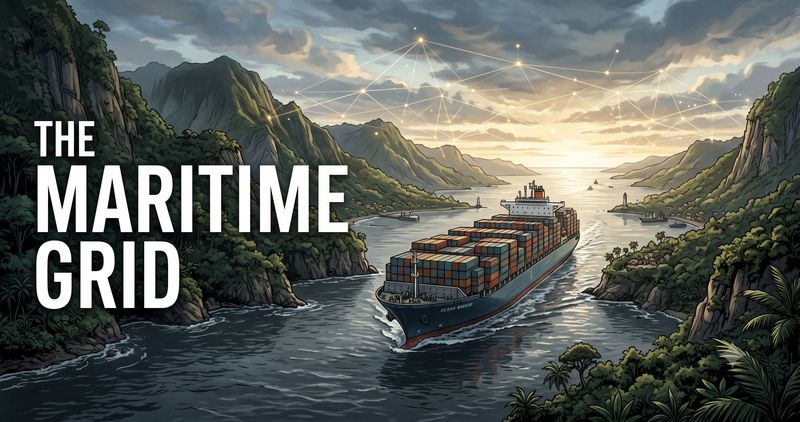
The comprehensive maritime and digital partnership between New Delhi and Jakarta proves that emerging economies can secure vital trade chokepoints by unbundling security from traditional military pacts.
What just happened at Istana Merdeka?
On Tuesday, July 7, 2026, Prime Minister Narendra Modi arrived at the historic Istana Merdeka in Jakarta for comprehensive bilateral talks with Indonesian President Prabowo Subianto. The high-level state meeting concluded with a sweeping joint statement that completely redefines the geopolitical architecture of the Indo-Pacific region.
While Western analysts expected routine trade talk, the actual framework established a deep convergence across maritime security, critical minerals, and the digital economy. The two nations are explicitly positioning themselves to lead the Global South, directly challenging the institutional monopolies of older global powers.
A few numbers show the scale:
- The maritime corridor between India and Indonesia controls a massive 30% of all global commercial shipping trade.
- The expanded trade roadmap targets an immediate boost to bilateral exchange, aiming past $50 billion by the turn of the decade.
- The cooperative framework establishes a joint surveillance envelope spanning more than 1,000 nautical miles of ocean territory.
Why software and minerals are replacing warships
Here is the part most people get wrong. They look at a security agreement and look for troop deployments, aircraft carriers, and formal mutual defense clauses. They assume that if you do not sign a treaty like NATO, your security arrangement has no real teeth.
The reality reframes everything. India and Indonesia realize that modern conflict is won by controlling the digital and material supply chains, not by staging naval standoffs. By linking India's digital public infrastructure with Indonesia's massive reserves of nickel and critical minerals, they are creating an economic trade block that dominates the entry points to the Malacca Strait. They are building a security wall by ensuring that any external superpower trying to bully the region can be instantly shut out of digital financial networks and resource supplies, making physical warships entirely secondary.
The Hanseatic League model of merchant security
This economic security strategy closely replicates the success of the Hanseatic League in late-medieval Europe. The league was not a country and it did not maintain a massive permanent standing army. Instead, it was an alliance of independent merchant towns that pooled their trading rights, built private ports, and controlled the critical shipping lanes of the Baltic Sea. When rival kingdoms tried to launch military campaigns against them, the league simply choked off their food supplies and froze their credit lines, forcing kings to surrender without firing a single cannon. India and Indonesia are running that exact merchant-led playbook in the twenty-first century.
True maritime dominance is no longer achieved by floating hulls of steel on the water, but by controlling the digital pipelines and raw minerals that fuel the modern world.
The friction of bureaucratic execution
The primary challenge to this emerging alignment is the structural inertia of both nations' massive state bureaucracies. Translating ambitious joint ministerial goals into fluid, real-world operational systems requires clearing decades of protective trade tariffs and local administrative red tape. If the newly formed joint working groups fail to fast-track regulatory clearances for cross-border investments and critical mineral supply chains, the entire blueprint will remain a paper promise, allowing aggressive external powers to continue fracturing the region.
Frequently Asked Questions
What is "Two giant democracies are quietly building a maritime wall without signing a single military alliance" about?
On July 7, 2026, Prime Minister Narendra Modi stood alongside Indonesian President Prabowo Subianto in Jakarta to launch an unprecedented economic and security blueprint. For decades, global observers assumed that containing maritime aggression required joining top-heavy, Western-led military treaties. But this sudden pact between the two largest anchors of the Indian Ocean bypasses military alliances completely. Instead, they are locking down international trade corridors through software code and critical minerals. The sudden move leaves major global superpowers scrambling to figure out how a trade agreement could neutralize a navy.
Why does this tech & ai topic matter?
This topic covers a significant development in tech & ai that affects economies, industries, and everyday people. Qrio breaks it down in plain English so you can understand the implications without needing specialized knowledge.
How long does it take to read this explainer?
The brief takes about 30 seconds. The full deep dive takes just a few minutes. You can choose how deep you want to go.
More from Qrio

Oura wants $16 billion for a ring, and one number explains why

India's biggest stock exchange is finally going public and it has to list on its rival