The global economy is splitting into a two speed machine where artificial intelligence value chains decide which nations escape a recession
4 min read · by Qrio · 18 Jul 2026
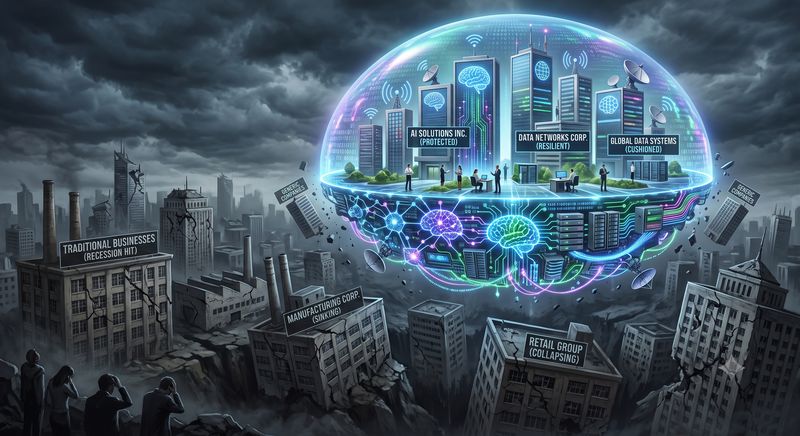
The comprehensive global growth report released by Moody's Analytics reveals that the high-velocity artificial intelligence boom has become the ultimate macroeconomic anchor, dividing the international system into a K-shaped world economy.
What the new global outlook reveals
On Thursday, July 16, 2026, Moody's Analytics published its highly anticipated global economic assessment, titled Global Outlook: Running Hot, Running Cold. The baseline findings confirmed that the international economic engine is moving into a visibly slower operational phase. High borrowing costs enforced by central banks, persistent supply-driven inflation, and ongoing trade disruptions have created massive headwinds for traditional consumer demand.
The analytical report formally projects global GDP growth to drop to a subdued 2.5% for the annual cycle, before edging up slightly to 2.8% next year. While traditional commercial infrastructure faces a steep cooling trend, the evaluation brought to light an absolute structural split. The explosive expansion of the artificial intelligence investment cycle has emerged as the single most powerful counterweight preventing a much deeper global recession.
The data behind the two speed economy
The comparative metrics inside the global ledger highlight the extreme divergence between competing economic regions and tech value chains:
- Moody's Analytics has pegged upcoming global GDP growth at a quiet 2.5% for the current cycle.
- The United States economic machine is forecast to maintain a moderate 2% expansion path.
- China's industrial output faces ongoing structural imbalances, cooling down to a projected 4.6%.
- Despite losing a step amid the broader international moderation, India is firmly locked to remain among the world's fastest-growing major economies.
How the AI investment cycle cushions the global downturn
The part most people get wrong when analyzing a global macroeconomic slowdown is treating an economic contraction as a uniform tide that lowers all boats equally. The common consensus says that when high interest rates reduce everyday household consumption, every single industrial index, manufacturing sector, and corporate balance sheet must slide down into the same defensive freeze.
The reality introduces an uneven operational phenomenon that economists call the K-shaped world economy. The massive, multi-billion dollar capital expenditure cycles flowing into frontier artificial intelligence technologies have completely unbundled from traditional consumer retail patterns. Global hyperscalers and multinational enterprises are refusing to pause their technology spending, pouring an continuous stream of capital directly into advanced semiconductors, high-density data centers, and advanced computing infrastructure.
This hyper-concentrated infrastructure spending has created a highly lucrative economic shield. The technology-intensive economies of Asia, which hold direct monopolies over microchip fabrication and hardware assembly, are seeing their export channels surge at full velocity. The massive revenues generated by the silicon stack are effectively wiping out the financial damage caused by higher energy bills, allowing tech-integrated hubs to race ahead while un-aligned industries fall behind.
The uneven divergence of the early industrial coal conversions
This structural financial split directly replicates how the dominant industrial economies of Western Europe transitioned into a deep, uneven divergence during the severe manufacturing contractions of the late nineteenth century. Back then, a series of international trade wars and prolonged agrarian banking collapses caused the value of traditional raw commodities and manual workshops to drop significantly, plunging standard merchant houses into bankruptcy.
However, the specific regions that had spent the prior decade investing heavily in mechanized steam-powered factories, high-efficiency steel foundries, and integrated railway networks completely decoupled from the surrounding distress. The global commercial demand for their high-speed manufacturing assets was so absolute that their export books recorded unprecedented gains, using the physical machinery of the modern factory floor to float their economies through a deep continental stagnation.
The risk of policy gridlock and central bank traps
The primary systemic threat to this K-shaped economic framework is the severe policy dilemma it inflicts on central banking institutions. Because the current inflationary pressures are being driven by supply-side geopolitical blockades rather than excessive consumer demand, traditional monetary tightening tools are losing their efficacy. If central banks continue to maintain high interest rates to curb sticky inflation, they risk completely crushing already weak traditional businesses and household budgets, without slowing down the capital-rich technology monopolies that are driving the infrastructure boom.
What to actually watch next
Watch the upcoming quarterly capital expenditure disclosures and hardware export log volumes published by technology-intensive manufacturing hubs over the next six months. If these specific silicon delivery volumes maintain their double-digit growth trajectory despite high global borrowing costs, it will confirm that the technology infrastructure stack has permanently insulated itself from traditional economic cycles.
The ultimate resilience of a modern national economy is no longer determined by the traditional credit health of its retail consumers, but by its absolute structural integration into the global computing value chain.
Frequently Asked Questions
What is "The global economy is splitting into a two speed machine where artificial intelligence value chains decide which nations escape a recession" about?
Global economic forecast published by Moody's Analytics shows that international economic growth will slow down to a muted 2.5% this year. Tighter credit conditions, active geopolitical stand-offs, and lingering inflation are weighing heavily on baseline manufacturing and consumer retail indices across major economies.The global economy is officially shifting into K-shaped recovery pattern. Traditional sectors face severe compression while economies deeply tied into AI and technology supply lines are single-handedly cushioning themselves from the global downturn.
Why does this finance topic matter?
This topic covers a significant development in finance that affects economies, industries, and everyday people. Qrio breaks it down in plain English so you can understand the implications without needing specialized knowledge.
How long does it take to read this explainer?
The brief takes about 30 seconds. The full deep dive takes just a few minutes. You can choose how deep you want to go.
More from Qrio

Oura wants $16 billion for a ring, and one number explains why

India's biggest stock exchange is finally going public and it has to list on its rival