Oura wants $16 billion for a ring, and one number explains why
4 min read · by Qrio · 9 Sept 2026
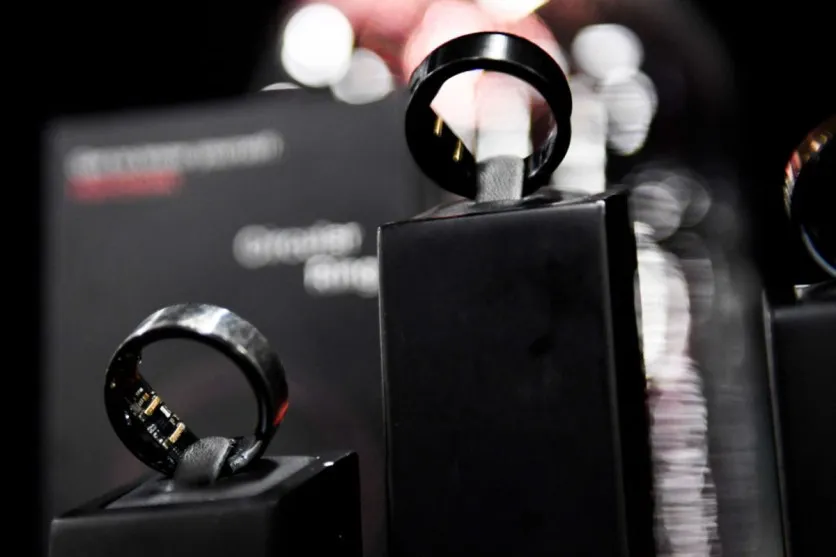
Oura sells a titanium ring. What it is actually listing is a subscription with a finger attached.
Hardware companies are usually terrible public investments, and everyone knows why. You sell someone a device, you book the revenue once, and then you spend heavily to persuade them to buy the next one. Growth requires new customers forever. The market prices that reality accordingly, at low single-digit multiples of sales.
Oura is asking for roughly 13 times revenue. So look at what it is actually showing investors.
The number that carries the price.
Over 94% of people who buy an Oura ring sign up for the paid membership. That is the whole thesis in one statistic.
For most subscription hardware, attach rate is where the story dies. People buy the printer and dodge the ink plan, buy the camera and skip the cloud storage. Oura's answer is structural rather than clever: the ring is close to useless without the membership. The sensors collect data, the app interprets it, and the interpretation is the product. You are not paying a subscription on top of a device you own. You are buying a sensor that requires a subscription to mean anything.
The retention is the proof it works. About 85% are still paying after a year, and CEO Tom Hale has said around 80% renew after the first year. The average member wears the ring 23 hours a day, which is close to the theoretical maximum for an object you also charge. Cumulatively, members have generated nearly 42 billion hours of biometric data.
That produces a revenue mix worth looking at directly. Of the $1.21 billion in the nine months to June, hardware was $974 million and membership $240 million. Subscriptions are still only about a fifth of sales, but they are the fifth that recurs, arrives at very high margin, and grows with every ring already sold rather than every ring yet to be sold. Total gross margin is 55%, high for consumer hardware and low for software, which is exactly what a hybrid should look like. Adjusted EBITDA was $107 million.
A ring buyer who does not subscribe has bought jewellery. That is why 94% subscribe.
The part of the filing to read slowly.
A meaningful share of the up-to-$3-billion offering is existing shareholders selling their stock, not the company raising fresh capital.
That deserves plain language. When a company sells new shares, the money goes into the business to fund growth. When existing holders sell, the money goes to them. Oura's Series B through E investors, including Fidelity, ICONIQ, Whale Rock and Atreides, have been waiting years for an exit, and this is it. That is completely normal and completely legitimate. It also means a chunk of this IPO is a liquidity event dressed as a growth story, and a company already generating net income does not obviously need $3 billion anyway.
Hale has told CNBC that Oura expects close to $2 billion in sales for 2026, roughly double the $1 billion of 2025 and quadruple 2024's $500 million. The company employs more than 900 people across San Francisco and Finland, where it was founded in 2013.
Where it could go wrong.
Two risks, and the first is the one people underrate.
Concentration. Oura sells essentially one product category. Apple, Samsung and a wave of cheaper rivals can all build a ring, and Apple in particular can bundle health features into hardware people already own, at a price of zero. Oura's protection is not the titanium. It is the data history and the habit, which is real but is not a patent.
Then credibility. In August, a proposed class action alleged Oura made misleading claims about the accuracy of its sleep tracking. The company responded that "Oura's sleep staging has been validated and compared favorably in multiple studies" against clinical standards. For a business whose entire premium rests on people trusting what the app tells them each morning, a fight about accuracy is not a side issue. It is an argument about the product.
Goldman Sachs, Morgan Stanley, JPMorgan, Allen & Company and Jefferies are running the listing. If it prices where hoped, the market will have decided something interesting: that a device is worth software money when it becomes genuinely inconvenient to stop wearing.
Frequently Asked Questions
What is "Oura wants $16 billion for a ring, and one number explains why" about?
Oura filed its S-1 publicly on September 3, heading for Nasdaq under the ticker OURA, seeking up to $3 billion at a valuation above $16 billion. That is about 45% more than the roughly $11 billion its late-2025 Series E implied. Revenue for the nine months to June 30 was $1.21 billion, up 74%, and unusually for a hardware company going public, it made money: net income of about $61 million. But the figure that justifies a software-style price tag is buried in the membership data, and it is the reason a ring is not being valued like a gadget.
Why does this finance topic matter?
This topic covers a significant development in finance that affects economies, industries, and everyday people. Qrio breaks it down in plain English so you can understand the implications without needing specialized knowledge.
How long does it take to read this explainer?
The brief takes about 30 seconds. The full deep dive takes just a few minutes. You can choose how deep you want to go.
More from Qrio
India's biggest stock exchange is finally going public and it has to list on its rival

India grew at 7.8% and its stock market shrugged