SpaceX made 92% more money this quarter and its stock crashed anyway
4 min read · by Qrio · 6 Aug 2026
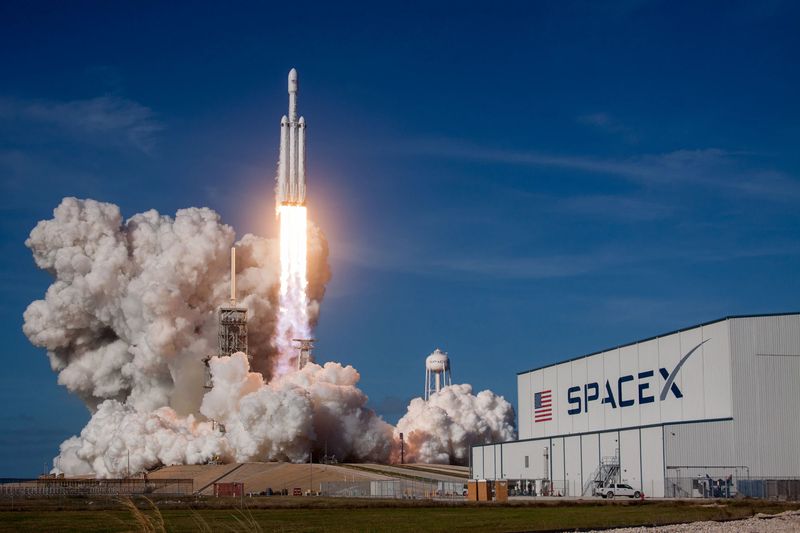
SpaceX beat every number that used to matter for a rocket company. Wall Street looked past all of them and focused on one number that didn't exist in this business two years ago: how much it's spending on AI.
For most of its history, judging SpaceX has been simple: did rockets launch, did Starlink subscribers grow, did revenue climb. On August 4, 2026, the company delivered its first earnings report as a newly public company, and by that traditional scorecard, it was a clear win. Revenue hit $7.8 billion for the April-to-June quarter, up 92% from the same period last year and comfortably ahead of the $6.8 billion Wall Street had penciled in. Analysts had also expected a net loss of $1.9 billion; the actual results beat that too.
None of it mattered to the stock. Shares tumbled more than 8% in after-hours trading, closing around $114.53, a price that sits 15% below where SpaceX priced its record-setting June IPO and 49% below the peak the stock hit on June 16. Since that peak, the company has shed more than $1 trillion in market value, a figure roughly comparable to the entire market capitalization of Tesla.
Why beating expectations wasn't enough
The culprit is capital spending, and specifically, spending tied to Musk's AI ambitions rather than rockets or satellites. Total capital expenditure for the quarter reached $18.3 billion, more than six times what the company spent in the same quarter a year earlier. Of that, $15.8 billion was tied to Musk's xAI-linked operations, itself roughly double the previous quarter's figure and well above the $13.09 billion analysts had expected. The AI business generated $2.5 billion in revenue during the quarter but posted a $1.2 billion operating loss on top of that spending. Investors, in other words, weren't punishing SpaceX for a bad quarter. They were punishing it for the size and pace of a bet that hasn't started paying for itself yet.
Musk, for his part, sounded entirely unbothered on the earnings call, framing the spending as a growth story rather than a warning sign. "Our rate of growth certainly is faster than anyone else," he said, projecting SpaceX's AI compute capacity would top 2 gigawatts by year end. He drew a direct comparison between his two very different businesses: "The terrestrial data centers are a trivial problem compared to making gigantic reusable rockets." He also outlined plans for daily rocket launches within a year, robots manufacturing on the Moon, an orbital satellite network called Starmind beginning in 2027, and a Grok 5 model trained on SpaceX's own data launching before year end.
A useful parallel
Picture a restaurant that just posted its best sales quarter ever, more customers, more revenue, everything up and to the right, and then the landlord raises rent by six times because the owner announced plans to open a second, unrelated business next door using the same cash. The core restaurant is doing fine. What's spooking everyone is the size of the side bet, made with money that could have gone toward the thing that's actually working.
"The terrestrial data centers are a trivial problem compared to making gigantic reusable rockets." Elon Musk, SpaceX CEO, on the company's Q2 2026 earnings call
The honest catch
SpaceX's underlying rocket and satellite business is not in trouble, revenue nearly doubled and both the revenue and loss figures beat Wall Street's forecasts by a wide margin. It's also true that markets are currently nervous about AI capital spending across the entire industry, not just at SpaceX, so some of this reaction reflects a broader mood rather than a verdict on SpaceX specifically. Musk's framing, that reusable rockets were the harder problem all along, is not obviously wrong, and a company willing to spend aggressively on AI infrastructure now could be well positioned if that bet pays off later. The timing does raise a separate concern: SpaceX's insider lockup period ends just two days after this earnings report, opening the door to more than $100 billion in potential stock sales, a coincidence of timing that adds pressure regardless of the business fundamentals.
A rocket company just had its best revenue quarter in its history and got treated like it missed. That's not really a story about rockets anymore. It's a story about how fast the market has decided AI spending needs to prove itself.
Frequently Asked Questions
What is "SpaceX made 92% more money this quarter and its stock crashed anyway" about?
SpaceX reported its first earnings as a public company on August 4, 2026: revenue of $7.8 billion, up 92% year over year and well above the $6.8 billion analysts expected. Its stock fell more than 8% anyway, closing around $114.53, down 15% from its IPO price and 49% from its June 16 peak, erasing over $1 trillion in market value. The reason: quarterly capital spending hit $18.3 billion, roughly six times what it was a year ago, with $15.8 billion tied to Elon Musk's AI ambitions, and the AI unit alone lost $1.2 billion. A rocket company just got graded like an AI company, and it failed the test.
Why does this business topic matter?
This topic covers a significant development in business that affects economies, industries, and everyday people. Qrio breaks it down in plain English so you can understand the implications without needing specialized knowledge.
How long does it take to read this explainer?
The brief takes about 30 seconds. The full deep dive takes just a few minutes. You can choose how deep you want to go.
More from Qrio
Oura wants $16 billion for a ring, and one number explains why
India's biggest stock exchange is finally going public and it has to list on its rival