One indian conglomerate rattled two different industries in a single year. It used the same playbook both times.
5 min read · by Qrio · 15 Jun 2026
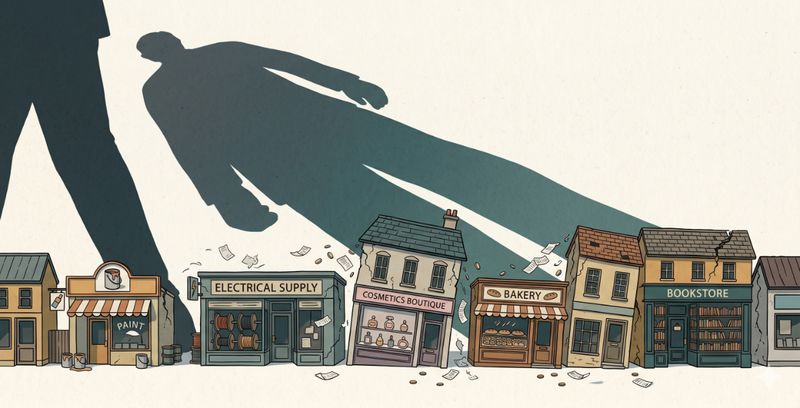
Most companies enter a market and fight for scraps. This one enters and the incumbents start bleeding before it has sold a thing.
The announcement that wiped out billions
On February 27, 2025, UltraTech Cement, the flagship company of the Aditya Birla Group, put out a simple press release: it would invest 1,800 crore rupees to build a cables and wires factory in Gujarat. No product had launched. No sales had been made. No dealer had been approached. It was just an announcement. By the end of that trading day, five of India's biggest cable companies had been hammered. Polycab fell 15 to 19 percent. KEI Industries fell 15 to 21 percent. RR Kabel lost around 20 percent. Havells dropped about 8 percent. Finolex fell over 5 percent. Billions of rupees in combined market value disappeared in a few hours, entirely because of a company that had not yet made a single metre of cable. That is how powerful a reputation becomes when you have already proved you know how to break an industry open.
The proof was what happened the year before:
- In 2024, the same group launched Birla Opus paint, spending over 10,000 crore building six factories before selling a single tin.
- Analysts expected it to capture 1 to 2 percent of the paint market in its first year. It took nearly 7 percent.
- Asian Paints, which had held almost 60 percent of the market for decades, saw its share slide to around 52 percent and its stock fall roughly a third.
- The Aditya Birla Group is a $65 billion conglomerate operating across six continents, with holdings in cement, metals, fashion, telecom, and financial services.
The playbook, in five moves
Here is the pattern, and it is the same both times. First, pick an industry where the leaders have grown comfortable and margins are fat. Indian paints had operating margins above 20 percent. Cables and wires, while thinner, are growing at 13 percent a year and the organised players hold 70 percent of the market.Second, build enormous manufacturing capacity before you sell anything. In paints, Birla built six factories with 1.3 billion litres of annual capacity. In cables, it committed 1,800 crore for a plant designed to produce at scale from day one. Third, go straight for the distribution network. In paints, this meant offering dealers better margins and longer warranties than Asian Paints. In cables, it plans to leverage UltraTech's existing network of dealers who already sell cement to the same builders and contractors who buy wires. Fourth, price aggressively. Birla Opus entered 10 to 15 percent below Asian Paints on comparable products. The cables business is expected to follow the same approach. Fifth, and this is the part most people miss: use the sheer size of the group to absorb losses for years that no standalone competitor can match. Asian Paints is a paint company. Polycab is a cable company. The Aditya Birla Group is a $65 billion empire that can fund years of losses in one division from profits in another without breaking a sweat.
The playbook is simple. Build the factory before you sell a thing. Go for the dealers, not the customers. And be rich enough to lose money longer than anyone else can survive.Why it works even before a product ships
The cable announcement proves something that business schools teach but rarely demonstrate so vividly: in certain markets, the threat of a deep-pocketed entrant is almost as damaging as the entry itself. The moment Birla announced, investors did the maths and priced in years of margin pressure for every incumbent. Polycab, which gets 65 to 70 percent of its revenue from cables, dropped the furthest because it has the most to lose. Havells, more diversified into consumer electronics, fell less. The market did not wait to see whether Birla's cables were any good. It assumed, based on the paint precedent, that the playbook would work again, and punished the incumbents immediately. As one prominent analyst wrote on the day of the announcement: "When they announced the paints entry, I said it would derate the industry. It played out as predicted."
Where to spot it next
The Aditya Birla Group is not done. In 2025 alone it also launched Birla Cosmetics, a beauty and personal care brand, signalling a possible move into yet another fat-margin consumer category dominated by comfortable incumbents like Hindustan Unilever and Marico. But the bigger lesson is not about one conglomerate. It is a pattern that repeats across industries and countries whenever a player with deep capital, existing distribution relationships, and patience enters a profitable market that a specialist has dominated. Amazon did it to retail. Reliance Jio did it to telecom. The incumbents always have better products, deeper expertise, and loyal customers.
The attacker always has one thing they cannot match: the ability to lose money for longer. The next time you see a press release from a large conglomerate announcing entry into a "new adjacent business," check who the market leader is and look at their stock that day. The playbook will already be running.
Frequently Asked Questions
What is "One indian conglomerate rattled two different industries in a single year. It used the same playbook both times." about?
In 2024, a conglomerate entered the paint business and grabbed nearly seven percent of the market in its first year, three times what experts predicted. Then in early 2025, it announced it was entering the cables and wires business. It had not sold a single cable yet. On that one announcement alone, five rival companies lost up to 21 percent of their stock value in a single day. The playbook is the same both times. Once you see it, you will recognise it everywhere.
Why does this tech & ai topic matter?
This topic covers a significant development in tech & ai that affects economies, industries, and everyday people. Qrio breaks it down in plain English so you can understand the implications without needing specialized knowledge.
How long does it take to read this explainer?
The brief takes about 30 seconds. The full deep dive takes just a few minutes. You can choose how deep you want to go.
More from Qrio
Oura wants $16 billion for a ring, and one number explains why

India's biggest stock exchange is finally going public and it has to list on its rival