One fitness app survived the great digital health collapse by buying old-fashioned concrete bricks
4 min read · by Qrio · 9 Jul 2026
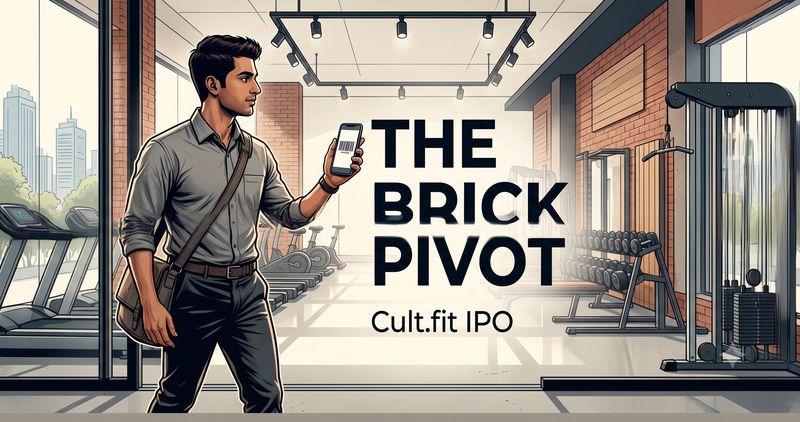
Cult.fit's journey to a public listing proves that technology platforms cannot survive in high-touch consumer industries without acquiring real-world physical infrastructure.
The massive public listing filing in New Delhi
The domestic fitness and wellness sector reached a mature milestone on July 7, 2026, as Cult.fit formally filed its initial public offering documents with market regulators. The company is seeking to raise a substantial ₹950 crore to fund its next multi-year growth chapter.
This filing represents a massive validation for the brand, which began as a localized tech-driven aggregator before transforming its core business model. The equity launch lands during a highly active period for the domestic startup market, occurring alongside smaller, specialized green packaging funding expansions.
A few numbers show the scale:
- The total capital target set for this landmark initial public offering stands at ₹950 crore.
- Early-stage tech packaging startups secured independent funding rounds of ₹40 crore to demonstrate ongoing private market liquidity.
- Consumer health applications globally have experienced an average 45% drop in user retention since the post-pandemic digital peak.
Why concrete bricks saved a software application
Here is the part most people get wrong. They look at a successful app-based company hitting the public markets and assume it is a victory for pure digital software scaling. They think the value is driven by algorithms, push notifications, and online community forums.
The reality reframes everything. Cult.fit is going public because it did something pure software companies are terrified of, it embraced the high overhead cost of physical real estate. When the post-pandemic world reopened, millions of consumers uninstalled their home workout apps because human beings fundamentally crave physical environments, real-world community, and hands-on coaching.
Instead of fighting this consumer migration by spending millions on digital advertising, Cult.fit pivoted. They used their venture capital to aggressively buy up independent gym chains, standardize the workout formats, and convert physical bricks into a massive, interconnected network of local health centers. The app ceased being the product and became a simple, friction-free tool to manage real-world foot traffic.
The physical expansion model of Netflix
This transition from digital delivery to real-world control directly parallels the classic strategic evolution of Netflix during its early operational phases. When Netflix started, it was a pure logistics software company that mailed physical DVDs to people's houses through a digital queue system.
When the market shifted toward streaming, critics thought the company would be wiped out by traditional media studios who owned the actual movie libraries. Netflix survived not by building a better website, but by spending billions to buy up physical studio spaces, sound stages, and production equipment to manufacture their own content. They realized that a digital pipeline means nothing if you do not own the physical core of what the customer is consuming.
The high operational costs of running real estate
The immediate risk to this public market debut is the crushing financial pressure of fixed real estate liabilities. Running hundreds of physical gym centers across multiple cities means the company must pay massive commercial rents, staff costs, and equipment maintenance bills regardless of whether consumers show up to work out. If a localized economic slowdown causes consumers to trim their discretionary spending on fitness memberships, these heavy brick-and-mortar overheads can quickly erase the company's operating margins and trigger deep losses.
What to actually watch
Watch the same-store utilization rate across tier-2 and tier-3 expansion hubs over the next two quarters. If the company can maintain an average center occupancy rate above 70% while passing on pricing increases to absorb local inflation, it will prove that their physical brand moat is deep enough to sustain long-term profitability on the public markets.
A tech platform only achieves true market dominance when it stops hiding behind a digital screen and starts owning the physical assets where its customers stand.
Frequently Asked Questions
What is "One fitness app survived the great digital health collapse by buying old-fashioned concrete bricks" about?
On July 7, 2026, Cult.fit officially filed its draft for a massive ₹950 crore public listing. Just a few years ago, the entire digital health startup space collapsed as consumers abandoned home workout applications to return to real-world routines. Most technology platforms burned through millions of dollars trying to force users onto digital screens, only to slide into bankruptcy. But Cult.fit pulled off a counter-intuitive survival pivot by abandoning pure software and buying up physical gym chains.
Why does this tech & ai topic matter?
This topic covers a significant development in tech & ai that affects economies, industries, and everyday people. Qrio breaks it down in plain English so you can understand the implications without needing specialized knowledge.
How long does it take to read this explainer?
The brief takes about 30 seconds. The full deep dive takes just a few minutes. You can choose how deep you want to go.
More from Qrio

Oura wants $16 billion for a ring, and one number explains why

India's biggest stock exchange is finally going public and it has to list on its rival