India Macro
India promised the world $1 trillion in exports this year. It fell $150 billion short
By Qrio · 17 August 2026 · 4 min read
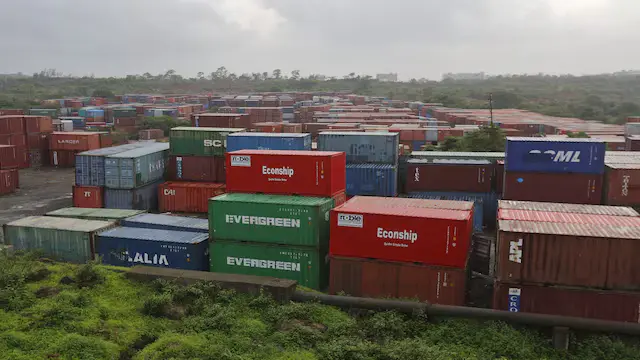
A country just posted its highest export total in history and is still being described as having missed its target. Both of those things are true, and the gap between them is the real story.
In April 2026, India's Ministry of Commerce and Industry confirmed that combined merchandise and services exports for the fiscal year that had just ended, April 2025 through March 2026, totaled $860.09 billion, a record high and a 4.22% increase over the $825.26 billion recorded the previous year. By almost any measure, that is a good number. It is also roughly $140 billion short of the $1 trillion the government had been publicly targeting for that exact year, and it landed close to what the Global Trade Research Initiative, a New Delhi-based policy think tank, had projected months earlier: exports near $850 billion, a $150 billion shortfall. GTRI founder Ajay Srivastava had put it bluntly ahead of the year-end numbers, saying the $1 trillion target now "looks more aspirational than realistic in a slowing, protectionist global economy."
The insight most coverage flattens into a single number: this was not a story of decline, it was a story of a target moving faster than reality could follow. Total exports grew. They just didn't grow anywhere near fast enough to close a trillion-dollar gap that was, by the government's own repeated statements, supposed to close this year. Services exports did their part, climbing from roughly $387 billion to around $421 billion. Merchandise exports barely budged, from $437.70 billion to $441.78 billion, a rise of less than 1%.
Why goods exports stalled has a specific, named cause. In August 2025, the United States doubled tariffs on many Indian goods to 50%, among the highest tariff rates Washington imposed on any country during that period. The Trump administration's stated reason was not trade competitiveness at all, it was Russia. More than a third of India's crude oil imports come from Russia, and the White House argued that India's continued purchases of discounted Russian oil were indirectly helping fund Russia's war in Ukraine, framing the tariffs as a national security response rather than a trade dispute. India's government called the move "unfair, unjustified and unreasonable" and estimated the tariffs would hit more than $48 billion worth of its exports. In the months that followed, India's exports to the US fell by roughly 21% between May and November 2025.
A target that keeps resetting instead of getting revised. What makes this more than a one-year miss is the pattern around it. Commerce and Industry Minister Piyush Goyal did not retire the $1 trillion figure once FY26 came up short. In May 2026, he set the same $1 trillion target again, this time for the fiscal year that had just begun, alongside a new five-year goal of $2 trillion. By August 12, 2026, Goyal was citing 15% export growth in the new year's first four months as reason for confidence. That is a familiar shape for a Modi government target: the $5 trillion economy goal, first promised for 2025 at Davos in 2018, has been quietly re-timed more than once, and India's GDP as of the FY26 data sat around $3.6 trillion, still well short of that older promise too.
A useful parallel. Picture a runner who announces, every January, that this is the year they'll finally break four hours in a marathon. Each year they run a bit faster than the year before, sometimes a personal best, and each year they miss the four-hour mark. Nobody would call the runner a failure exactly, they keep improving. But at some point, announcing the same four-hour goal every January stops being a target and starts being a ritual, one that lets the runner feel driven without ever being measured against the year they first said it out loud.
"The $1 trillion exports target now looks more aspirational than realistic in a slowing, protectionist global economy."- Ajay Srivastava, founder, Global Trade Research Initiative
The honest catch. A $140 to $150 billion shortfall against a self-set political target is not the same as an economic crisis, India's exports still grew, still hit a record, and services trade in particular remains a genuine bright spot. It is also true that GTRI's projection and the government's own final figures differ by about $10 billion, a reminder that even the "shortfall" number depends on whose estimate you use and when it was made. And the US tariff explanation, while well documented and directly tied to a stated Russian-oil rationale, is not the sole cause; weak global demand and a slowing world economy were already pressuring goods exports before the tariffs took full effect.
India didn't fail to grow its exports this year. It failed to grow them at the speed of its own promise, and it has already made the same promise again.
More india macro stories
India Macro
India's biggest stock exchange is finally going public and it has to list on its rival
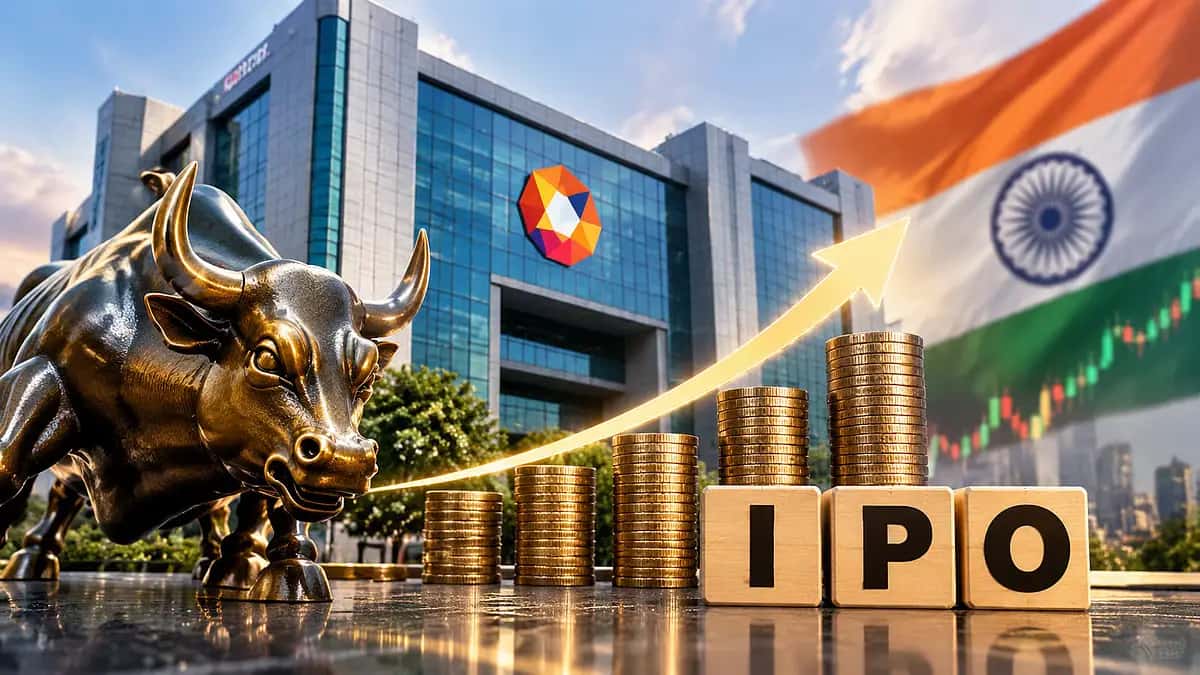
On September 4, the Securities and Exchange Board of India cleared the National Stock Exchange to launch its IPO, ending a wait of nearly a decade. The issue is an offer for sale of 14.89 crore shares, about 6% of the company, worth roughly Rs 30,000 crore. That would make it the largest public issue in Indian history, ahead of Hyundai Motor India's Rs 27,870 crore in October 2024, and implies a valuation above Rs 5 lakh crore. Subscription is expected to open September 15. The shares will trade on the BSE, the rival NSE has spent thirty years leaving behind.
7 September 2026 · 4 min read

India Macro
India grew at 7.8% and its stock market shrugged
India's economy expanded 7.8% year on year in the June quarter, comfortably beating both the Reserve Bank of India's 7% projection and a market consensus of about 7.1%. That is a strong number for an economy absorbing a six-month oil shock. The stock market's response has been a shrug. On Thursday the Sensex fell 417.49 points to 76,152.86 and the Nifty 50 slipped to 23,873.45, after opening higher and briefly crossing 24,000. Foreign investors have pulled $24.6 billion out of Indian equities this year. The index and the economy are not the same animal.
4 September 2026 · 3 min read