India is carving massive holes in Rajasthan's salt deposits to turn oil storage into a profit engine.
5 min read · by Qrio · 20 Jul 2026
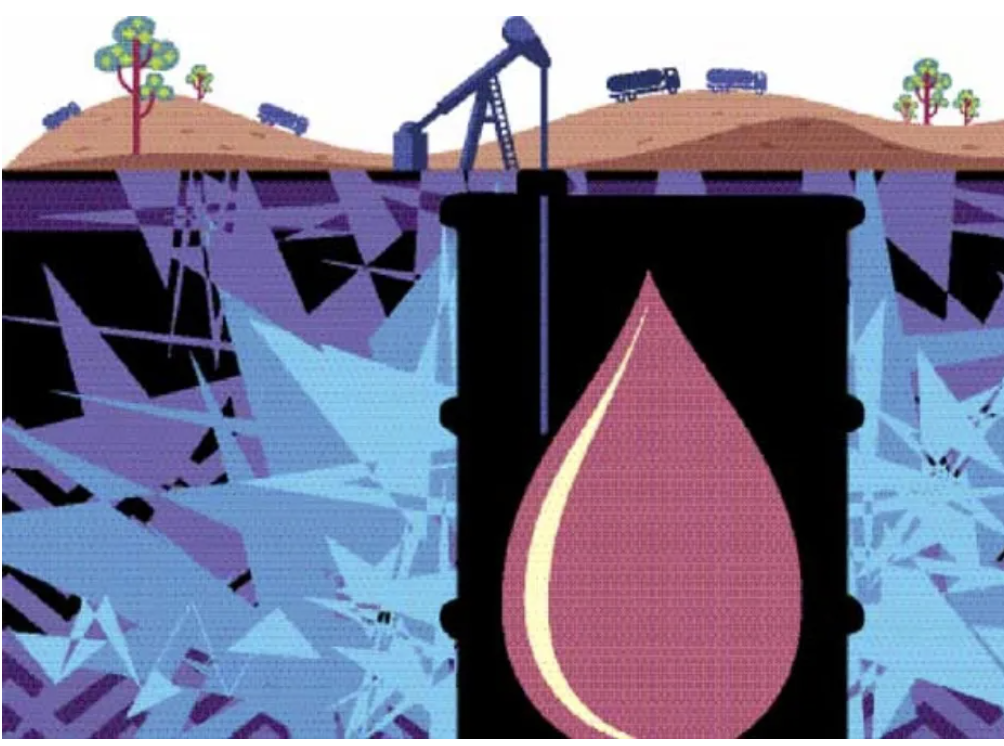
By swapping hard rock for soft salt, India is transforming its national energy defense strategy from a sunk cost into a highly lucrative trading business.
India imports over 85 percent of the crude oil it consumes. This extreme dependence leaves the country highly vulnerable to global geopolitical shocks. If a conflict breaks out in the Middle East or a key shipping lane is blocked, India's economy could grind to a halt within weeks.
To protect against this nightmare scenario, the government built the Strategic Petroleum Reserve. Think of it as a massive national insurance policy, consisting of enormous underground storage facilities capable of holding tens of millions of barrels of crude oil.
Historically, these reserves were hollowed out of solid rock formations in coastal cities like Visakhapatnam and Mangaluru. But engineering these unlined rock caverns is a slow, punishingly expensive process. Now, India is pivoting north toward the desert sands of Rajasthan, utilizing a completely different geological feature that changes both the engineering and the economics of energy security: underground salt caverns.
The magic of self-healing rocks
Building an oil reserve inside a salt deposit sounds counterintuitive. We think of salt as something that dissolves when wet. However, deep underground, massive salt domes act very differently. Under immense geological pressure, rock salt behaves more like a thick plastic than a brittle stone.
If a tiny crack develops in a salt wall, the pressure of the surrounding earth slowly pushes the salt back together, effectively self-healing the fracture. This makes salt caverns incredibly secure containers for liquid hydrocarbons. Unlike rock caverns, which require meticulous engineering to ensure water does not seep in and oil does not leak out, salt walls form a natural, impermeable seal.
To create these cavernous spaces, engineers use a technique called solution mining. They pump fresh water deep into the salt bed, dissolve the salt to create a controlled, massive void, and then pump the salty brine out.
This process is significantly faster and dramatically cheaper than blasting through solid granite with explosives.
From safety net to trading floor
The true revolution in India's new oil strategy is not the geology, it is the business model.
The existing rock-cavern reserves are purely defensive. The government bought the oil, filled the holes, and left it there, locking up billions of rupees in idle capital. It was an expensive asset that yielded no financial return unless a major crisis occurred.
With the new salt cavern projects in Rajasthan, India is adopting a commercial-cum-strategic model. Instead of buying all the oil itself, the government is inviting global energy giants, such as the Abu Dhabi National Oil Company, to lease the storage space.
This creates a win-win scenario for both parties. The foreign oil companies get a highly strategic storage hub close to major Indian refineries, allowing them to rapidly distribute crude oil to the domestic market when demand spikes. In exchange, India gets two massive benefits. First, the foreign companies bear the cost of filling the caverns. Second, in the event of a severe global supply disruption or a national emergency, the Indian government retains the absolute right of first refusal to seize and use that oil to keep the nation running.
Acting like a commodity trader
This commercial freedom completely alters how India manages its energy reserves. In traditional rock caverns, pumping oil in and out frequently is difficult and damages the structural integrity of the unlined rock. Salt caverns, by contrast, are highly resilient. Oil can be injected and withdrawn repeatedly without compromising the structure.
This agility allows India to behave like a sophisticated commodity trader. When global oil prices crash, India can aggressively buy cheap crude to fill its salt caverns. When prices skyrocket, it can lease the space at a premium or allow its partners to sell the stored oil into the market, taking a cut of the profits. Energy security ceases to be a heavy burden on the national treasury, transforming instead into a self-sustaining, profitable enterprise.
The environmental and logistical catch
Despite the clear economic benefits, the strategy faces a major hurdle: water scarcity. Solution mining requires billions of liters of fresh water to dissolve the underground salt formations. Rajasthan is an arid state where water is a precious, highly contested resource. Finding enough water to carve out these massive caverns without depriving local communities or agriculture is a delicate tightrope walk for project planners.
There is also the challenge of disposing of the highly concentrated salt brine that is pumped back out of the earth. If managed poorly, it can destroy local soil fertility and pollute scarce groundwater supplies.
What to watch next
Watch for the finalization of public-private partnership agreements and environmental clearances for the Rajasthan sites. The speed at which the government can secure sustainable water sources, potentially by treating industrial wastewater, will determine how quickly this energy shield becomes operational.
If successful, India will join an elite club of nations, including the United States and Germany, that use salt caverns to dominate global energy logistics. It is a striking reminder that in modern geopolitics, true security comes not from locking your resources away in a vault, but from building a smarter, more dynamic marketplace.
Frequently Asked Questions
What is "India is carving massive holes in Rajasthan's salt deposits to turn oil storage into a profit engine." about?
For years, India safeguarded its energy security by pumping millions of barrels of emergency crude oil into deep underground rock caverns. It was a purely defensive, expensive safety net. Now, the strategy is changing. India is preparing to build its first salt-cavern strategic reserves in Rajasthan. Unlike rock caverns, salt formations are self-healing and dramatically cheaper to develop. More importantly, India is adopting a commercial model, allowing global oil giants to lease the space, trade the oil, and turn an expensive security blanket into a revenue-generating asset.
Why does this india macro topic matter?
This topic covers a significant development in india macro that affects economies, industries, and everyday people. Qrio breaks it down in plain English so you can understand the implications without needing specialized knowledge.
How long does it take to read this explainer?
The brief takes about 30 seconds. The full deep dive takes just a few minutes. You can choose how deep you want to go.
More from Qrio

Oura wants $16 billion for a ring, and one number explains why

India's biggest stock exchange is finally going public and it has to list on its rival