For 50 Years, No One Could Touch Asian Paints. Then a Richer Giant Walked In.
5 min read · by Qrio · 7 Jun 2026
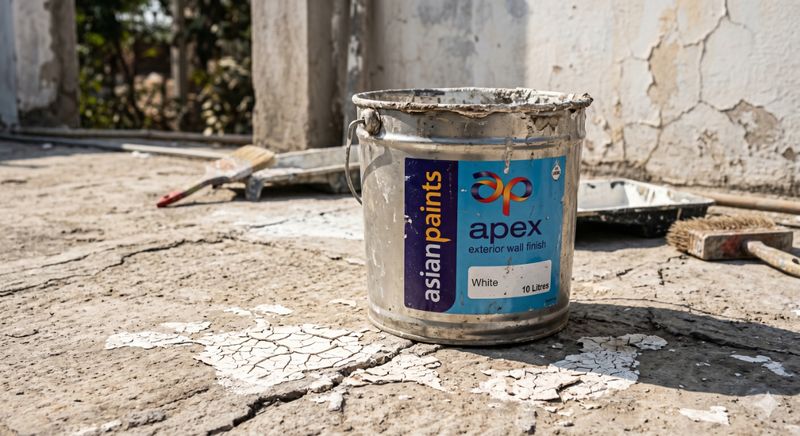
The story of how a "boring" company built the strongest fortress in Indian business, and why money alone may be enough to storm it.
The wall everyone thought was permanent
For most of the last 50 years, Asian Paints was the closest thing Indian business had to an unbreakable company. It held nearly **60 percent of the entire paint market, **more than its next three rivals combined, and it earned higher profits than all of them. Investors paid an extraordinary price for its shares precisely because they believed nothing could dislodge it. The strange part is that this dominance had almost nothing to do with the paint itself. Anyone can make decent paint. What no one could copy was the machine Asian Paints built to get that paint onto the wall faster than anyone else, and that machine is the whole story.
A few numbers show how complete the dominance was, and how fast it is now slipping:
- Asian Paints held around 59 percent of the market. In a single year it fell to 52 percent.
- The new challenger, Birla Opus, captured nearly 7 percent in its first year. Analysts had expected it to take just 1 to 2.
- The Aditya Birla Group spent over 10,000 crore rupees building paint factories before selling a single tin.
- Asian Paints' stock has fallen roughly a third from its peak, and its profit dropped 45 percent in one recent quarter.
The machine, not the paint
Here is what actually made Asian Paints unbeatable. Paint is a low-value, heavy, slow-moving product that a shopkeeper hates to stock, because it ties up money and shelf space. Asian Paints solved that better than anyone on earth. It connected **over 150,000 dealers **to a system that could restock a shop several times a day, so a retailer almost never had cash stuck in unsold tins and almost never lost a sale to an empty shelf. It put colour-mixing machines in shops so any shade could be made on the spot. It gave dealers credit, training, and support. The result was that a dealer made more money, with less risk, by selling Asian Paints than anything else. That preference, multiplied across 150,000 shops and refined over decades, was the fortress. A rival could match the paint in a week. Matching the machine would take a generation.
Why money is the one thing that can breach it
So how do you attack a fortress that took 50 years to build? You do not out-clever it. You out-spend it. That is exactly what the Aditya Birla Group, one of India's largest conglomerates, decided to do. Rather than enter quietly,** it spent over 10,000 crore rupees** building enormous paint factories before it sold anything, instantly becoming one of the largest paint producers in the country by capacity. Then it went straight for the one thing holding Asian Paints up: the dealers. Birla Opus offered shopkeepers better margins, longer warranties, and aggressive incentives to stock its tins, and it priced its paint **10 to 15 percent below the leader. **It was not trying to make better paint. It was trying to make the dealer a better offer, which is the only language the fortress understands.
A rival could copy the paint in a week. Copying the machine took 50 years. So Birla did not copy it. It outspent it
The fortress is cracking faster than anyone predicted
The most telling detail is how badly the experts underestimated this. When Birla Opus launched, seasoned analysts expected it to win 1 to 2 percent of the market in its first year, the usual fate of a new entrant facing a giant. Instead it took nearly 7 %, the fastest rise any challenger has ever managed in this industry, growing close to three times faster than the market itself. Asian Paints has been forced into the exact corner its moat was supposed to prevent: cutting prices, spending more on advertising, and fighting for dealers it once took for granted. It has even filed and faced regulatory complaints over how it treats those dealers, a sign of how fiercely the counter is now being contested.
The company is not collapsing. But the aura of invincibility, the very thing investors paid a premium for, is gone.
The lesson worth keeping
The Asian Paints story is really a lesson about what kind of advantage actually lasts. A great product can be copied. A clever idea can be stolen. But a system built patiently over decades, woven into the daily habits of 150,000 shopkeepers, was supposed to be the rare advantage that money alone could not buy. Birla Opus is testing whether that was ever true, and the early answer is uncomfortable: a deep enough pocket, aimed precisely at the one thing holding a fortress up, can crack even the strongest wall in Indian business. The next time someone tells you a company has an unbreachable moat, remember that the strongest moat India ever built is being crossed right now, by a rival who simply decided to pay whatever it cost.
Frequently Asked Questions
What is "For 50 Years, No One Could Touch Asian Paints. Then a Richer Giant Walked In." about?
Asian Paints was the company investors called unbreakable. For decades, it held nearly 60 percent of the Indian paint market, not by making better paint, but by building a delivery system no rival could copy. Then in 2024, a giant with far deeper pockets quietly entered the fight. Analysts expected it to grab 1 to 2 percent of the market. In one year, it took almost 7, and Asian Paints lost a third of its value.
Why does this business topic matter?
This topic covers a significant development in business that affects economies, industries, and everyday people. Qrio breaks it down in plain English so you can understand the implications without needing specialized knowledge.
How long does it take to read this explainer?
The brief takes about 30 seconds. The full deep dive takes just a few minutes. You can choose how deep you want to go.
More from Qrio
Oura wants $16 billion for a ring, and one number explains why

India's biggest stock exchange is finally going public and it has to list on its rival