FIFA wanted $100 million from India. It settled for less than half.
4 min read · by Qrio · 5 Jun 2026
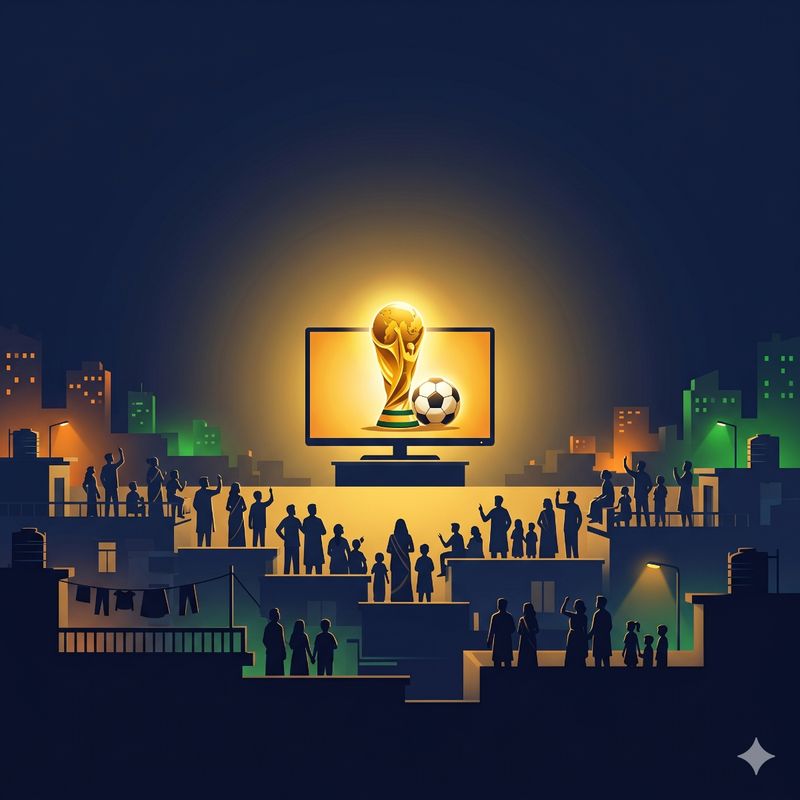
The 2026 World Cup nearly had no home in India. The story of why it almost went dark, and who finally switched the lights on, tells you exactly who runs Indian sport.
The negotiation nobody wanted to talk about
- FIFA opened asking around $100 million for the 2026 and 2030 rights, then cut its ask to about $60 million.
- JioStar, India's biggest platform, talked, put money on the table, and made a final offer of just $15 million before walking away.
- Sony, which aired the 2014 and 2018 tournaments, held discussions but never filed a formal bid.
- Doordarshan entered and produced nothing.
- Ten days before kickoff, Zee signed a deal reported to exceed $40 million.
That final figure is less than half the original ask, and below even the reduced $60 million, which is roughly what Viacom18 paid for the last World Cup. FIFA had already closed deals in more than 180 territories. India, with 1.4 billion people, was the last holdout on earth.
FIFA's press release called India a market of "strategic importance" and "immense potential." It did not mention that FIFA had spent the better part of a year cutting its price in half and watching every credible broadcaster walk.
Why the biggest player walked away
The problem was never the audience. It was the clock.
The 2026 World Cup is being played across the United States, Canada and Mexico. Group-stage matches land in Indian living rooms between ** midnight and 6:30 AM.** No advertiser pays primetime rates for an audience watching at 3 AM, no matter how large it is. That is a structural wall no negotiation can move. On top of that, the Disney-Reliance merger that created JioStar wiped out the bidding war that usually drives these prices up. And JioStar already owns the only thing that reliably prints money in Indian sport: cricket. It did not need a 3 AM football tournament. So the dominant player simply said no.
The company that said yes
Zee did not sign from a position of strength. It signed because it needed a new story.
In January 2024, its $10 billion merger with Sony Pictures Networks India collapsed. When the deal was confirmed dead, Zee's stock fell 30.5% in its worst single day, wiping out nearly 7,300 crore rupees in value. Sony then demanded a $90 million termination fee, which Zee denied owing. A run of weak quarterly profits followed. This was a wounded company. So it did what wounded companies do. It made a bet. Zee launched four new Unite8 Sports channels built specifically around this deal, using a discounted FIFA package as the foundation for a sports platform it is constructing from scratch.
Zee's CEO Punit Goenka framed it as a "clear belief in football's long-term potential." His deputy, Mukund Galgali, called football a sport with "tremendous under-leveraged potential" in India.
Read that carefully. "Under-leveraged" is an admission that the value is not there yet. It is a promise, not a result.
The admission FIFA will never make
Strip out the diplomacy and the truth is simple. These rights were not worth $40 million to any Indian broadcaster on their own commercial terms. The clock alone made the numbers fail. They were worth $40 million to FIFA, to avoid something worse. A blackout in a market of 1.4 billion would not just be embarrassing. FIFA's global sponsors pay for worldwide reach, and India is counted in that promise. Letting it go dark would have weakened FIFA's pitch to every sponsor who signed up on the basis of global audience numbers. So FIFA blinked, and accepted less than half.
What actually happens next
The single most important detail is the length of the deal. Zee did not buy one tournament. It locked in 39 FIFA events through 2034, including three World Cups and the 2027 Women's World Cup. That is a platform investment, not a content purchase. The verdict comes down to one question that no press release can answer. India had over 110 million digital viewers follow Qatar 2022, and not one of them was watching their own team. Are those 110 million a real football audience waiting to be served? Or were they cricket fans who borrowed a few weeks of attention and then went home? So don't watch the price FIFA settled for. **Watch whether India actually becomes a football market. **That answer, not the discount, decides whether Zee made the bargain of the decade or bought itself an expensive problem. It will be settled one quarterly earnings call at a time, over the next eight years.
Frequently Asked Questions
What is "FIFA wanted $100 million from India. It settled for less than half." about?
With the World Cup just days away, FIFA still had no broadcaster in India, the last big market on earth without a deal. It had asked for a fortune, then kept cutting. The biggest player walked. Sony never bid. Finally a wounded Zee Entertainment said yes, for less than half the opening price. A country that has never once played in a men's World Cup nearly missed watching this one. Here is why the math never worked.
Why does this business topic matter?
This topic covers a significant development in business that affects economies, industries, and everyday people. Qrio breaks it down in plain English so you can understand the implications without needing specialized knowledge.
How long does it take to read this explainer?
The brief takes about 30 seconds. The full deep dive takes just a few minutes. You can choose how deep you want to go.
More from Qrio
Oura wants $16 billion for a ring, and one number explains why
India's biggest stock exchange is finally going public and it has to list on its rival