Analysts said Zomato would go broke. It won by owning the least glamorous thing in tech.
4 min read · by Qrio · 11 Jul 2026
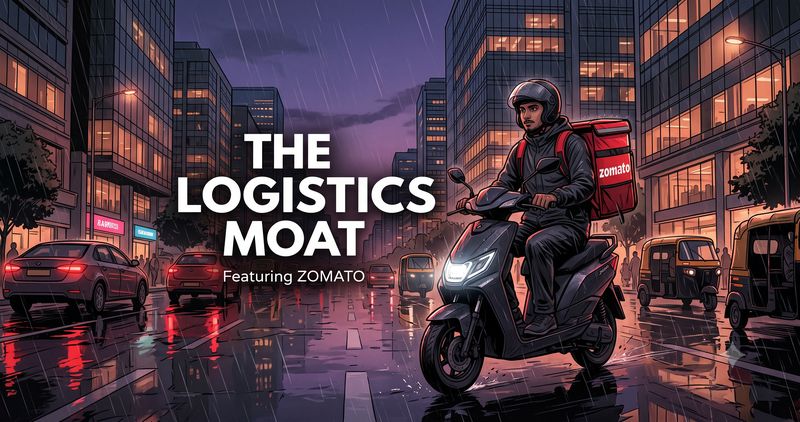
Zomato was supposed to be a cautionary tale. Instead it became one of India's most valuable consumer companies, and the reason has almost nothing to do with the app on your phone.*
Not long ago, owning Zomato shares felt like a bad joke. When it listed, the company was losing hundreds of crores, and the smart money assumed food delivery was simply a business that could never make money. Every order seemed to cost more to fulfil than it earned.
Fast forward to July 2026, and the story has completely flipped. The stock trades near ₹296, up almost 19 percent in a single month. Annual revenue has climbed to about ₹55,760 crore, and the company that was "destined for bankruptcy" is now turning a real profit. So what changed?
The thing everyone got wrong
Most people look at a company like Zomato and assume its real value is the app: the slick design, the recommendation engine, the marketing. Software, they think, is where the magic is.
It is not. Zomato's breakthrough came when it stopped acting like a shiny, asset-light tech app and leaned into the ugliest part of the business: running an army of delivery riders on the ground. That work is expensive, complicated, and low-margin, exactly the kind of thing "pure tech" companies run away from. Zomato ran toward it.
The trick is a boring word: density
Here is the simple idea that saved the company. Delivering one hot meal at a time is a terrible business. A rider drives across town, delivers a single lunch, and the tiny fee barely covers the petrol. Do that all day and you lose money, which is exactly what was happening early on.
But now imagine that same rider delivering your groceries at 8 in the morning and your lunch at 1 in the afternoon. Suddenly one rider, one bike, one salary is earning the company money twice. That is what Zomato unlocked when it bought Blinkit and built a web of small neighbourhood "dark stores" for quick grocery delivery. By using the same fleet for meals and groceries, it squeezed far more value out of every rider. That efficiency, packing more deliveries into the same network, is what quietly turned years of losses into profit.
In other words, the delivery fleet became the business. The app just became the easy button that keeps it all moving.
We have seen this movie before, with Amazon
If this feels familiar, it should. Amazon did the same thing two decades ago. In its early days, Amazon relied on outside couriers like FedEx and UPS to ship its parcels, which left it at the mercy of their prices. So it spent billions building its own warehouses, its own trucks, even its own planes. Wall Street hated it at first and punished the stock for burning cash on all that physical infrastructure. But that delivery network became a wall no rival could climb. Once Amazon could deliver faster and cheaper than anyone, no other online store could catch up.
The lesson is the same in both cases: the app was never the moat. The delivery engine is. You win not by writing the prettiest code, but by building a real-world network your customers cannot live without.
Where it could still go wrong
This strength is also the biggest risk. An empire built on hundreds of thousands of gig-economy riders is extremely sensitive to costs. Because Zomato earns razor-thin margins on each delivery, any jump in minimum wages, new rules forcing rider benefits, or a spike in fuel prices could eat its profits fast. A business this physical lives and dies by tiny numbers multiplied across millions of orders.
What to actually watch
Ignore the daily share price noise. The number that matters is whether the quick-commerce grocery business keeps getting more profitable per order over the next couple of quarters. If those margins keep creeping upward, it means Zomato has real pricing power and the profits are here to stay. If they stall, the doubters get their opening again.
For now, though, the company that everyone left for dead has quietly built something rare: not a popular app, but an unglamorous, hard-to-copy delivery machine woven into the daily life of millions. And that, far more than any algorithm, is why the market finally believes in it.
Frequently Asked Questions
What is "Analysts said Zomato would go broke. It won by owning the least glamorous thing in tech." about?
Few years ago, market analysts said that a cash-burning food delivery app 'ZOMATO' with no path to profit, destined to slowly bleed to death. Today it sits near record highs, comfortably profitable, with revenue past ₹55,000 crore. The turnaround did not come from smarter software or a cleverer app. It came from the exact opposite: mastering the messy, low-margin, deeply unglamorous business of physically moving things from A to B. Here is the quiet trick that flipped a money pit into a machine rivals cannot copy.
Why does this business topic matter?
This topic covers a significant development in business that affects economies, industries, and everyday people. Qrio breaks it down in plain English so you can understand the implications without needing specialized knowledge.
How long does it take to read this explainer?
The brief takes about 30 seconds. The full deep dive takes just a few minutes. You can choose how deep you want to go.
More from Qrio
Oura wants $16 billion for a ring, and one number explains why
India's biggest stock exchange is finally going public and it has to list on its rival