A secret trading corridor between local towns is quietly shielding India from a global trade collapse
4 min read · by Qrio · 7 Jul 2026
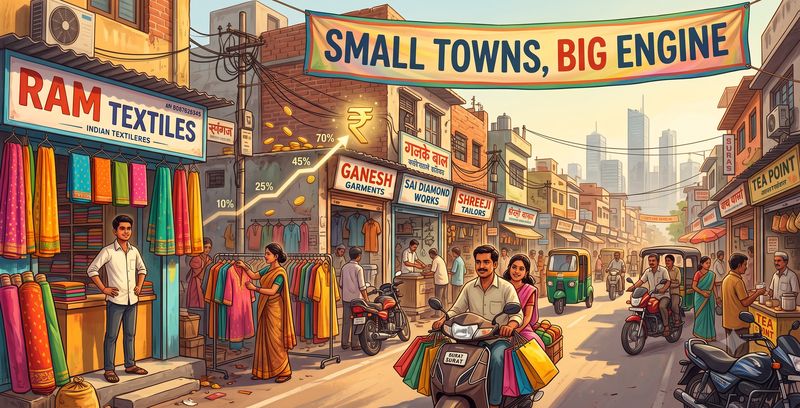
The spectacular resilience of India's internal consumer economy proves that the nation's growth engine has successfully shifted away from top tier-1 capitals toward specialized, high-saving industrial towns.
What is happening inside India's spending architecture?
During the opening days of July 2026, the total combined market capitalization of six of India's ten most valued firms surged by over ₹1 lakh crore, led by heavy consumer and telecom volumes. This equity boom occurred right as international tracking indices flagged a sharp drop in foreign portfolio investments across secondary emerging markets.
The underlying layer of this domestic boom was decoded by a fresh consumer data analysis spanning the country's urban landscapes. While tier-1 metros face rising cost-of-living pressures, secondary industrial hubs are registering an unprecedented explosion in individual disposable income and retail velocity.
A few numbers show the scale:
- Six of the top ten most valued domestic firms added an aggregate of ₹1 lakh crore to their market size in five trading sessions.
- India's total top 100 cities combined continue to drive roughly 35% of the total national household income.
- Mutual fund systematic investment plans hit a fresh high, stabilizing retail stock liquidity.
Why are secondary towns beating the big cities?
People think that because Mumbai and Delhi hold the corporate headquarters, they dictate the absolute trajectory of consumer demand. They assume wealth always filters from the top down.
The reality reframes everything. Metro cities are heavily exposed to global economic headwinds, such as high rent inflation, IT corporate cost-cutting, and international supply spikes. But secondary production hubs like Surat and Tiruppur operate on completely different internal mechanics. These cities are highly specialized industrial zones focusing on textiles, diamonds, and light manufacturing. Because their local real estate costs are a fraction of metro prices, their middle class has a vastly higher propensity to spend. The data shows that while top metros are tightening their belts, these industrial towns are deploying their surplus cash into retail, vehicles, and stock market SIPs. This single-handedly keeps the domestic economy insulated from foreign drops.
The rise of the midwestern manufacturing belts
This internal migration of consumer power heavily parallels the emergence of the American Midwest Manufacturing Belt in the 1950s. While financial capitals like New York faced high post-war overheads and structural shifts, secondary industrial cities like Detroit, Cleveland, and Milwaukee became the real engine of the American middle-class consumer boom. The workers in these industrial hubs earned solid wages while facing low living costs, causing an explosion in domestic automobile and appliance sales that protected the US economy from international shocks. India's secondary cities are running that exact engine today.
The structural safety of a massive consumer economy relies on the spending power of the provincial factory town, not the financial speculation of the capital metro.
What could throw a wrench in this machine?
The immediate risk is that these specialized industrial towns are heavily dependent on raw material stability. If localized power costs surge, or if supply shocks hit basic commodities like cotton or industrial metals, the operating margins of small and medium enterprises in towns like Tiruppur will compress instantly. Because these economies lack the corporate diversity of a mega-metro, a localized manufacturing squeeze can quickly freeze an entire town's spending power.
What should you actually watch next?
Don't monitor luxury real estate sales. Watch the monthly two-wheeler registration data and entry-level retail volume updates coming out of non-metro districts over the next quarter. If entry-level consumption in these manufacturing belts continues to outpace tier-1 growth, India's internal bull run will remain entirely secure.
The true gauge of national economic health isn't the height of glass skyscrapers in corporate metros, but the weight of retail shipments arriving in industrial hubs.
Frequently Asked Questions
What is "A secret trading corridor between local towns is quietly shielding India from a global trade collapse" about?
Rising global shipping costs and currency fluctuations are putting immense pressure on traditional trade hubs. Yet, under the radar, India's domestic market cap just added a massive 1 lakh crore rupees in a single week across its top firms. The real secret behind this financial resilience isn't coming from major export hubs like Mumbai or Bengaluru but true engine of India's economic endurance is driven by unexpected spending power exploding inside secondary industrial cities.
Why does this tech & ai topic matter?
This topic covers a significant development in tech & ai that affects economies, industries, and everyday people. Qrio breaks it down in plain English so you can understand the implications without needing specialized knowledge.
How long does it take to read this explainer?
The brief takes about 30 seconds. The full deep dive takes just a few minutes. You can choose how deep you want to go.
More from Qrio

Oura wants $16 billion for a ring, and one number explains why

India's biggest stock exchange is finally going public and it has to list on its rival