A major global regulator just stopped a nine billion pound payout because car companies fought back
4 min read · by Qrio · 8 Jul 2026
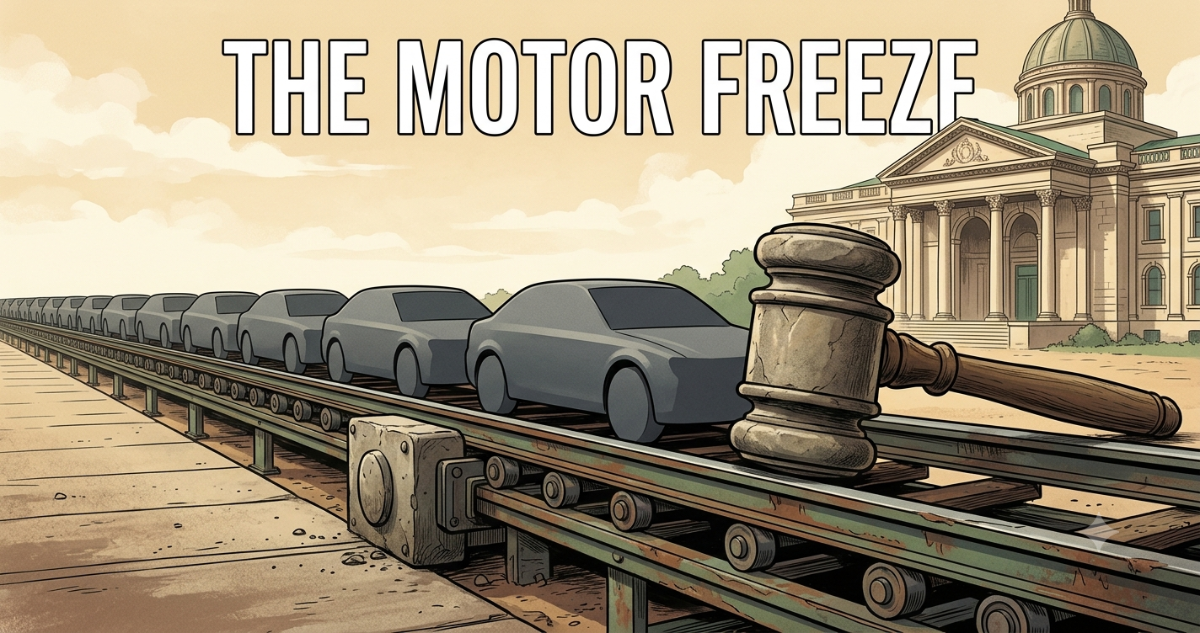
The sudden suspension of the UK's massive motor finance compensation scheme proves that regulatory bodies cannot enforce mass consumer payouts when corporate giants pool their legal infrastructure.
What just happened to the historic car loan payout?
In a major development for the global banking and automotive sectors, the Financial Conduct Authority (FCA) was forced to partially suspend its historic consumer compensation framework. The regulator had built the massive £9.1 billion scheme to penalize car lenders and dealerships who secretly overcharged everyday drivers for auto loans between 2007 and 2024.
The compensation program was designed to automatically distribute cash refunds to aggrieved borrowers across the country. But following a coordinated wave of legal actions, a high-level UK court named the Upper Tribunal issued an emergency order that completely froze the compensation mechanism.
A few numbers show the scale:
- Everyday car borrowers were legally expected to receive an average cash payout of £830 each.
- A total of 4 massive corporate entities combined their legal infrastructure to sue the financial regulator.
- The judicial freeze has delayed all consumer redress payments until a full hearing concludes in February 2027.
Why did a done deal suddenly freeze up?
People think the compensation scheme was paused because the government realized that car dealers did nothing wrong. They assume that regulators simply miscalculated the data.
The reality is that the car companies successfully built a legal defensive wall. Instead of fighting the regulator one-by-one, four of the largest automotive finance giants in the world, including Volkswagen Financial Services and Mercedes-Benz Financial Services, pooled their massive legal resources to file a joint lawsuit. They argued that forcing them to calculate and pay billions in compensation before a final court ruling violates basic business rights. The court agreed, ruling that the car firms don't need to communicate with borrowers or pay out a single penny until the multi-year legal process wraps up.
The tobacco litigation parallel of the 1990s
This corporate defense mirror-images the famous Master Settlement Agreement battles in the American tobacco industry during the 1990s. When individual states tried to sue cigarette manufacturers for health costs, the companies spent years tying up the regulatory agencies in local courts, dragging out the process until the governments were exhausted. It was only when the corporations realized that a single, unified settlement would give them permanent legal immunity that they finally allowed the payouts to happen. The global car brands are running that exact same stall-and-delay strategy today.
When a regulator tries to extract billions from an entire industry, the targeted corporations will stop competing with each other and merge into a single legal army.
What could go wrong now?
The immediate risk is for the smaller financial firms and independent car dealerships trapped in the middle. While giant brands like Volkswagen have the cash reserves to endure a legal battle that stretches into 2027, smaller lenders are left in complete financial limbo. They are legally forced to keep gathering historical loan data and logging complaints, but they cannot settle their books or predict their future liabilities, which could freeze local auto lending entirely.
What to actually watch with concrete metrics
Don't look at individual customer complaints. Watch the upcoming court updates leading to the final December 2026 hearing dates. If the court signals that the regulator's core commission rules are legally flawed, the entire £9.1 billion compensation scheme will be permanently dismantled, saving the car companies billions and leaving millions of drivers empty-handed.
The ultimate survival of consumer financial protection isn't decided by regulatory announcements, but by the precise wording of a court order in late 2026.
Frequently Asked Questions
What is "A major global regulator just stopped a nine billion pound payout because car companies fought back" about?
Millions of car buyers in the UK were celebrating a massive victory against predatory financing. The Financial Conduct Authority had designed a historic £9.1 billion compensation scheme to pay back drivers who were overcharged on their auto loans by greedy dealers. On paper, it looked like a done deal, with individual borrowers expecting an average payout of £830 each. But in last forty-eight hours, the entire compensation engine was frozen. The real reason for this halt shows exactly how the world's largest automotive brands can use a legal lever to paralyze a government.
Why does this tech & ai topic matter?
This topic covers a significant development in tech & ai that affects economies, industries, and everyday people. Qrio breaks it down in plain English so you can understand the implications without needing specialized knowledge.
How long does it take to read this explainer?
The brief takes about 30 seconds. The full deep dive takes just a few minutes. You can choose how deep you want to go.
More from Qrio

Oura wants $16 billion for a ring, and one number explains why

India's biggest stock exchange is finally going public and it has to list on its rival