Business
Walmart beat every number that matters and still had its worst day in four years
By Qrio · 25 August 2026 · 4 min read
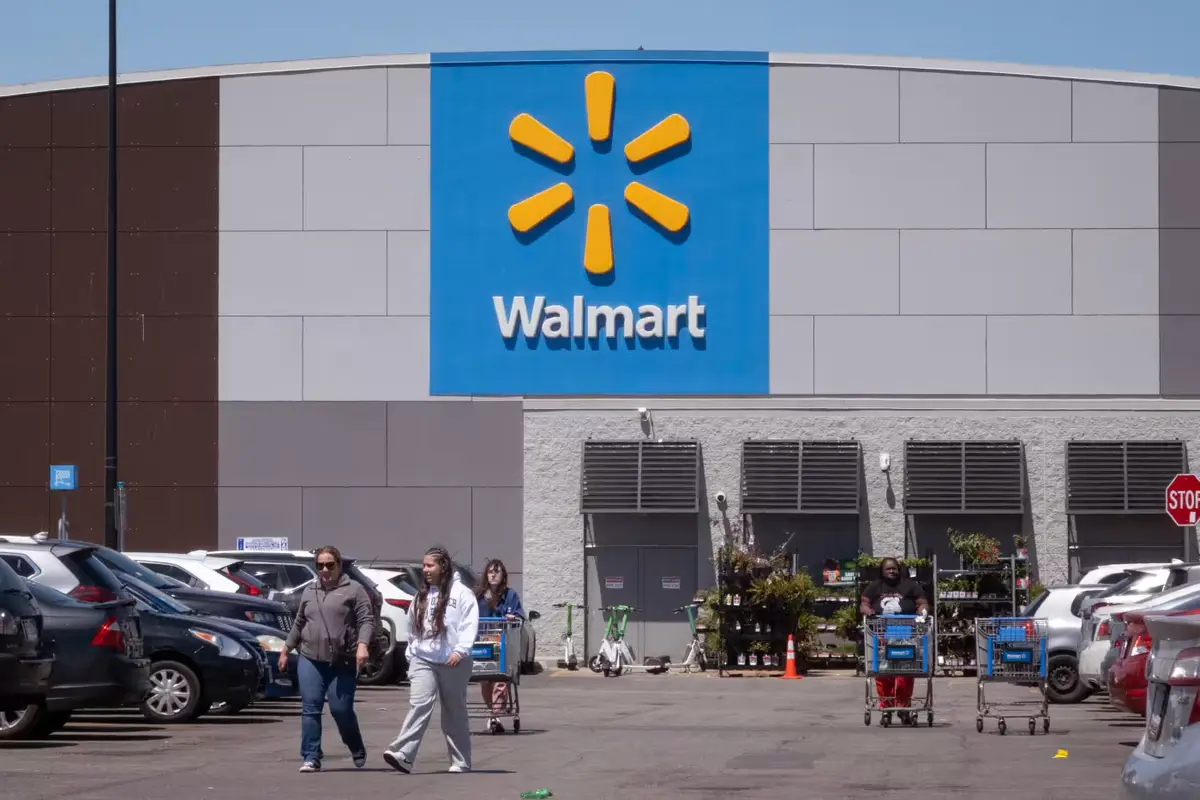
Walmart beat on profit, beat on revenue and raised its full-year guidance. Wall Street erased 9% of its stock value in one day anyway. That gap is the real story.
On its face, the quarter Walmart reported on August 20, 2026 looked strong. Adjusted earnings per share came in at $0.81, beating the $0.7413 analysts expected. Revenue hit $187.94 billion, up 6% from a year earlier. Gross profit margin rose 96 basis points. Management even raised full-year guidance, lifting its adjusted EPS outlook to $2.80 to $2.87 from $2.75 to $2.85. By the numbers investors usually chase, Walmart delivered.
Then the stock fell anyway. Shares dropped roughly 9%, from $114.30 to $103.84, wiping out billions in market value in a single session, the company's worst earnings-day reaction in ten straight quarters and its fourth consecutive earnings-day decline. JPMorgan and Bank of America both told clients to buy the dip. The market didn't listen that day.
What actually spooked investors. US comparable sales, a measure of growth at stores open at least a year, rose just 2.6%, badly missing the roughly 3.8% analysts expected and marking Walmart's weakest comparable-sales quarter since 2020. Transaction growth eased to 1.5%, meaning fewer trips, not just smaller baskets. Furner didn't dress it up on the earnings call: "Customers tell us they're still feeling some pressure." Walmart pointed to new federal rules that cut prices on several costly Medicare drugs, plus a jump in gasoline prices to $4.10 a gallon from $2.98, and inflation that had climbed to 3.4% from 2.4% before the Iran war disrupted oil markets.
The number that made the beat look softer than it was. A chunk of the profit beat came from a one-time tariff refund worth roughly $2.9 billion, a 750 basis point boost to gross margin that Walmart mostly plowed back into more than 11,000 price rollbacks rather than pure profit. Strip that refund out, and the underlying earnings picture looks considerably less rosy than the headline number suggests. Analysts had spent the quarter modeling clean, repeatable growth. What they got was a real beat propped up by a one-time government check.
A useful parallel. Imagine a student who aces a test only because the teacher accidentally handed back ten bonus points from an old assignment. The grade on paper is excellent. But everyone in the room who watched them actually work through the exam knows the real score was closer to a pass than an A, and next test, there's no bonus round coming.
"Customers tell us they're still feeling some pressure." John Furner, CEO, Walmart, on an earnings call with analysts
The honest catch. Walmart is still the biggest retailer in America, still gaining share from higher-income shoppers trading down, and its full-year guidance did go up, not down. This isn't a company in trouble. It's the bellwether for roughly 90% of the US population that shops there at least occasionally showing the first real crack in spending discipline in a while, at exactly the moment gas prices and drug-pricing shifts are squeezing the same households. One soft quarter from one retailer doesn't prove a recession. It does mean the "resilient consumer" story that's held up all year just got its first real dent.
What to actually watch next. Watch Walmart's Q3 comparable sales, guided down slightly to reflect a Flipkart timing headwind, to see if the slowdown is temporary or structural. Watch whether Target, which rallied on a similar tariff-refund story, reports the same underlying softness when its own comps come in. And watch gas prices and Medicare drug-pricing effects specifically, since Walmart named both as the drivers squeezing its core shopper this quarter.
Walmart didn't miss. It hit every target it set for itself and still spooked the market, because for the first time in a while, the numbers underneath the numbers told a shakier story than the headline.
More business stories
Business
Unacademy sold for 94% less than what it was once worth. Its CEO said so himself
India's edtech firm Unacademy has officially been acquired by rival upGrad in an all-stock deal closing at just over $200 million (₹19.55 billion), roughly 94% below Unacademy's peak private valuation of $3.44 billion in 2021. Unacademy had raised nearly $880 million across 13 funding rounds from SoftBank, Tiger Global, and General Atlantic. Co-founder and CEO Gaurav Munjal didn't dress it up: "We raised at a peak, but sold at a fraction of that." No layoffs are planned for Unacademy's roughly 1,000 employees. The deal closes a five-year arc for one of India's most-funded startups, and it began with the opposite problem entirely.
3 September 2026 · 3 min read
Business
Sachin Bansal ran his fintech alone for eight years before taking anyone's money
Navi, the Bengaluru fintech founded by Flipkart co-founder Sachin Bansal, raised $100 million from Prosus at a roughly $1.3 billion valuation, its first institutional funding round in eight years of operation, TechCrunch reported on August 19, 2026. Bansal had personally bankrolled Navi since founding it in 2018. The company's UPI app processed 947 million transactions worth about ₹483 billion (~$5.05 billion) in July 2026 alone, and its lending arm carries roughly ₹130 billion (~$1.4 billion) in assets. Navi is now preparing an IPO targeting about $2 billion, after abandoning an earlier attempt in 2023.
29 August 2026 · 3 min read