SpaceX bought a $60 billion company without spending a dollar. Here is how.
6 min read · by Qrio · 19 Jun 2026
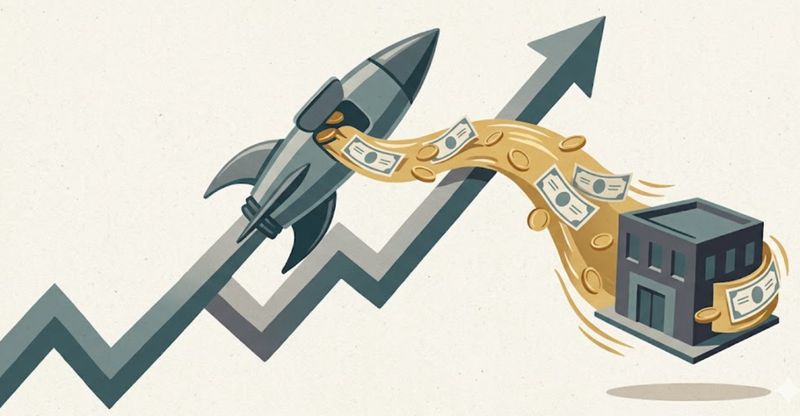
A rocket company just paid $60 billion for an AI startup, using money that did not exist a week earlier. The reason it wanted it reveals what SpaceX is quietly turning into.
The deal that cost nothing
On June 16, 2026, SpaceX agreed to buy Cursor, the maker of one of the world's most popular AI coding tools, for $60 billion. What makes this remarkable is not the price. It is that SpaceX paid using none of its own cash.
Just four days earlier, on June 12, SpaceX had gone public in the largest stock-market debut in history. Its shares then rocketed from $135 to over $200, adding close to a trillion dollars to the company's value in a matter of days. In fact, SpaceX's stock rose by the entire $60 billion cost of Cursor in just a few hours of trading on its first day. So Musk bought a whole company by handing over freshly minted shares that cost him nothing to create, and which the market had just decided were worth more than ever. The acquisition came to barely a tenth of the value his stock had gained that single week.
The numbers behind the deal:
- SpaceX is paying $60 billion for Cursor, entirely in stock, with no cash involved.
- Its June IPO was the largest in history and pushed the company's value past $2 trillion, with the stock still climbing.
- The deal caused only about 3.4 percent dilution, meaning existing owners gave up a small slice in exchange for a whole company.
- Analysts say it may be the largest acquisition of a venture-funded startup ever.
From a 2022 startup to overnight billionaires
Cursor's own story is part of why this is remarkable. It is an AI coding tool, that can write, fix and explain software almost on its own, and engineers love it. The company behind it, Anysphere, was founded only in 2022 by a small team of young engineers, passed through OpenAI's startup programme in 2024, and quickly became one of the most popular coding tools in the world. Money followed fast. Cursor raised about $900 million in mid-2025, then another $2.3 billion later that year, roughly $3.2 billion in total, and by early 2026 it was valued at around $29 billion. SpaceX's offer doubled that to $60 billion in barely two months.
Because SpaceX paid in publicly traded shares rather than private paper, Cursor's founders did not just watch their stakes rise on paper, they received stock they could actually sell. A handful of people who started a company four years earlier, one that was not even profitable yet, became billionaires more or less overnight.
Why a rocket company is buying AI
The obvious question is why SpaceX, famous for rockets and the Starlink satellite internet service, wants an AI coding startup at all. The answer is that SpaceX is no longer really just a rocket company. In February 2026, it merged with Musk's AI startup xAI, absorbing the Grok chatbot and the X social network in one of the largest mergers ever recorded. Overnight, SpaceX became a strange new kind of conglomerate: rockets, satellites, a social network, and artificial intelligence, all under one roof.
Buying Cursor is the next step. Musk's AI division had been struggling. All eleven of his xAI co-founders had left, and its tools were falling behind rivals like Anthropic and OpenAI. So rather than build a competitive coding product from scratch, SpaceX simply bought one of the best that already existed. Investors liked the logic. SpaceX's stock jumped about 16 percent on the news, briefly making it worth more than Amazon and Microsoft.
SpaceX was never really just a rocket company. The rockets were the launchpad for something much bigger.
The vision: data centres in space
To see where this is heading, you have to understand Musk's actual goal, which sounds like science fiction but is being built right now.
AI runs on data centres, vast warehouses of computers that swallow enormous amounts of electricity and need constant cooling. On Earth, they are increasingly limited by power, land, and water. Musk's bet is that the cheapest place to run AI in the future will not be on Earth at all, but in space, where solar energy is endless and the cold helps with cooling.
SpaceX has asked regulators for permission to launch up to one million satellites to form what it calls orbital data centres: AI computers floating in space, powered by the sun, carried up by the rockets SpaceX already builds and fed by the satellite network it already runs. In this vision every piece fits. The rockets launch the satellites, the satellites hold the computers, the computers run the AI, and companies like Cursor provide the software that sits on top.
Why this is a glimpse of how giants now grow
Step back, and the deal is a vivid lesson in how the most powerful companies expand today. The secret is the stock itself. When a company's shares are soaring, that stock becomes a kind of free currency it can use to buy real businesses without spending real money. The higher the stock climbs, the cheaper any deal feels, because each one costs only a sliver of a constantly rising pile. That is exactly what SpaceX did. It listed its shares, watched them soar on AI excitement, and immediately used them to swallow a rival. It is a pattern repeating across the tech world, where a handful of giants use their inflated values to absorb smaller, innovative companies before those companies can grow into threats.
It is also why some investors worry. If the AI excitement lifting these stocks ever fades, the free money stops being free, and deals that looked brilliant on the way up can look reckless on the way down.
Genius or bubble
So which is it? The honest answer is that both readings hold up, and that is what makes the moment fascinating. The optimistic view is that Musk has assembled something no rival can easily copy: one company that builds the rockets, owns the satellites, runs the network, and now owns the AI software to fly on top, all bought with currency the market handed him almost for free. The cautious view is that two struggling players just combined, paid for with stock riding a wave of AI enthusiasm that may not last.
A company can now go public on a Friday and buy a $60 billion rival by Tuesday, with money that did not exist the week before. The line between a rocket company, an AI company, and a financial machine has all but vanished, and SpaceX is now all three at once. Whether that is the future of business or the warning sign of a bubble, the next few years will decide.
Frequently Asked Questions
What is "SpaceX bought a $60 billion company without spending a dollar. Here is how." about?
Last week SpaceX went public in the biggest stock-market debut in history, and its shares soared so fast it gained close to a trillion dollars in value in just days. Then it used that freshly minted stock to buy Cursor, a leading AI coding company, for $60 billion, without spending a single dollar of cash. The stock had risen by the entire price of the deal in hours of trading. The bigger surprise is why a rocket company wanted it at all.
Why does this tech & ai topic matter?
This topic covers a significant development in tech & ai that affects economies, industries, and everyday people. Qrio breaks it down in plain English so you can understand the implications without needing specialized knowledge.
How long does it take to read this explainer?
The brief takes about 30 seconds. The full deep dive takes just a few minutes. You can choose how deep you want to go.
More from Qrio
Oura wants $16 billion for a ring, and one number explains why
India's biggest stock exchange is finally going public and it has to list on its rival