Business
China is selling more cars abroad than ever while losing money on the ones it sells at home
By Qrio · 13 August 2026 · 4 min read
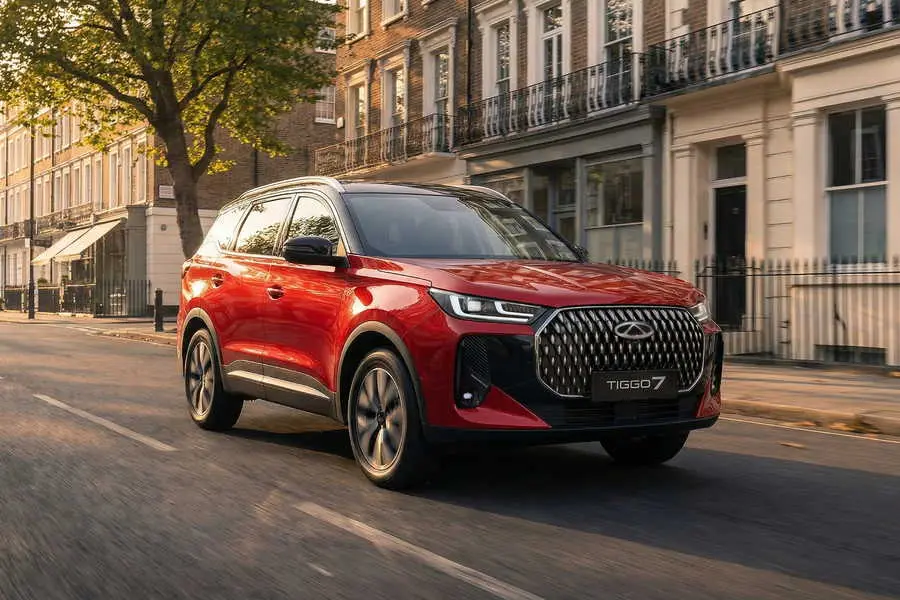
Chinese carmakers aren't chasing overseas buyers because they pay more for the same car. They're fleeing a domestic price war they built themselves.
A record that reveals a crisis, not a triumph
In July 2026, Chery exported 202,533 vehicles in a single month, a number no Chinese automaker had ever hit before. Across the first half of the year, Chery led all exporters with 931,500 units shipped abroad, BYD followed with 769,300, and Geely's exports jumped 158.3% to 472,500. On paper, this looks like a triumphant story of Chinese industrial capability conquering global markets. Look at the same companies' domestic numbers and the story flips: BYD's total domestic sales volume fell 15.72% year-on-year even as its exports boomed, and China's overall domestic car sales dropped 21.1% year-on-year, the tenth straight month of decline. The export boom isn't happening because Chinese manufacturers suddenly discovered the rest of the world wants their cars more. It's happening because the home market has become unbearable to sell in profitably.
The number that explains why: 25 million cars, nowhere near 25 million buyers
Goldman Sachs estimates Chinese EV manufacturers now have the collective capacity to build roughly 25 million vehicles a year, a figure roughly equal to all projected global vehicle demand combined, not just Chinese demand, global demand. Dozens of automakers built factories during China's EV boom years, all betting on continued explosive growth. That growth has slowed, and the factories didn't stop running. The result is an industry with far more supply than any single market, however large, can absorb, and manufacturers with expensive factories to keep utilized no matter the price they have to charge to move inventory.
The margin gap that gives the game away
Here's the detail most headlines about "China's export boom" skip past entirely: BYD's own 2025 annual report shows a gross margin of 28.1% on vehicles sold overseas, compared to just 17.2% on vehicles sold domestically. The same car, built the same way, is nearly twice as profitable to sell abroad. That's not because foreign customers are being ripped off, it's because China's domestic market has descended into a price war so brutal that automakers are effectively selling many models at a loss just to maintain market share and keep factories running, while pricing the same vehicle at a level abroad, still often cheaper than local competitors, that actually returns a real profit. A BYD Atto 3 that lists above $41,000 in Germany sells for under $20,000 in China.
A useful parallel
Picture a bakery that's opened three locations too many in its own neighborhood, all competing for the same customers, forcing every location to slash bread prices below what it costs to bake. To survive, the bakery starts trucking bread to the next town over, where there's no price war, and sells it there at a normal, profitable price. From the outside, it looks like the bakery is expanding successfully into new markets. From the inside, it's running from a fight it started at home that it can no longer afford to keep fighting.
"The auto industry is facing enormous pressure." Cui Dongshu, Secretary-General, China Passenger Car Association
The honest catch
Exporting doesn't fix the underlying overcapacity problem, it just relocates where the pressure shows up. Five Chinese auto brands already took 12.1% of new-car registrations across the EU and UK in June, up from 7.7% a year earlier, a pace of gain that's likely to trigger the same tariff and anti-dumping responses the EU has already been considering. If major export markets respond with tariffs the way the US and EU already have in some categories, Chinese automakers lose the one market where their margins actually work, while the domestic price war that pushed them there in the first place still hasn't gone away.
What to actually watch next
Watch whether the EU or other major markets tighten tariffs on Chinese EVs in response to the accelerating export share, since that would remove the profitable outlet these companies are currently relying on. Watch China's domestic sales figures for any sign the decline is bottoming out, since a stabilization there would ease the pressure to dump inventory abroad. And watch whether smaller, less internationally established Chinese automakers start failing or consolidating, since 25 million units of capacity chasing a shrinking home market and an increasingly contested export market isn't sustainable for every player currently in the race.
China's carmakers aren't winning the world. They're running from a price war at home, and hoping the rest of the world doesn't close the door before the war ends.
More business stories

Business
Unacademy sold for 94% less than what it was once worth. Its CEO said so himself
India's edtech firm Unacademy has officially been acquired by rival upGrad in an all-stock deal closing at just over $200 million (₹19.55 billion), roughly 94% below Unacademy's peak private valuation of $3.44 billion in 2021. Unacademy had raised nearly $880 million across 13 funding rounds from SoftBank, Tiger Global, and General Atlantic. Co-founder and CEO Gaurav Munjal didn't dress it up: "We raised at a peak, but sold at a fraction of that." No layoffs are planned for Unacademy's roughly 1,000 employees. The deal closes a five-year arc for one of India's most-funded startups, and it began with the opposite problem entirely.
3 September 2026 · 3 min read

Business
Sachin Bansal ran his fintech alone for eight years before taking anyone's money
Navi, the Bengaluru fintech founded by Flipkart co-founder Sachin Bansal, raised $100 million from Prosus at a roughly $1.3 billion valuation, its first institutional funding round in eight years of operation, TechCrunch reported on August 19, 2026. Bansal had personally bankrolled Navi since founding it in 2018. The company's UPI app processed 947 million transactions worth about ₹483 billion (~$5.05 billion) in July 2026 alone, and its lending arm carries roughly ₹130 billion (~$1.4 billion) in assets. Navi is now preparing an IPO targeting about $2 billion, after abandoning an earlier attempt in 2023.
29 August 2026 · 3 min read